Treasury Yields Rise as Defense Spending Grows

Global borrowing costs are breaking higher again, and the market is now pricing a far more expensive world of war finance, rearmament and stubborn inflation than policymakers want to admit.
The 10-year U.S. Treasury yield has climbed to 4.777%, its highest level in the data provided and a sharp jump from 4.67% on Aug. 27, while the 2-year has risen to 4.395% from 4.20% over the same span. That move matters because it is happening despite efforts by Treasury Secretary Scott Bessent to lean against higher rates, underscoring that the bond market is not buying the idea that governments can spend aggressively on defense without paying up for the privilege.

This is the kind of move that changes investment math across the economy. Higher sovereign yields raise the discount rate on everything from equities to real estate, lift financing costs for households and companies and make deficit-funded rearmament more expensive precisely when governments are already stretching balance sheets. The signal from Treasury markets is clear: the era of cheap war financing is over.
The pressure is not confined to the front end of the curve. The iShares 20+ Year Treasury Bond ETF, TLT, fell to 81.87 on Sept. 1 from 82.81 on Aug. 27, while the 7- to 10-year Treasury ETF, IEF, slipped to 92.10 from 92.90. That fits a broader selloff in longer-dated government debt, where investors are demanding more compensation for fiscal profligacy, heavier issuance and the risk that defense spending collides with supply-side inflation.
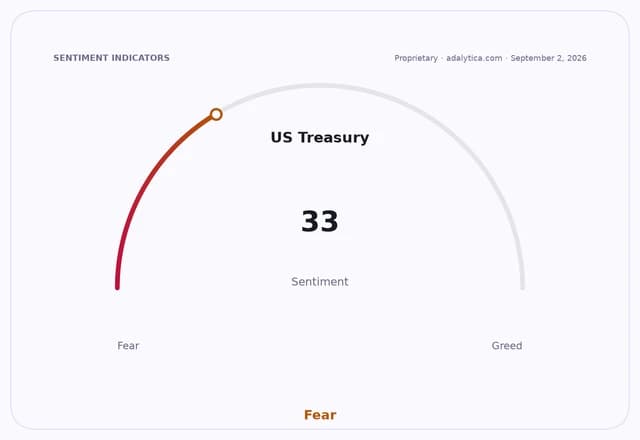
The macro backdrop is exactly the one bond bulls feared. Governments across the G7 are borrowing more to fund military buildouts and strategic stockpiling, while the Fed’s balance sheet remains far below the pandemic peak and no longer offers the same backstop to duration assets. The U.S. central bank’s balance sheet has fallen to about $6.74 trillion from more than $8.79 trillion in late 2021, leaving the market with less liquidity support just as Treasury supply is set to rise.
For investors, the message is to stop treating defense spending as a simple growth story and start seeing it as a capital-market reshaping event. The obvious winners are defense contractors such as Lockheed Martin, Northrop Grumman and RTX, which sit on the receiving end of a multi-year spending cycle already visible in federal budget documents and company filings. The less obvious winners are the industrial suppliers, shipbuilders, missile-defense names and energy infrastructure companies tied to strategic autonomy and wartime logistics.
The losers are duration-heavy assets and balance-sheet-sensitive sectors. Long-duration Treasuries, rate-sensitive growth stocks and leveraged borrowers all face a higher hurdle rate if sovereign yields keep rising. Even the dollar is getting caught in the cross-currents, with trade signals showing a rebound in interest in the currency as global investors reassess relative yield advantages.
I believe the market is still underestimating the second-order effect of rearmament: not just more defense revenue, but a sustained repricing of capital itself. Once governments normalize war-like borrowing on a peacetime balance sheet, bond yields do not stay contained for long. For investors, the play is to own the toll roads of this new order — defense, missile defense, naval capacity, energy security and logistics — while staying underweight the long-duration assets that suffer when the cost of capital resets higher.
| Entity | Gains | Losses |
|---|---|---|
| Defense contractors | ▲Bigger budgets | ▼Higher input costs |
| Long-dated Treasuries | ▲Short-term trading flows | ▼Falling prices |
| Rate-sensitive equities | ▲Selective inflows | ▼Higher discount rates |
| Governments | ▲Rapid rearmament | ▼Rising debt service |