Treasury yields hold near 4.6% as real yields stay positive
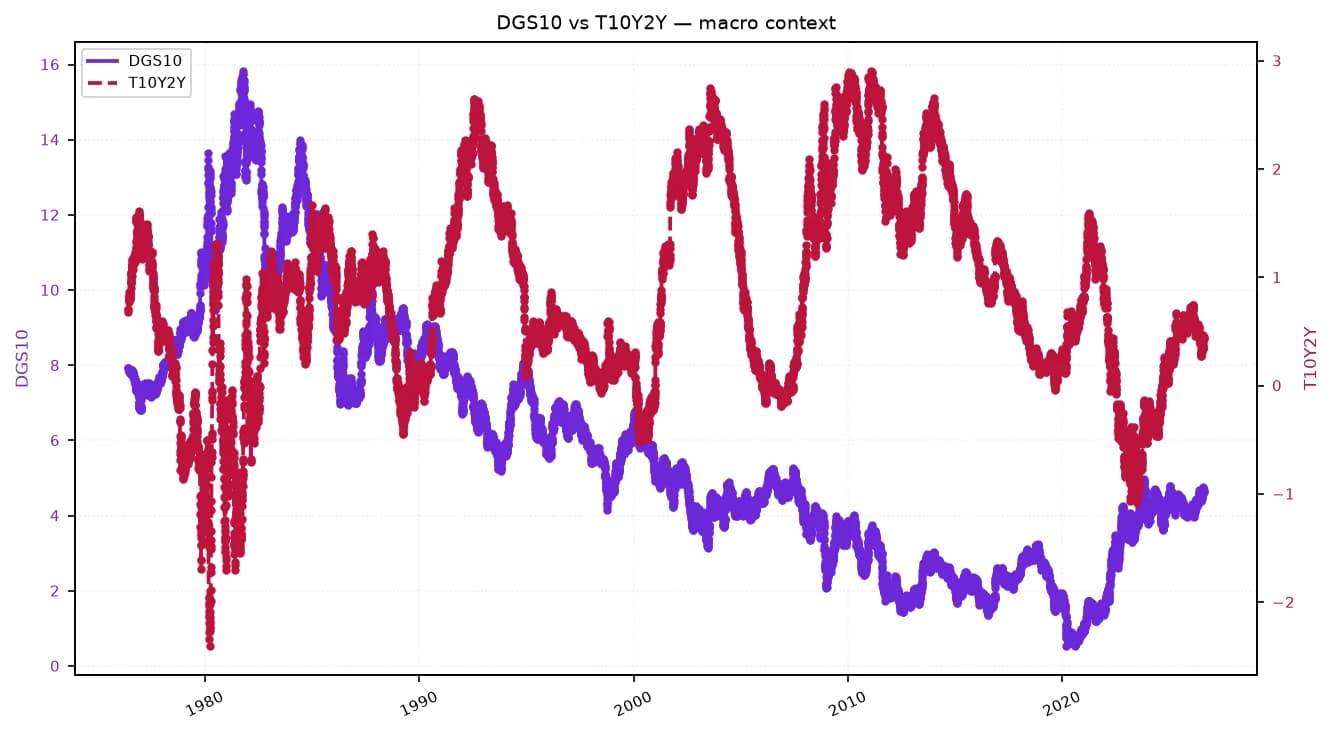
Treasuries are regaining investor attention as the U.S. 10-year yield holds near 4.6% and real yields stay elevated, giving bond buyers income again after years of near-zero returns.
The shift matters because higher real yields change the math across markets. They raise borrowing costs for households, companies and the federal government, while also giving fixed-income investors a more credible alternative to equities and cash.
The 10-year Treasury yield was last at 4.69% on Aug. 6 and was forecast at 4.623% for Aug. 7, far above the ultra-low levels that defined much of the past decade. The inflation breakeven rate on 10-year Treasuries, a market measure of expected inflation, was 2.25% on Aug. 7, leaving real yields meaningfully positive and reinforcing the case for duration.
That backdrop is showing up in bond funds. The iShares 20+ Year Treasury Bond ETF, TLT, traded at 82.76 on Aug. 7 after a heavy 96.1 million shares changed hands, while the iShares 7-10 Year Treasury Bond ETF, IEF, closed at 93.17 with volume of 55.0 million. The high-yield credit ETF, HYG, finished at 79.61, suggesting investors are still reaching for spread income, but with less urgency than when government bond yields were pinned near zero.
The move is also visible in the yield curve. The 10-year/2-year spread was 0.46 percentage point on Aug. 7, a mild steepening from the prior session and a sign the market is still pricing growth and policy uncertainty rather than a clean recession call.
For investors, the implication is straightforward: bonds are no longer just a defensive hedge, but a return source in their own right. If yields stay near current levels, Treasury funds can compete with dividend stocks and money-market cash, while also offering capital gains if the economy slows and the Federal Reserve eventually cuts rates.
The risk for bond bulls is that the reset can reverse quickly if inflation re-accelerates or fiscal supply pressures push long rates higher. The next move in Treasury yields, inflation expectations and Fed policy guidance will decide whether this is a durable regime change or just another stop in a volatile cycle.
| Entity | Gains | Losses |
|---|---|---|
| Treasury buyers | ▲Higher income | ▼Price volatility |
| Stock investors | ▲Diversification option | ▼Relative valuation support |
| U.S. borrowers | ▲Longer-term stability if yields settle | ▼Higher refinancing costs |
| High-yield credit holders | ▲Spread income still available | ▼Less rate relief than Treasuries |