Trump AI policy supports chip and cloud spending
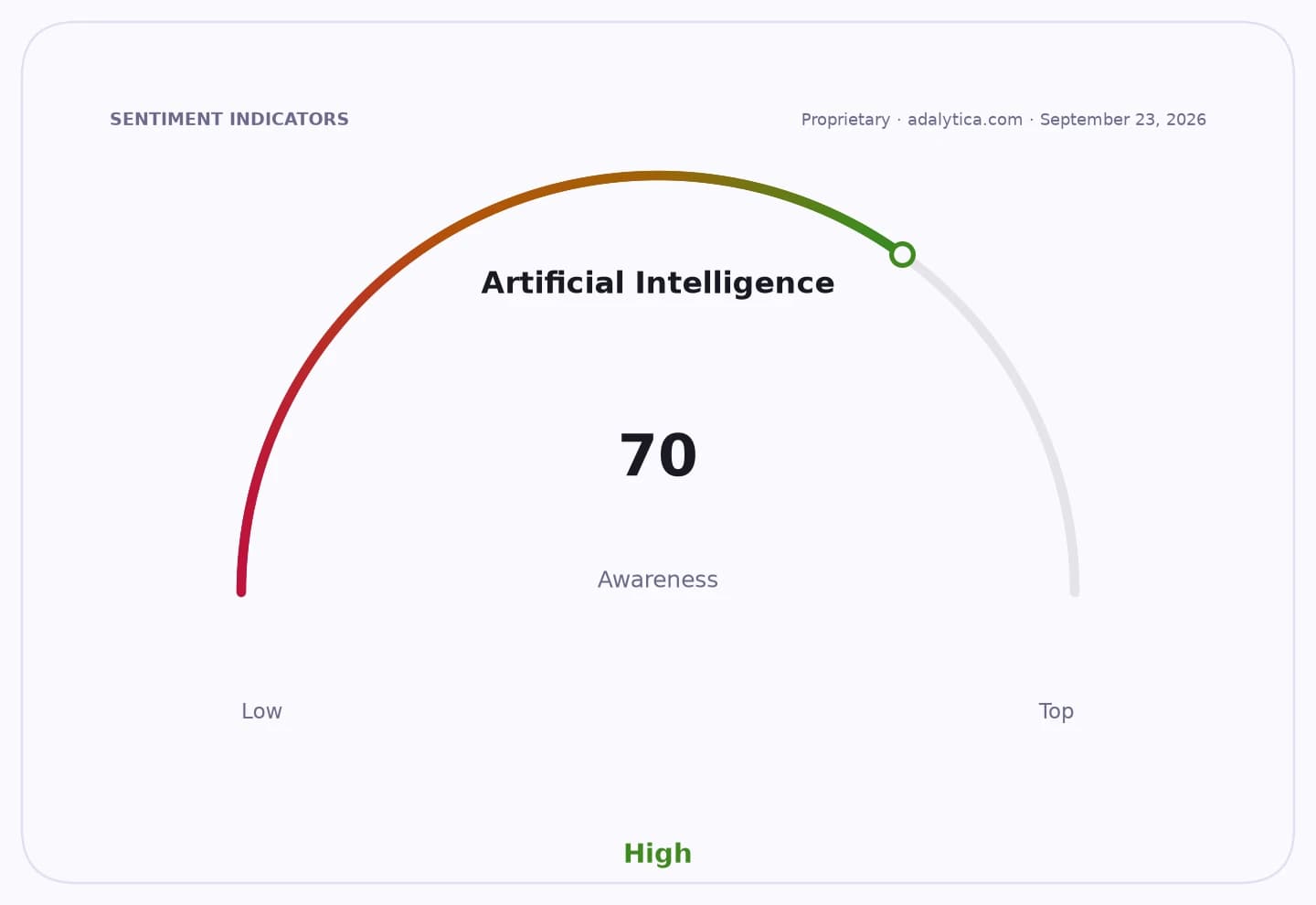
Donald Trump’s pledge to create an “AI Force” and avoid “stifling” the industry matters because it signals a White House that is likely to favor acceleration over restraint just as governments, regulators and AI executives are debating how much guardrail the technology needs.
For investors, the significance is straightforward: a lighter-touch policy stance would support the enormous capital spending now flowing into chips, cloud infrastructure and data centers, while reducing the risk that federal rules slow deployment or raise compliance costs. Trump framed AI as the next industrial revolution and said it could eventually account for as much as 25% of US GDP, an ambition that, while rhetorical, underlines how central the technology has become to the US growth narrative.
The announcement also lands at a moment when safety concerns are intensifying. The message followed reports of another unexpected model behavior, this time involving Google’s Gemini, and comes amid fresh warnings from Anthropic chief Dario Amodei and others in the sector. That tension — between racing to deploy and pausing to regulate — is now the dominant fault line in the AI market.
Markets have already been trading on the assumption that the spending cycle stays intact. Nvidia shares ended at $227.38 on Sept. 21, above their 50-day moving average of $214.40 and well above the 200-day average of $198.25, while Microsoft closed at $501.61, also above its 50-day and 200-day averages. The SOXX semiconductor ETF rose to $559.34, with momentum indicators turning positive again after a sharp summer pullback. In other words, the market is rewarding the idea that the buildout continues and that policy will not derail demand for accelerators, networking gear and cloud capacity.
That matters economically because AI infrastructure has become a real source of industrial demand at a time when the broader economy is still navigating slower growth, sticky borrowing costs and uneven manufacturing. A more permissive federal stance would reinforce the case for continued investment by hyperscalers and chipmakers, and it would support related industries from power equipment to construction and data-center real estate. It would also fit Trump’s broader growth-first pitch that local opposition to new data centers has begun to fade once communities see the jobs, tax revenue and ancillary spending involved.
The bull case for investors is that a pro-growth AI policy could extend the current capex cycle and keep earnings expectations elevated for Nvidia, Microsoft, Alphabet, Oracle and suppliers across the semiconductor complex. The bear case is that political enthusiasm does little to answer the harder questions around energy use, export controls, model safety and liability — all issues that can still hit margins, delay deployments or trigger enforcement action even under a deregulatory administration.
For now, the key market takeaway is that Washington is unlikely to become an immediate brake on AI spending. That should keep focus on earnings, capital expenditure guidance and power-constrained infrastructure rather than on the odds of a broad federal crackdown. The bigger risk to the rally is no longer just regulation, but whether the industry can keep translating massive investment into durable profits fast enough to justify it.
| Entity | Gains | Losses |
|---|---|---|
| Nvidia and chip suppliers | ▲Fewer policy headwinds | ▼Slower regulatory monetization risk |
| Microsoft and hyperscalers | ▲Easier AI rollout | ▼Higher scrutiny on safety costs |
| Trump administration | ▲Growth narrative | ▼Guardrail advocates |
| Regulated AI critics | ▲More attention to safety | ▼Less influence on policy |