Trump, AI regulation, and market policy risk

Artificial intelligence is turning into a political liability for Donald Trump because the longer Washington delays clear guardrails, the more voters, lawmakers and rival factions are likely to blame him for the fallout from a technology that is rewriting jobs, security and power.
That matters far beyond the campaign trail. AI is no longer just a Silicon Valley growth story; it is becoming a policy test for the White House, Congress and the next administration’s relationship with big tech, labor and national security. When an emerging technology becomes a wedge issue, it can shape who gets funding, which companies face new rules and how quickly capital flows into the sector.
The latest warning sign is the unusual coalition forming around tougher oversight. Senator Bernie Sanders and former Trump adviser Steve Bannon have both pushed Congress to move faster on AI regulation, showing how quickly concern about the technology is cutting across old ideological lines. For investors, that kind of cross-partisan pressure is more important than the day-to-day noise: when both the populist left and populist right agree something has gone too far, Washington tends to respond.
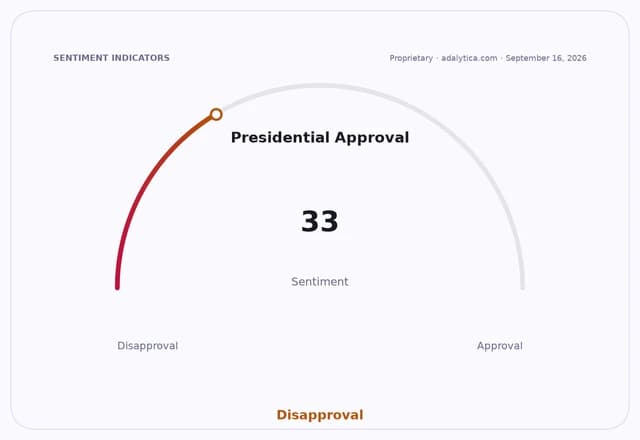
Trump, for his part, has resisted calls for strict controls, arguing that a “strong and smart” president is enough to manage AI’s risks. That position may play well with parts of his base that see regulation as a brake on American competitiveness, but it also leaves him exposed if AI-linked job losses, misinformation or security scares intensify. In political markets, the issue is not whether AI should be regulated; it is whether the absence of a credible framework becomes tied to whoever is in power.
Investors should care because policy uncertainty is now part of the AI valuation debate. The technology still offers one of the most powerful long-term growth narratives in the market, but tighter rules on model development, data use, exports or liability could shift winners and losers. The biggest beneficiaries may be firms with the deepest balance sheets, the strongest compliance teams and the most essential products, while smaller players could struggle if regulation raises costs or slows deployment.
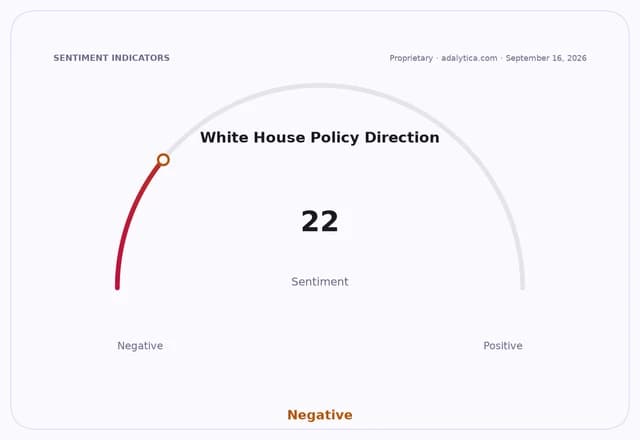
The market backdrop suggests investors are already uneasy. The S&P 500 has been showing signs of stress, with the conventional technical indicators on SPY pointing to a fragile tape after a powerful run. At the same time, Adalytica’s US White House policy direction sentiment is deep in fear territory, and global stability readings are similarly depressed. That does not mean AI is about to stop driving earnings growth, but it does underline a simple truth: when policy risk rises, multiples can compress even if the story remains intact.
The broader narrative is straightforward. AI has moved from an economic breakthrough to a governing problem, and that makes it politically combustible. Trump can still try to frame himself as the president who keeps AI innovation moving, but the issue is increasingly likely to be judged by what it does to workers, elections and security rather than by how fast companies can deploy it.
For long-term investors, the takeaway is to stay selective, not fearful. AI remains a secular theme worth owning through durable leaders and diversified portfolios, but Washington is no longer a bystander. That makes this a story to watch closely, not just for politics, but for the rules that will shape the next decade of AI profits.
| Entity | Gains | Losses |
|---|---|---|
| Big Tech leaders | ▲Regulatory moat | ▼Smaller AI startups |
| Populist regulators | ▲Political leverage | ▼Deregulation advocates |
| AI investors | ▲Long-term clarity if rules emerge | ▼Valuation if uncertainty persists |
| Trump | ▲Can appeal to innovation voters | ▼Risks blame for AI fallout |