Trump Alignment Favors Defense and Domestic Value
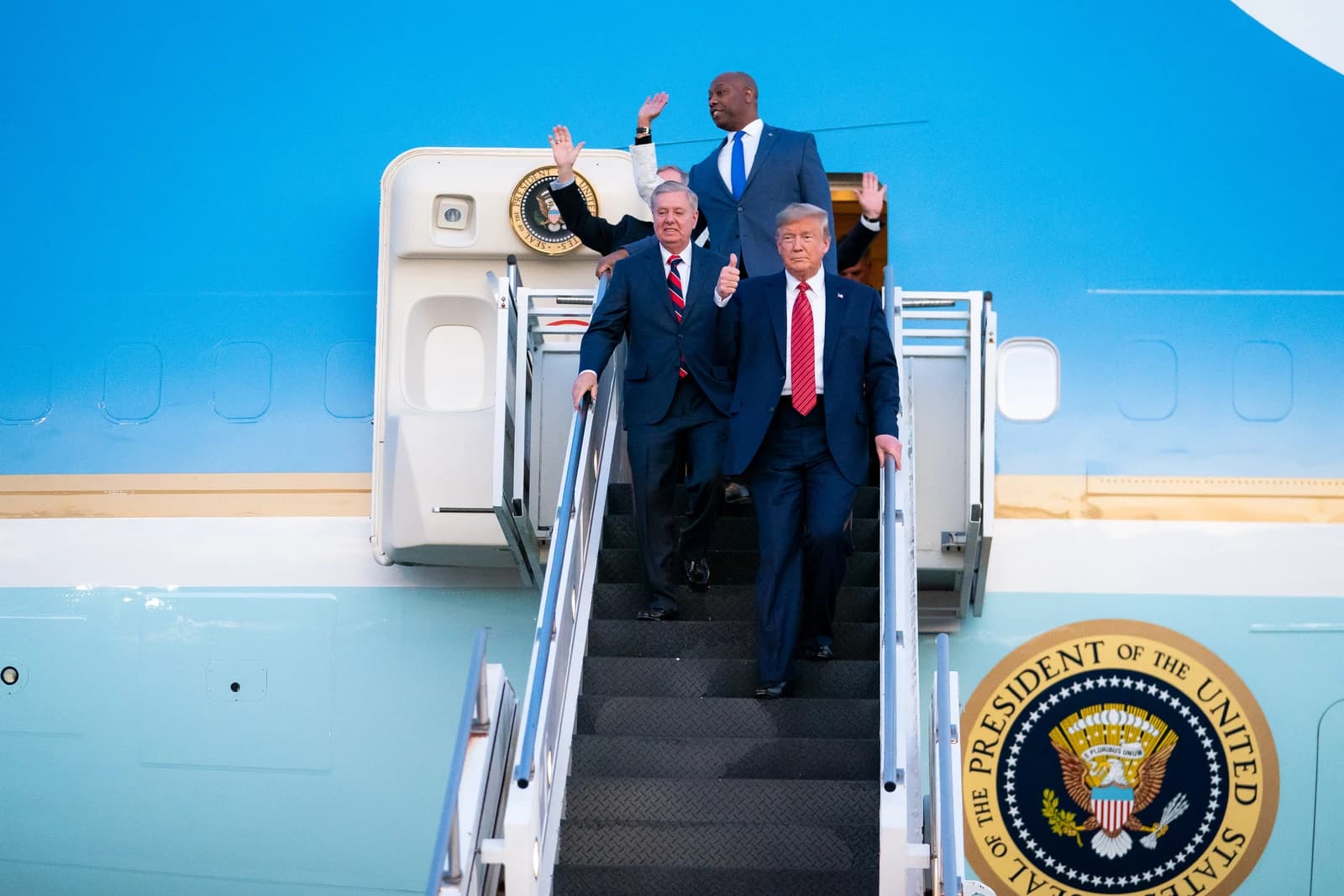
Lindsey Graham’s journey from Trump critic to one of the president’s fiercest allies is no longer just a Washington personality story — it is a market story, because the Republican coalition now looks increasingly built around personal loyalty, policy discipline and electoral control rather than old-school institutional guardrails.
That matters because when politics becomes more centralized around one figure, investors get a clearer but more volatile policy path. The result is a stronger case for Trump-linked sectors — defense, border security, energy, industrials and infrastructure — while reducing odds of a clean, predictable bipartisan bargain on taxes, trade, spending and regulation. The market has already begun pricing that in. The S&P 500, tracked by SPY, is sitting near 754.95, well above its 200-day moving average of 691.09, showing the broader market is still in an uptrend. But the message from the rally is not complacency; it is selectivity. Breadth has not been the whole story, and investors are increasingly rewarding names tied to fiscal largesse, reshoring and national-security spending.
The investment case starts with power. A political alliance like Graham’s with Trump is consequential because it helps convert personal influence into legislative leverage. That can accelerate the kind of policy mix markets understand best: tax relief, tougher borders, higher defense outlays, friendlier energy policy and a harder line on adversaries. Those are not abstract campaign talking points. They are capex catalysts. They move cash flows for defense contractors, pipeline operators, industrial suppliers, nuclear developers and domestic manufacturers that benefit when Washington prioritizes security and self-sufficiency over efficiency at any cost.
The market is already hinting at that preference. Small caps, often more sensitive to domestic policy and deregulation, have surged: IWM is at 295.99, far above its 200-day moving average of 261.04. That tells you investors are not just betting on megacap AI and index concentration. They are also positioning for a broader domestic revival if the political backdrop continues to tilt toward pro-growth, pro-onshoring policy. Even with short-term pauses in momentum, the bigger trend remains intact.
At the same time, the bond market is not fully endorsing a risk-free political setup. TLT sits at 84.47, below its 200-day moving average of 86.07, signaling that long-duration Treasuries are still under pressure. That fits the story: if Washington leans into fiscal stimulus, defense spending and tax cuts without a matching credibility play on deficits, yields can remain sticky. For investors, that is a warning not to overpay for duration and a reminder that political loyalty can be inflationary when it translates into more spending and less restraint.
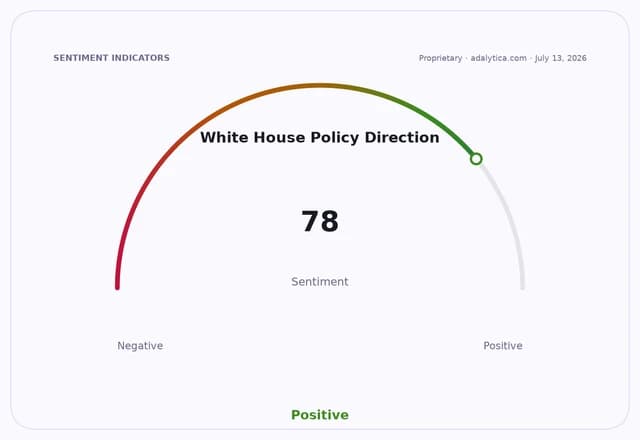
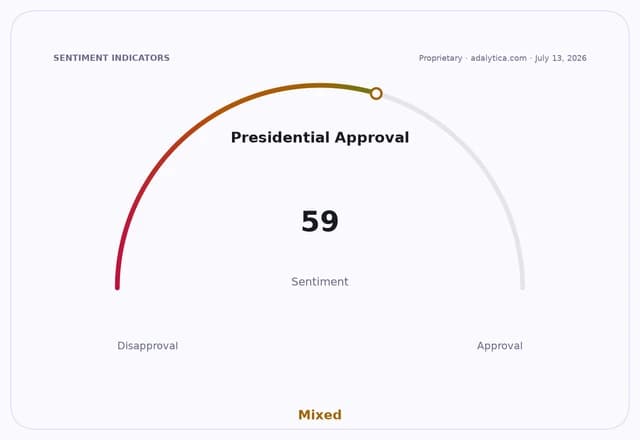
Adalytica’s U.S. White House Policy Direction Sentiment is flashing greed at 78, while awareness is still extremely low at 15, suggesting the market is aware of the policy direction but not fully positioned for the second-order beneficiaries. That is exactly where asymmetric opportunity lives. The market often prices the headline outcome — Trump gains influence, allies consolidate — before it prices the operating consequences. Those consequences include a more aggressive policy cadence, a tighter Washington message machine and a higher probability that capital flows keep rotating toward sectors that win under nationalism, industrial policy and defense-led growth.
This is why investors should think in terms of toll roads, not just headlines. If Graham’s alliance with Trump strengthens the odds of a more coherent Republican agenda, then the real winners are the companies that collect revenue regardless of the political theater: defense primes, border technology firms, energy infrastructure, domestic rail and freight, and select industrials tied to U.S. rebuilding. The losers are the usual suspects — long-duration bonds, rate-sensitive defensives and global multinationals that depend on policy stability, low tariffs and open trade lanes.
The next catalyst is not whether Trump and Graham agree on every issue. It is whether their alliance helps lock in a durable governing majority that can move bills, shape budgets and force capital to follow policy. If that happens, the trade is bigger than one friendship. It becomes a multi-year rotation into the parts of the market most exposed to the state’s spending power. For investors, the takeaway is straightforward: stay long the domestic policy winners, keep duration disciplined, and treat political loyalty in Washington as an investable macro force, not a sideshow.
| Entity | Gains | Losses |
|---|---|---|
| Defense and border-security stocks | ▲Higher spending tailwind | ▼N/A |
| Domestic industrials and energy | ▲Onshoring and fiscal support | ▼Global peers |
| Long-duration Treasuries | ▲N/A | ▼Higher-for-longer yield pressure |
| Rate-sensitive growth stocks | ▲N/A | ▼Policy uncertainty and stickier rates |