Trump Orders Cuts in U.S.-South Korea Drills
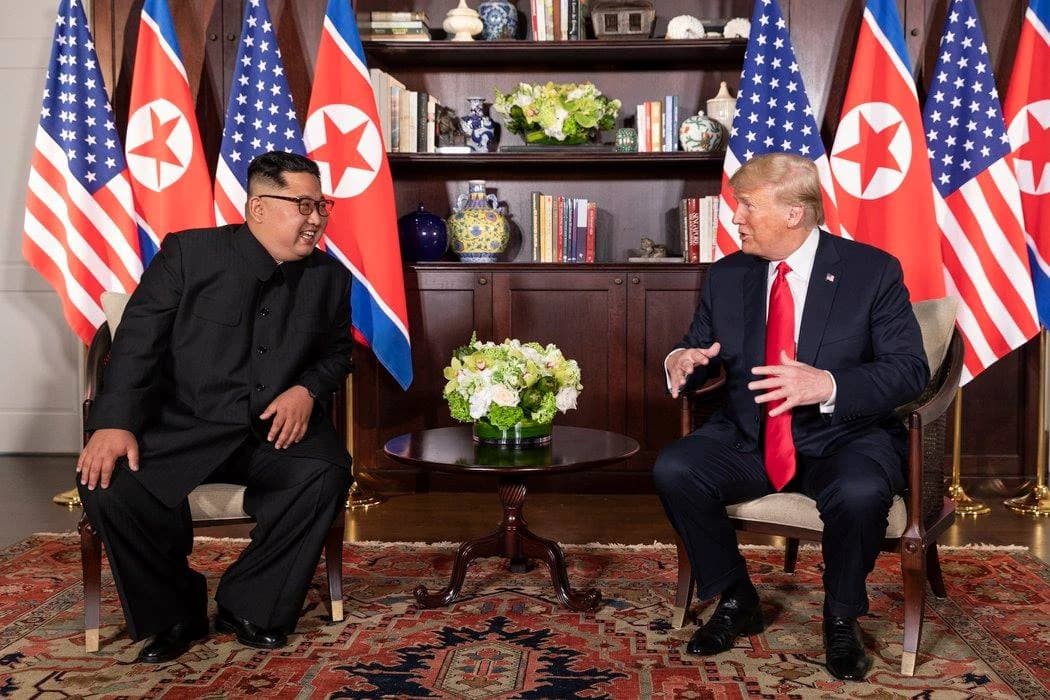
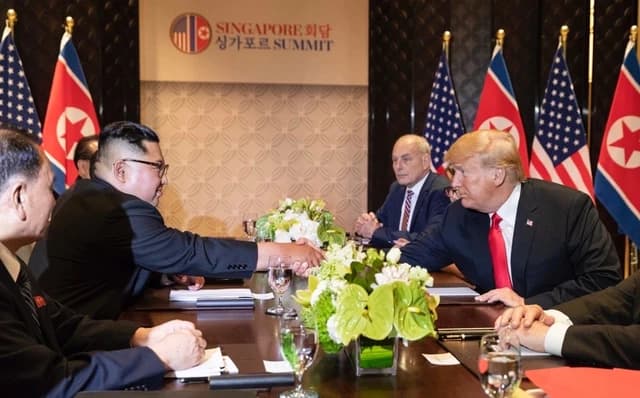
President Donald Trump said he ordered a reduction in U.S.-South Korea joint military exercises after saying he has a “very good relationship” with North Korean leader Kim Jong-un, a move that could lower immediate military tensions on the Korean Peninsula but also raises questions about deterrence and alliance management.
The shift matters because the annual drills are one of the clearest signals of U.S. readiness on the peninsula. Scaling them back may help create room for diplomacy with Pyongyang, but it also risks unsettling Seoul at a time when South Korean President Lee Jae Myung is calling for a historic dialogue with North Korea to “sit at the table to end the war” and defuse tensions.
Markets tied to Korea have already reflected the whipsaw in geopolitical risk. The iShares MSCI South Korea ETF, ticker KF, has rebounded to $64.17 after briefly sinking to $51.88 on July 29, with its 50-day moving average now at $65.99 and the RSI at 62.8, a sign the fund has recovered from an oversold stretch. Korea Electric Power Corp, ticker KEP, has also stabilized at $11.77 after plunging to $11.51 on Aug. 13 and $11.88 on Aug. 12, though it remains well below its 200-day moving average of $15.75.
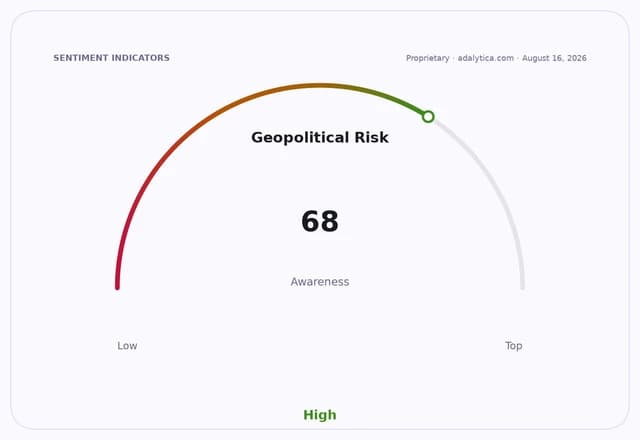
The broader geopolitical backdrop is still fragile. Adalytica’s Global Stability Sentiment gauge sits at 4, labeled “Extreme Fear,” underscoring how quickly policy headlines can swing risk appetite even as the U.S. White House policy direction snapshot shows “Extreme Greed,” reflecting market expectations that Washington may keep using foreign-policy flexibility to pursue negotiations.
For investors, the key question is whether the exercise cut becomes the start of a sustained thaw or just another episodic gesture. A durable easing in peninsula risk could support Korean equities, the won and defense-sensitive assets, while any misread by Pyongyang could reverse the move quickly and revive demand for havens and military contractors.
The next catalysts are any clarification from Seoul and Washington on the size and timing of the exercise changes, plus any response from North Korea, which will determine whether the market sees de-escalation or another round of headline-driven volatility.
| Entity | Gains | Losses |
|---|---|---|
| North Korea | ▲Diplomatic leverage | ▼U.S./ROK pressure |
| South Korea bulls | ▲Lower war-risk premium | ▼Drift in deterrence |
| Defense hawks | ▲None | ▼Fewer joint drills |
| Korea ETFs, including KF | ▲Relief rally potential | ▼Safe-haven bid fades |