Trump Delays China Tariff Announcement Before Xi Meeting

The Trump administration has delayed a planned tariff announcement on Chinese goods days before President Donald Trump is due to meet Xi Jinping, signaling a preference for leverage over escalation as Washington and Beijing try to keep trade talks alive.
The pause matters because any new duty on Chinese manufacturing capacity would risk reigniting a trade shock at a time when both sides are still working through tariffs, rare earths, technology restrictions and critical minerals. Bloomberg previously reported the administration was weighing an additional 7.5% levy on Chinese imports, which would have lifted the extra tariff burden on China to about 20% — a level Beijing has said is consistent with the trade truce framework. That is a meaningful threshold for markets because it would have turned a policy review into a fresh, across-the-board cost shock for importers, manufacturers and consumers.
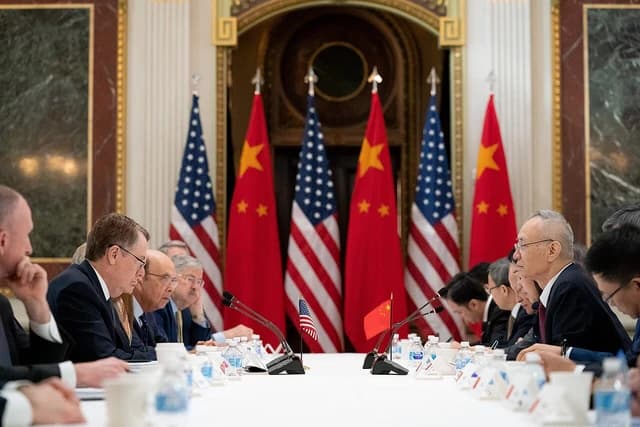
Instead, the delay suggests the White House is preserving room for a broader deal. The two sides are discussing a tariff-reduction framework covering about $30 billion of goods on each side, while U.S.-China trade still reached $400.8 billion in the first eight months of 2026, up 5.4% from a year earlier. China remains one of the largest sources of U.S. import exposure, and the tariff burden is already elevated: the Penn Wharton Budget Model put the effective U.S. rate on China at 22.8% in July, the highest among major U.S. trading partners.
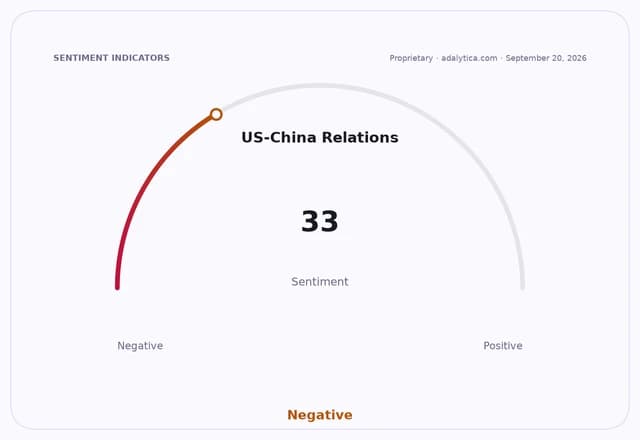
For investors, the immediate implication is less about the avoided tariff itself than about the probability of a smoother summit. Equity markets have been sensitive to tariff headlines, and the move lower in China-focused ETFs and yuan trading underscores that the market is still pricing policy uncertainty rather than a clean détente. The offshore yuan was hovering near 6.70 per dollar, while the iShares China Large-Cap ETF FXI and the MSCI China ETF MCHI have both weakened from recent levels, reflecting how quickly sentiment can deteriorate when Washington and Beijing move back toward confrontation.
That matters most for sectors with the deepest China links. Apple, Walmart, Deere and Home Depot have all flagged tariff pressure in recent filings, either through higher component costs, supply-chain disruption or retail margin risk. A new round of duties would have sharpened that squeeze. A delay, by contrast, buys time for companies to avoid repricing inventories or accelerating supplier shifts before the summit outcome is known.
The broader economic narrative is that both governments still want tariff pressure available as bargaining leverage, but neither appears eager to force a rupture before the leaders meet. U.S. trade policy has widened from China to a longer list of economies under Section 301 probes into manufacturing excess capacity, but China remains the pivotal case because of the size of the trade relationship and the overlapping disputes over advanced manufacturing, technology and strategic materials.
For markets, the key question is whether the summit produces a temporary tariff truce, a narrow framework around targeted goods, or another delay that keeps headline risk alive. For now, the administration appears to be choosing optionality over confrontation — a stance that supports risk assets in the short term, but leaves investors exposed to a sharp repricing if talks fail.
| Entity | Gains | Losses |
|---|---|---|
| Trump administration | ▲summit leverage | ▼tariff credibility |
| China | ▲avoids new duty shock | ▼negotiating pressure |
| U.S. importers | ▲lower cost risk | ▼policy uncertainty |
| China-linked equities | ▲near-term relief | ▼fragile sentiment |