Trump comments lift policy uncertainty for markets
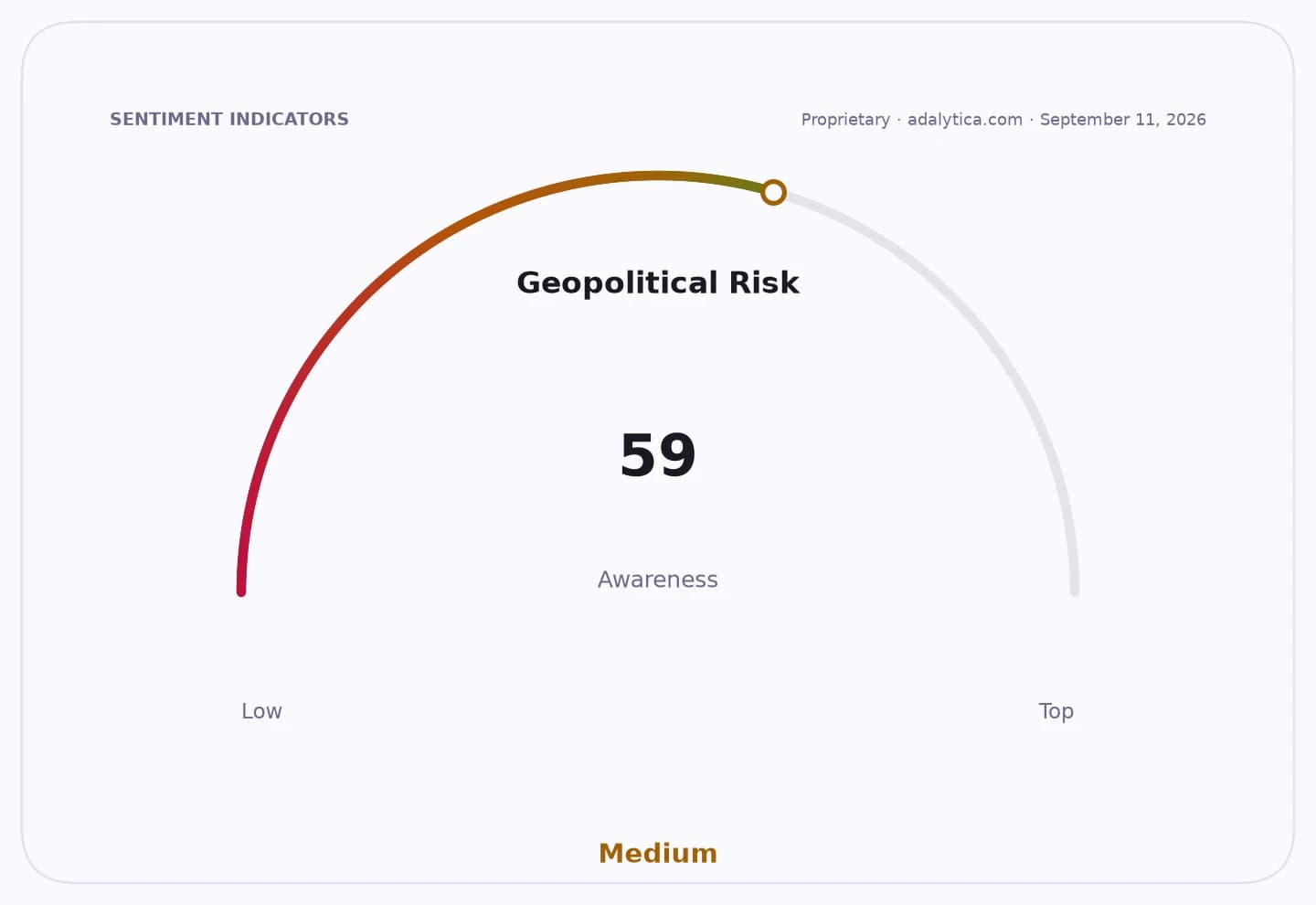
Donald Trump said the US would become “communist” if Democrats win congressional elections, sharpening a campaign message that is aimed at mobilizing Republicans but also underscores how intensely the vote is being cast as a referendum on the future direction of the economy and markets.
The economic significance lies less in the rhetoric itself than in what it signals about policy uncertainty. When a presidential race is framed around socialism versus capitalism, investors tend to focus on the odds of higher regulation, tax changes, spending plans and trade friction — all issues that can affect earnings, inflation and risk appetite. The latest warning also lands at a time when broader market gauges point to caution: Adalytica’s S&P 500 trade signals show “Extreme Fear,” while its global stability sentiment sits in the “Fear” range.
Trump made the remarks at a Republican Party gathering, saying Democrats were not simply “democratic socialists” but “communists,” and promising to “defeat communism.” That language is designed to compress a complex policy debate into a stark binary, a tactic that can help turn out voters. But it also raises the stakes for investors trying to handicap the post-election policy mix, especially if Republicans and Democrats split power and produce legislative gridlock.
The market angle is more visible in the shares of Trump Media & Technology Group, which trade under the ticker DJT. The stock closed at $8.70 on Sept. 11, well below its 50-day moving average of $9.17 and its 200-day moving average of $10.13, while RSI readings of 44.3 suggest the shares are neither deeply oversold nor in a strong uptrend. The stock has retreated sharply from recent levels above $10, reflecting how political narratives can support the name episodically without providing durable fundamental backing.
That matters because DJT has become a proxy not just for Trump sentiment but for broader expectations around the durability of his political brand and the intensity of his base. In bull cases, stronger election-driven enthusiasm can lift trading volumes and speculative interest around politically tied assets. In bear cases, repeated headline risk can revive doubts about execution, cash generation and whether the stock’s valuation is being driven more by campaign momentum than by business fundamentals.
For investors, the key question is less whether the rhetoric lands and more whether it foreshadows policy volatility after the vote. A Democratic win in Congress could mean more resistance to tax cuts, more oversight of large companies and a less predictable legislative path. A Republican sweep would raise the odds of a more pro-business agenda, but also potentially wider deficits and continued tariff and trade risk. Either way, the campaign is increasingly being priced not only as a political contest but as a market event.
The coming weeks will matter for both sentiment and positioning. If election polling tightens and the anti-communist message intensifies, politically sensitive assets may see sharper swings. If the rhetoric fails to move voters, markets may return to focusing on inflation, rates and earnings — the issues that ultimately matter more than campaign language.
| Entity | Gains | Losses |
|---|---|---|
| Trump campaign | ▲Republican turnout | ▼Policy nuance |
| Democrats | ▲Can frame rhetoric as alarmist | ▼Narrative control |
| DJT shareholders | ▲Volatility trades | ▼Fundamental visibility |
| Broad equity market | ▲Clearer election pricing | ▼Lower risk appetite |