Trump Returns to White House as Middle East Tensions Rise
Donald Trump cut short his Camp David weekend and returned unexpectedly to the White House as warnings mounted that the Middle East could be moving toward a faster, less predictable escalation.
The early return, reported by Axios and followed by a fresh U.S. State Department warning to Americans in the region, is the clearest sign yet that Washington sees the security backdrop worsening. The State Department described the environment as “complex” and said there is a risk of “unexpected escalation,” while also warning that Iran-backed Houthi fighters have carried out hostile acts against Saudi Arabia, including attacks on civilian airports, with the potential for “rapid escalation.”
The development matters because any widening of the regional conflict would carry immediate economic spillovers. Oil markets remain the most exposed, with crude traders still highly sensitive to threats to shipping lanes, Gulf infrastructure and broader supply stability. Gold has also remained a preferred haven in periods of geopolitical strain, while U.S. equities can come under pressure when investors move to price in higher energy costs, supply disruptions and a flight to safety.
Market positioning already leaves little room for complacency. SPY, the S&P 500 ETF, closed at 773.50 on Sept. 21, trading above its 50-day moving average of 758.30 and far above the 200-day average near 712.98, but its RSI reading of 56.0 suggests neither panic nor overbought extremes. GLD ended at 398.38, below its 50-day average of 393.40 and 200-day average of 416.28, while USO closed at 148.16, also below its recent highs after a strong run, leaving crude sensitive to any fresh geopolitical shock.
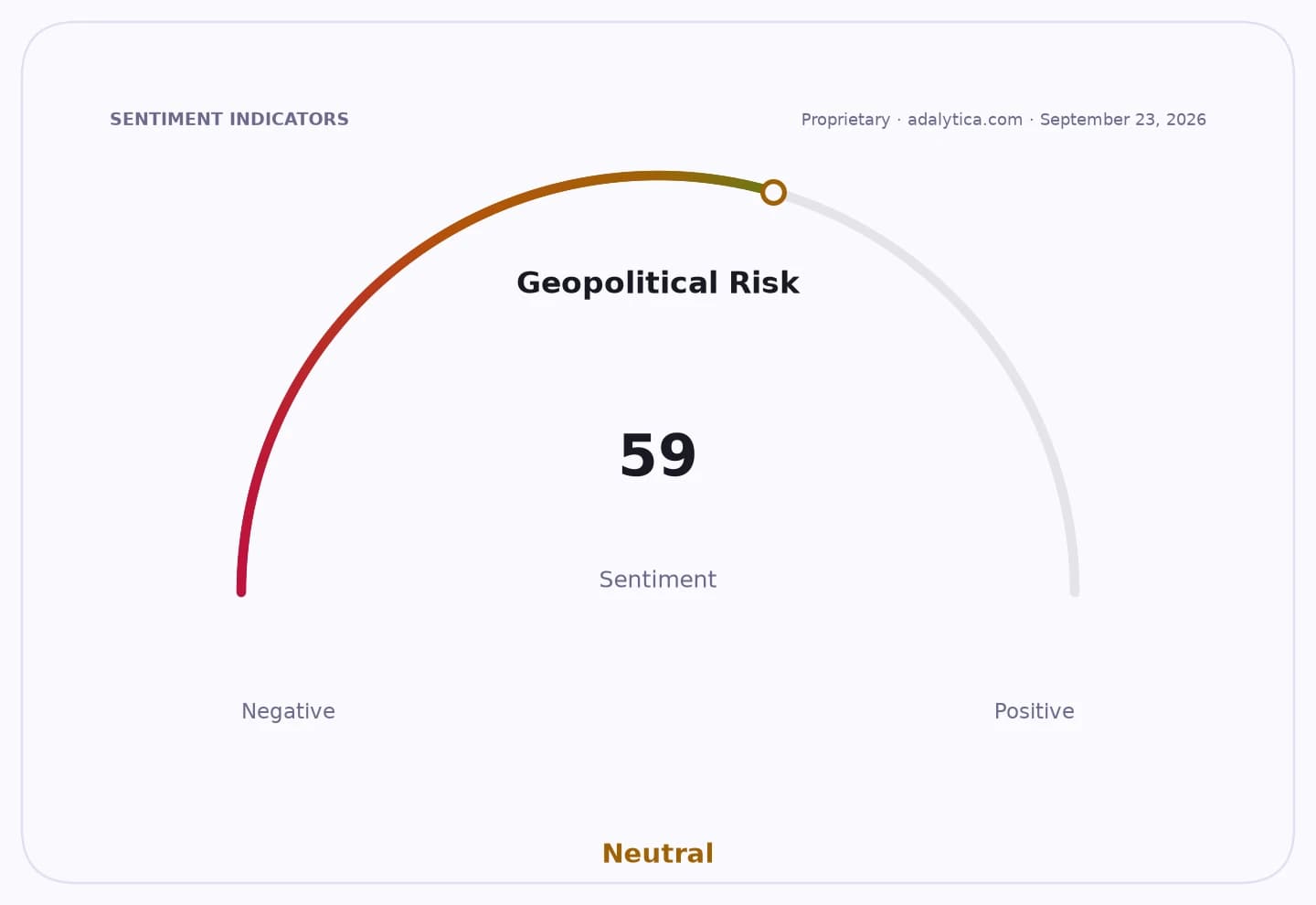
Adalytica’s Global Stability Sentiment gauge was at 59, labeled neutral, but its awareness reading of 26 carried a fear label, reflecting how quickly risk perception can shift when a U.S. president cuts a trip short amid regional tensions. The S&P 500 trade signal snapshot showed greed at 72 and extreme greed on awareness at 95, a backdrop that can amplify volatility if investors rush to de-risk.
For investors, the immediate focus is whether Washington’s move signals a more forceful response or merely precaution. Any U.S. military or diplomatic escalation in the Middle East would likely lift oil, support gold and pressure cyclicals, airlines and other energy-sensitive sectors, while adding another layer of uncertainty to an already crowded macro tape.
| Entity | Gains | Losses |
|---|---|---|
| Oil producers | ▲Higher crude prices | ▼Energy importers |
| Gold holders | ▲Haven demand | ▼Risk assets |
| U.S. government hawks | ▲Stronger deterrence posture | ▼Diplomatic flexibility |
| Airlines and consumers | ▲— | ▼Fuel costs and volatility |