TSMC Approves 900 Billion Yen Expansion Program
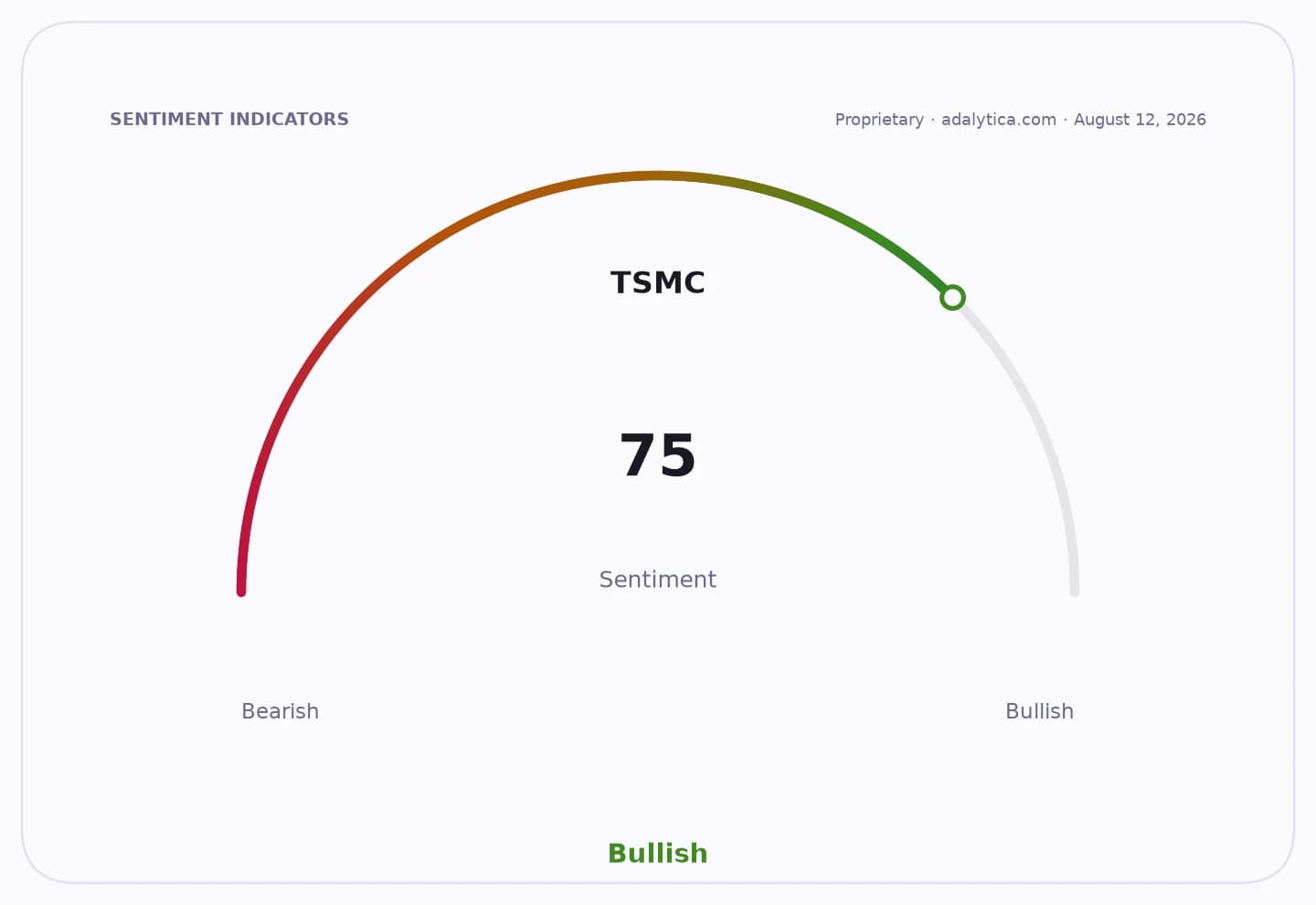
TSMC has approved a 900 billion yen, or about $29.44 billion, expansion program at the center of a global scramble for AI semiconductor capacity, a move that underscores how quickly demand for advanced chips is outpacing the industry’s manufacturing base.
For investors, the scale of the spending matters as much as the headline number. Taiwan Semiconductor Manufacturing Co. remains the critical bottleneck in AI hardware supply, producing leading-edge processors for Nvidia and other designers that are driving the current buildout in data centers, cloud infrastructure and high-performance computing. A commitment of this size signals confidence that the AI cycle is still far from mature, even after a powerful run in chip shares this year.
The expansion comes as TSMC’s own stock trades just above $422, near its 50-day moving average, while remaining well above its 200-day average around $360. The shares have recovered sharply from a late-July selloff that pushed them toward technical oversold territory, with the 14-day RSI now back near neutral at 50.4. Nvidia has also steadied after recent volatility, and the broader semiconductor ETF SOXX has rebounded to roughly $534, though it remains below its 50-day average, reflecting an industry still digesting both demand optimism and valuation risk.
The investment also adds to the capital intensity of the AI supply chain. TSMC is not simply adding capacity for one customer or one product cycle; it is expanding the ecosystem that underpins advanced logic, packaging and related manufacturing services needed for next-generation chips. That is supportive for equipment makers and upstream suppliers, including ASML, while reinforcing the market power of firms that can secure allocation at advanced nodes.
For Japan, the spending is another sign that semiconductor manufacturing is becoming a strategic industrial policy priority. TSMC has been expanding its footprint there, and the latest commitment strengthens local supply-chain resilience at a time when governments are competing to attract chip investment. For Sony Semiconductor Solutions, the related joint venture in image sensors adds a separate layer of strategic importance, tying advanced manufacturing more closely to smartphone and consumer electronics demand.
The macro backdrop is still constructive. U.S. industrial production is projected to keep inching higher, and the 10-year Treasury yield around 4.7% has not derailed the equity market’s appetite for growth and AI-linked assets. But higher rates and heavier capex bills mean investors will keep pressing for evidence that demand can justify the spending. If order growth slows or AI infrastructure customers pause, the same investments that look prudent today could pressure returns later.
For now, the message from TSMC is straightforward: the AI supply chain still needs more silicon than it can comfortably deliver. That favors foundry leaders and the most exposed chip designers, but it also raises the bar on execution, margins and capital discipline across the sector.
| Entity | Gains | Losses |
|---|---|---|
| TSMC | ▲capacity leadership | ▼higher capex burden |
| Nvidia | ▲tighter chip supply | ▼dependence on TSMC |
| Semiconductor equipment makers | ▲more tool orders | ▼cyclical demand risk |
| Late AI chip buyers | ▲eventual supply relief | ▼near-term allocation pressure |