TSMC’s plan to pour another $100 billion into its Arizona fabs is more than a capacity expansion: it signals that the world’s most important chip foundry is moving from a cautious U.S. foothold to a much larger strategic commitment just as Washington pushes to rebuild domestic semiconductor supply chains.
TSMC Arizona Expansion Deepens U.S. Chip Commitment
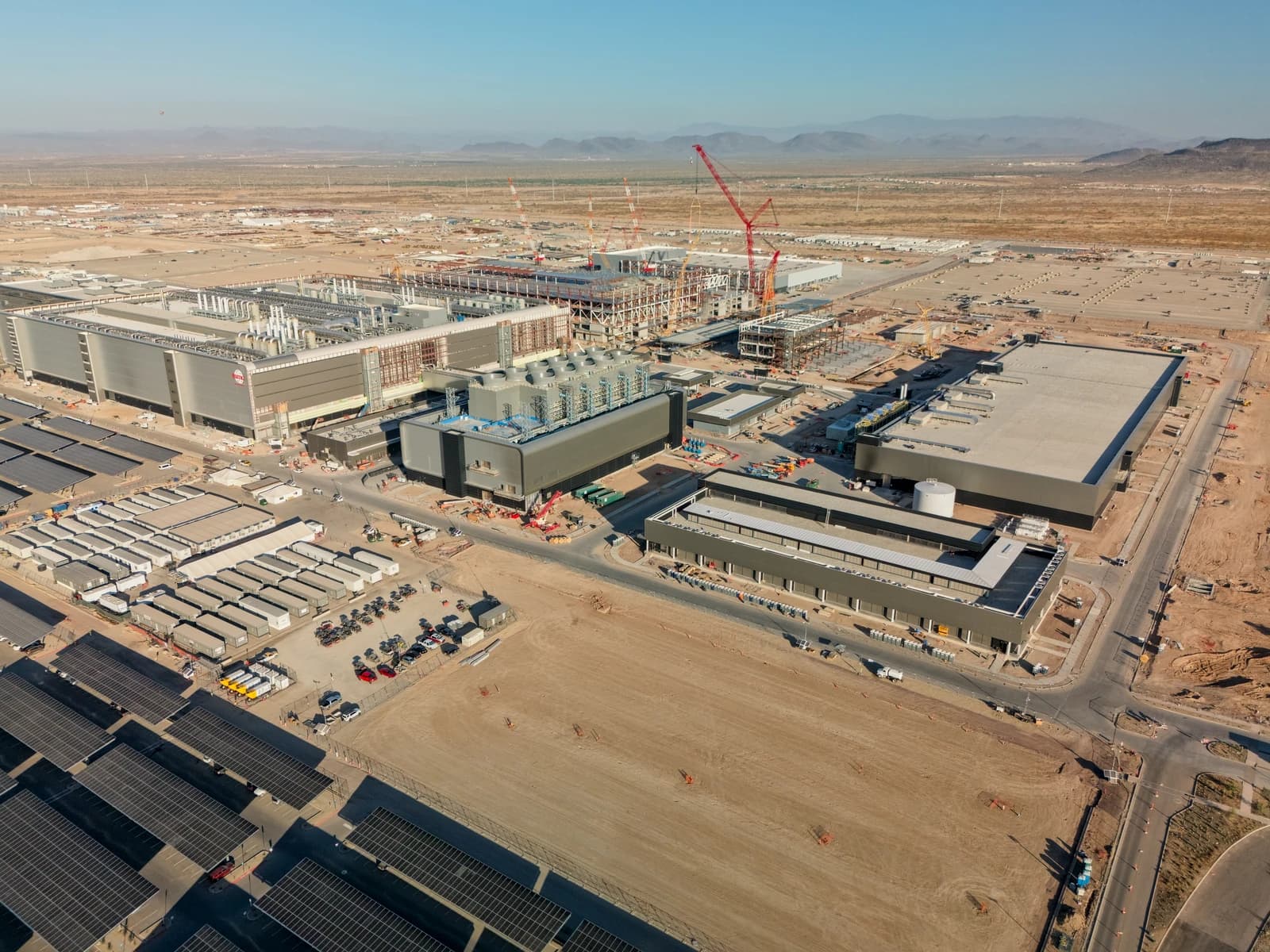
The investment matters because advanced chips sit at the center of AI infrastructure, defense electronics and high-end consumer computing, and the United States has been trying to reduce reliance on Asian production after the supply shocks of the pandemic and rising tensions with China. A larger Arizona buildout would give U.S. customers a more resilient source of leading-edge wafers, while also locking in more of the value chain onshore.
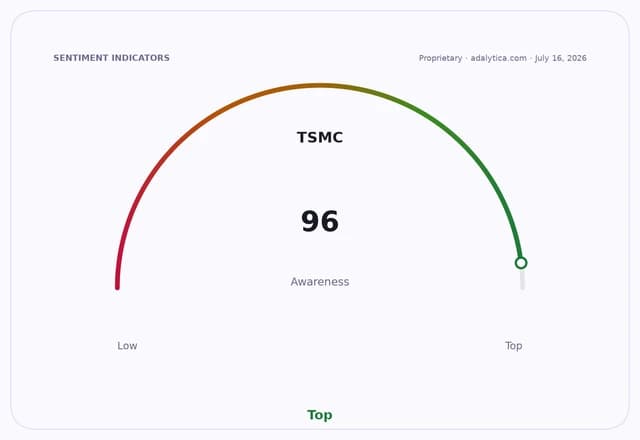
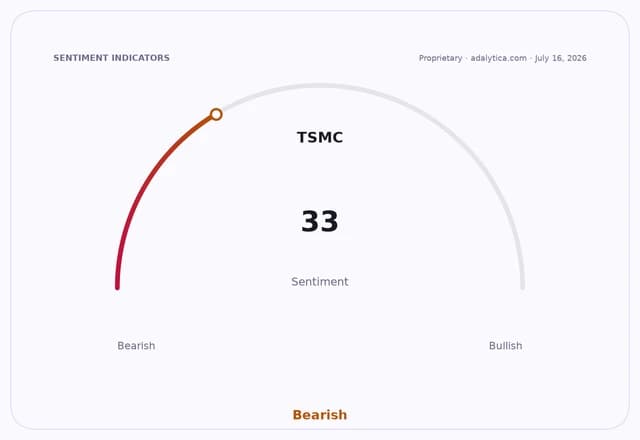
Sentiment IndicatorsⓘProprietary · adalytica.com · July 16, 2026
This is a snapshot — live sentiment, awareness and momentum for 130+ markets update continuously in the dashboard.Open AlphaPulse
For investors, the announcement is a reminder that TSMC’s growth story is increasingly tied to capital intensity as much as demand. The company is coming off strong revenue momentum, with June sales up 67.9% from a year earlier, underscoring that the spending is being funded by powerful end-demand rather than balance-sheet strain. But the scale of the commitment also raises questions about returns, execution and margin durability as TSMC ramps a more complex manufacturing footprint outside Taiwan.
The market’s read has been mixed. TSMC shares have traded well above their 50-day average in recent months, but the stock has also shown volatility around the announcement, with technical indicators such as RSI retreating from overbought levels, suggesting some investors are already weighing enthusiasm for U.S. expansion against the burden of multibillion-dollar capital outlays. The shares remain far above longer-term moving averages, reflecting confidence in the AI cycle and TSMC’s pricing power, but the path higher now depends on how quickly Arizona capacity can be brought online and absorbed by customers.
Nvidia, TSMC’s largest and most strategically important customer, stands to benefit if U.S.-based supply reduces bottlenecks for AI accelerators and related packaging demand. That matters because Nvidia’s valuation still rests on sustained access to advanced foundry capacity. Intel, by contrast, faces a more difficult competitive backdrop: a larger TSMC presence in Arizona strengthens the case for the U.S. as a semiconductor hub, but it also increases the pressure on Intel’s own foundry ambitions to prove they can match TSMC on scale, yield and customer trust.
The geopolitical significance is equally clear. Taiwan remains the core of global advanced chip production, but every additional dollar TSMC invests in Arizona broadens the company’s exposure to U.S. policy priorities and makes its manufacturing map more diversified. That may be welcomed in Washington and by customers seeking supply-chain security, but it also underscores the strategic trade-off for Taiwan, which risks seeing some of its crown-jewel manufacturing capacity gradually internationalized.
The key question for investors is whether the Arizona expansion becomes a margin-dilutive obligation or a premium-priced strategic asset. If demand from AI, high-performance computing and automotive clients remains strong, the U.S. fabs could command longer-term relevance and support a valuation premium. If execution slips or utilization lags, the project could weigh on returns even for an industry leader with unmatched scale.
What to watch next is whether TSMC translates the investment into firm customer commitments, faster deployment schedules and clearer visibility on subsidies, tax benefits and local operating costs. For now, the message is that the chip supply chain is becoming more geographically fragmented, and TSMC is the company most responsible for making that transition real.
| Entity | Gains | Losses |
|---|---|---|
| TSMC | ▲U.S. manufacturing presence | ▼Higher capital intensity |
| Nvidia | ▲More secure chip supply | ▼Less supply-chain concentration risk |
| Intel | ▲U.S. chip ecosystem gains | ▼Tougher foundry competition |
| U.S. policymakers | ▲Domestic semiconductor capacity | ▼Less dependence on Taiwan |