TSMC August revenue hits record on AI demand
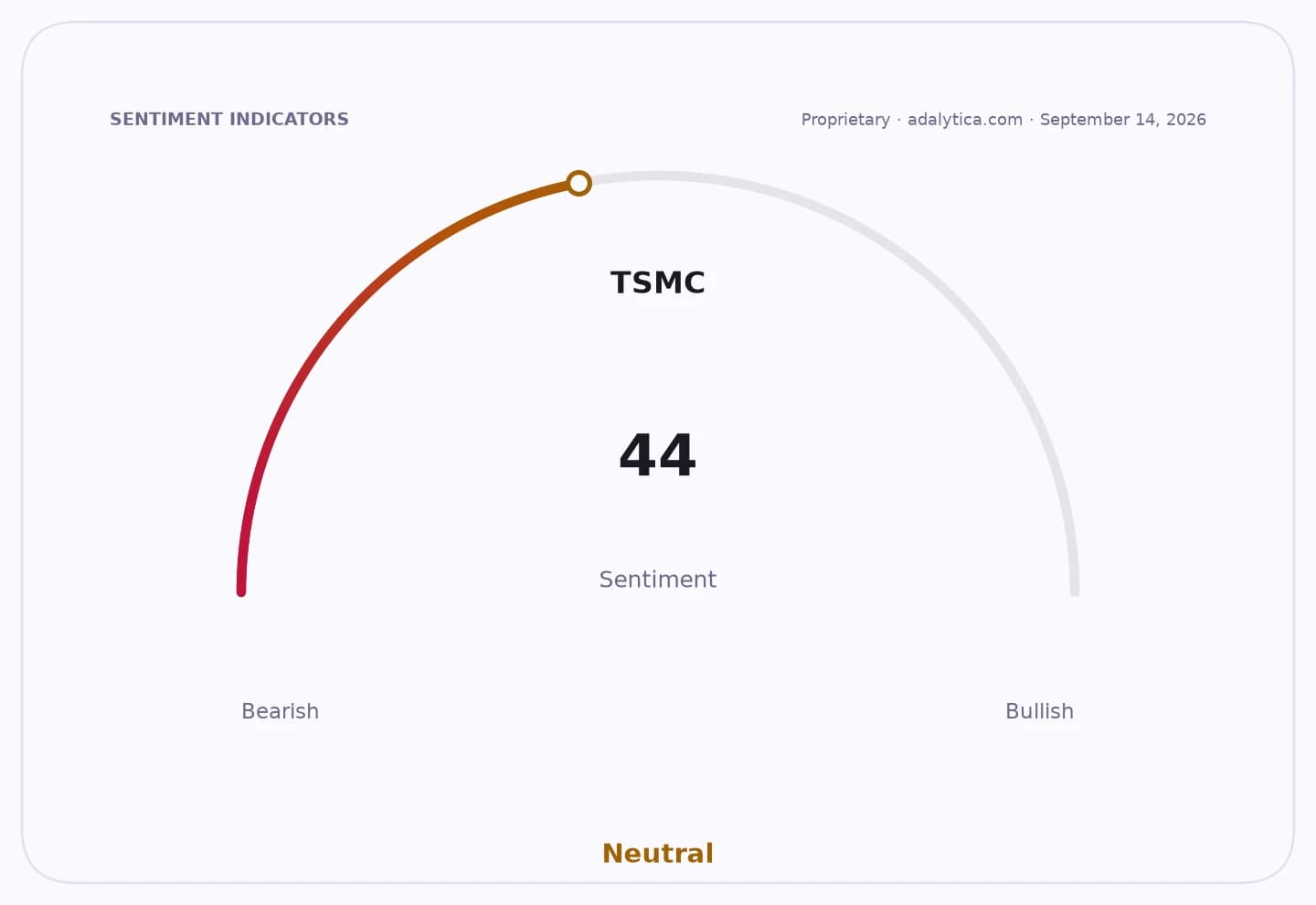
Taiwan Semiconductor Manufacturing Co. said August revenue rose to a record on strong demand for AI chips and smartphones, underscoring that the world’s largest contract chipmaker is still benefiting from the spending cycle that has powered the semiconductor rally.
The company booked NT$514.81 billion, up 10.1% from July and 33.8% from a year earlier, taking sales for the first eight months of 2026 to NT$3.39 trillion, also a record. For investors, the numbers matter because they suggest that demand for advanced nodes remains firm even as the market has grown more selective about which chipmakers can sustain AI-driven growth.
TSMC’s August performance reinforces the idea that AI infrastructure spending is still flowing through the supply chain, with advanced packaging and leading-edge wafer capacity remaining the bottlenecks rather than end-demand. That matters economically because TSMC sits at the center of the global electronics complex: when its revenue accelerates, it usually signals stronger production schedules for data-center accelerators, premium smartphones and other high-end devices that depend on its most advanced processes.
The report also helps explain why semiconductor shares have remained volatile even in a structurally strong market. TSMC’s U.S.-listed shares closed at $421.19 on Sept. 14, above the 200-day moving average of about $375.68 but just under the 50-day average near $418.68, suggesting the stock remains in an uptrend but is no longer in the kind of momentum phase that characterized earlier AI rallies. By contrast, Nvidia, TSMC’s biggest AI customer, has seen its own share price cool after a strong run, with traders now looking for confirmation that hyperscale spending will keep translating into orders.
That confirmation is especially important because the semiconductor cycle is now more uneven than the broad AI narrative suggests. AI servers are still soaking up capacity, but smartphone demand remains a secondary support rather than the main engine, which means TSMC’s growth still depends on a relatively narrow set of premium products and customers. The bull case is that this concentration gives TSMC pricing power and visibility into a multi-year AI buildout. The bear case is that if AI capex slows or product ramps slip, the company’s growth rate can decelerate quickly even if overall chip demand stays healthy.
For investors, the August figures keep TSMC at the center of the AI trade while also highlighting how dependent the broader sector remains on one foundry’s execution. The next test will be whether third-quarter revenue and management commentary show that August was a one-off spike or part of a broader stretch of sustained demand into year-end.
| Entity | Gains | Losses |
|---|---|---|
| TSMC | ▲Record revenue growth | ▼Capex pressure |
| AI chip customers | ▲Secured wafer supply | ▼Higher foundry costs |
| Smartphone makers | ▲Stable advanced-node access | ▼Margin pressure |
| Nvidia rivals / shorts | ▲Cooling valuation extremes | ▼Confirmation of AI strength |