TSMC, Lockheed, Northrop cited in Western Pacific risk trade
The deepening Russia-China alignment and renewed focus on Taiwan’s militarization are reinforcing a world in which geopolitical risk is no longer a background variable — it is becoming a market input, and investors are still underpricing the winners from that shift.
That matters because the trade is not just about rhetoric. It is about capital moving toward rearmament, supply-chain redundancy and strategic technology, while away from the assumption that the Pacific can be treated as a low-volatility manufacturing corridor. The result is a stronger case for defense contractors, missile-defense suppliers, cyber and space names, and selected Asian assets that benefit from security spending even as broader regional risk rises.
Oil is also part of the macro transmission. U.S. crude has been volatile, recently trading above $109 a barrel before easing back toward the mid-$80s, a reminder that geopolitical shocks can still push up energy costs quickly. In a tighter world, the inflation impulse from shipping disruption, sanctions risk or a Taiwan Strait crisis would flow straight through to rates, margins and central-bank policy. That makes the 10-year U.S. Treasury yield near 4.65% especially important: it leaves little room for another inflation shock without repricing equities, especially duration-sensitive growth stocks.
The market reaction in equities already shows where money is trying to hide and where it is being bid for exposure. Taiwan Semiconductor Manufacturing Co. has held above its 200-day moving average after a sharp recovery, with shares around $418.47 on Monday following a summer slide and rebound. The stock remains one of the cleanest ways to own the AI and advanced-chip supply chain, but it also sits at the center of any Taiwan escalation scenario. Samsung Electronics-linked exposure, through EWY, has been more erratic, but the South Korea ETF’s rebound from recent lows reflects the same investor instinct: buy the industrial backbone of Asian tech, even if the geopolitical premium is rising.
Our thesis is that the market underestimates how quickly militarization in the Western Pacific can turn into a multi-year capex cycle. The U.S. and its allies are already signaling that elevated tensions are no longer temporary. Northrop Grumman and Lockheed Martin have both told investors in recent filings that the global security environment has become more demanding, with the Pacific among the critical theaters. That is the setup for a sustained procurement wave in air defense, sensors, munitions, space systems and autonomous platforms.
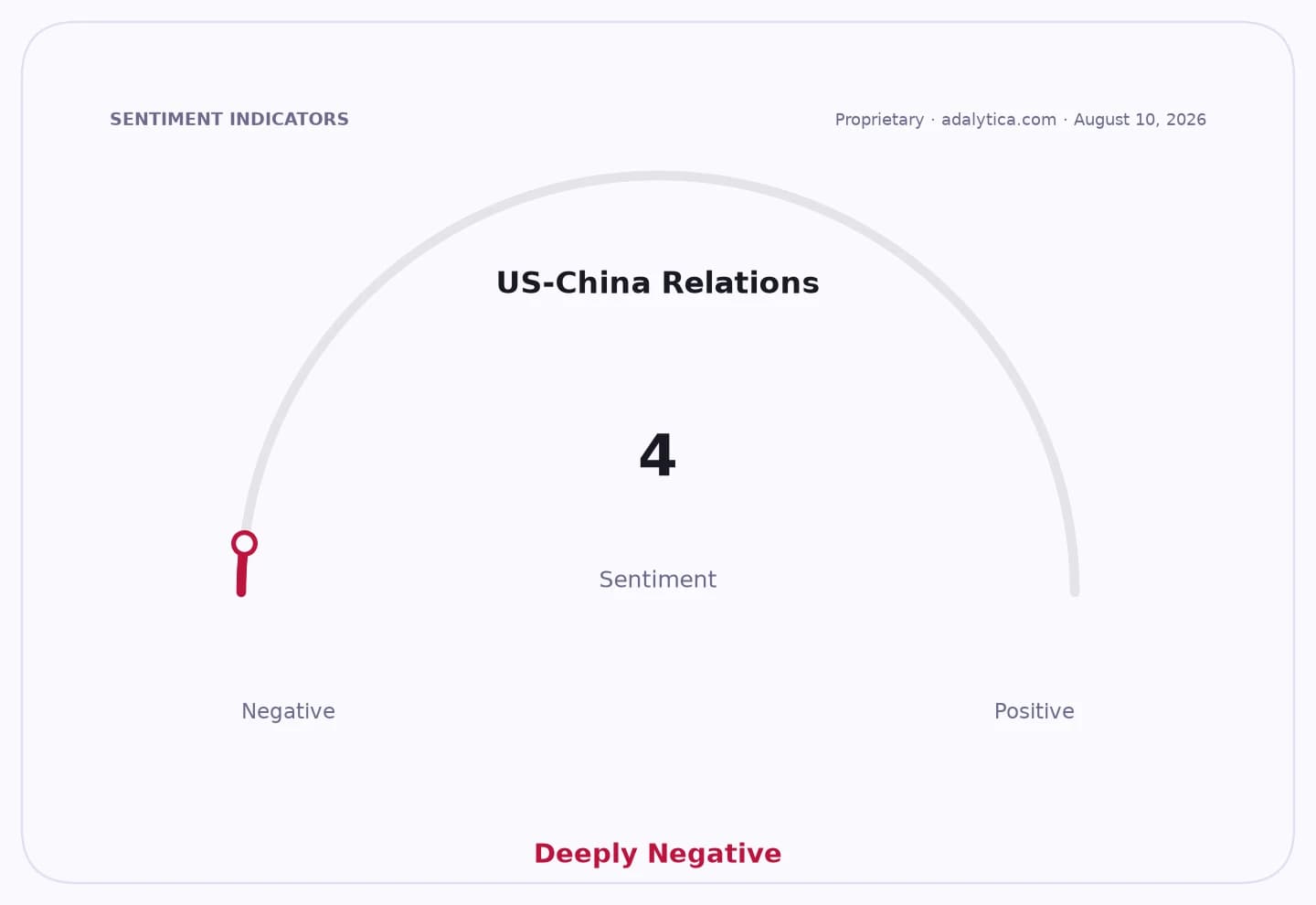
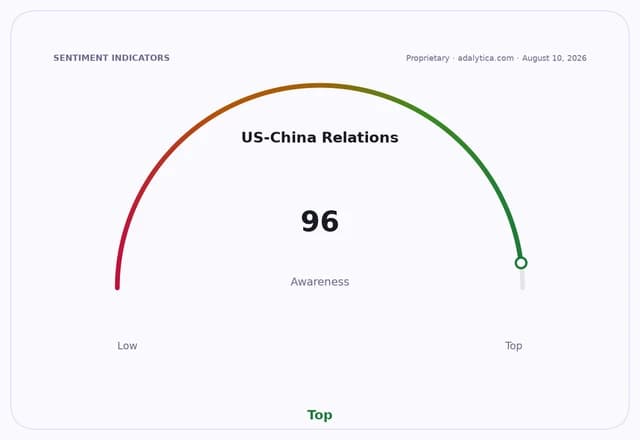
The biggest opportunity, in our view, is not in trying to predict the next headline from the South China Sea or Taiwan. It is in owning the toll roads of the new order. That means TSMC for the semiconductor supply chain, defense primes such as LMT and NOC for rearmament, and selective Asia ex-Japan ETFs only if you can tolerate volatility and own them for the industrial and technology upside rather than for calm. The Adalytica US-China Relations Sentiment gauge has dropped to Extreme Fear, even as awareness stays at Extreme Greed, a classic sign that the story is fully on investors’ radar but not yet fully reflected in positioning.
If tensions keep rising, the next catalyst is likely to come from procurement, sanctions, export controls or a fresh maritime confrontation. Any of those would accelerate spending on chips, weapons and energy security, while rewarding companies that sit inside the strategic bottlenecks. For investors, this is a moment to lean into the infrastructure of deterrence, not the illusion of de-escalation.
| Entity | Gains | Losses |
|---|---|---|
| Lockheed Martin / Northrop Grumman | ▲Higher defense procurement | ▼Budget pressure if delays persist |
| TSMC | ▲Strategic chip demand | ▼Taiwan war-risk discount |
| Oil producers | ▲Geopolitical risk premium | ▼Demand hit if growth slows |
| Asia exporters / importers | ▲— | ▼Higher shipping and insurance costs |