TSMC Stabilization Fund Gains NT$7.7 Billion on Intervention
Taiwan Semiconductor Manufacturing Co.’s contribution helped a market stabilization fund book a net NT$7.7 billion gain from intervention, underscoring how the island’s biggest company is being pulled into a broader effort to steady markets amid volatile currency moves and shifting interest-rate expectations.
The size of the gain matters because TSMC is not just Taiwan’s most important listed company; it is the anchor of the local equity market, a major source of foreign inflows and a bellwether for semiconductor demand. When a stabilization fund is able to net that much from intervention, it suggests official support has been active and, at least for now, effective in absorbing pressure from traders trying to exploit currency and market swings.
For investors, the key issue is less the accounting gain than what it says about the market environment around TSMC. The stock has been volatile even as the company remains fundamentally strong, with the shares closing at NT$418.2 on Aug. 6, above both the 50-day moving average and the 200-day moving average, but still below recent highs after a sharp pullback in late July. Standard technical indicators show momentum improving from oversold levels, with the relative strength index recovering from 22.9 on July 29 to 57.9 by Aug. 6, while the MACD has turned less negative. That points to stabilization rather than a clean breakout.
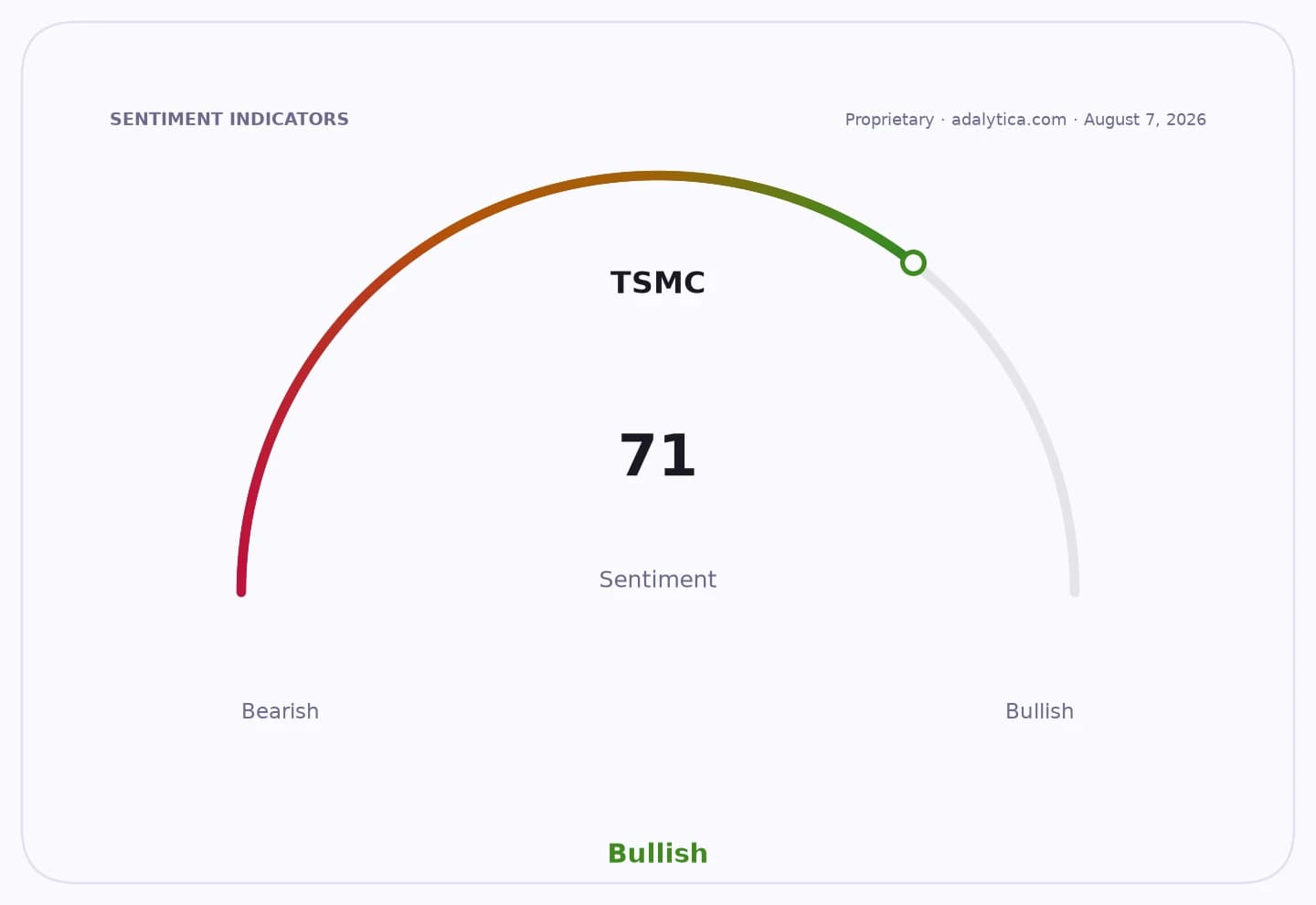
The broader backdrop is a cross-current between corporate strength and macro caution. TSMC’s own revenue has been running strongly, and sentiment around the stock in Adalytica’s TSMC Earnings Sentiment gauge remains elevated at 71, even as awareness is still in “Extreme Fear,” reflecting how quickly conviction can change in a market sensitive to policy and currency shifts. In other words, investors are still attracted to TSMC’s earnings power, but they are also demanding a risk premium for intervention-heavy conditions and global rate uncertainty.
That combination matters for Taiwan’s market structure. TSMC’s weight means any intervention-linked flow can affect not only the stock itself but also the broader Taiwan equity complex, the local currency outlook and foreign investor positioning across semiconductors. A stabilization fund profit does not remove the underlying issue: if market support is needed, officials are signaling that volatility remains a policy concern, and traders will keep watching for further action.
The near-term focus will be whether the intervention backdrop fades as currency markets calm, or whether renewed pressure forces more support. For TSMC holders, that means the fundamental story remains intact, but the trading environment may stay dominated by macro flows rather than earnings alone.
| Entity | Gains | Losses |
|---|---|---|
| TSMC / stabilization fund | ▲NT$7.7 billion net gain | ▼Exposed to policy-driven volatility |
| Taiwan market authorities | ▲Short-term market support | ▼Larger intervention burden |
| Long-only TSMC investors | ▲Stabilized price action | ▼FX and rate uncertainty |
| Short sellers / volatility traders | ▲Fewer disorderly moves | ▼Less downside momentum |