TSMC Supply Chain Gains Taiwan Tube Production
TSMC’s push to localize one of chipmaking’s most specialized components is a small headline with an outsized strategic payoff: it reduces dependence on imported materials, hardens Taiwan’s semiconductor supply chain and gives the world’s most important foundry another layer of resilience as geopolitical risk and export scrutiny intensify.
Nichias’ plan to build the key “tubes” used in chip production in Taiwan matters because the semiconductor industry’s bottlenecks are no longer just in lithography tools or wafers. Every added domestic source for ultra-clean, high-spec parts shortens lead times, reduces cross-border shipping risk and makes it harder for disruptions — whether from trade controls, shipping delays or Taiwan Strait tensions — to ripple through advanced-node manufacturing. For TSMC, whose plants sit at the center of the global AI buildout, supply assurance is now a competitive advantage, not just an efficiency gain.
The move also fits a broader pattern: Taiwan is tightening control over the technology ecosystem around TSMC at the same time it is investing more heavily in defense and policing illegal chip flows to China. That combination underscores how semiconductor supply chains have become part industrial policy, part national security strategy. In this environment, manufacturers that can localize critical inputs are likely to gain pricing power, better delivery reliability and more bargaining leverage with customers racing to secure AI capacity.
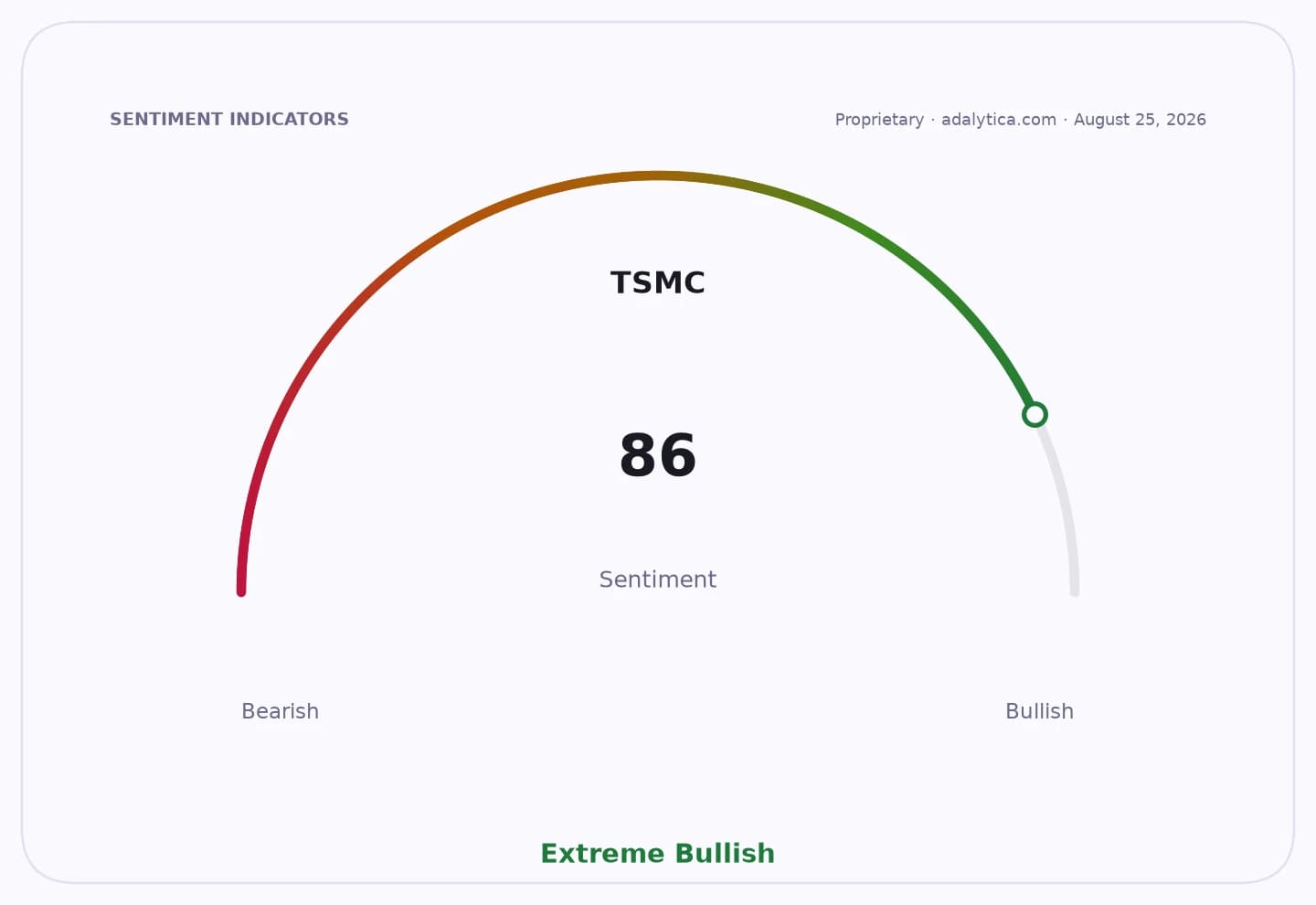
Investors should read this as another reason the Taiwan chip complex remains one of the strongest long-term beneficiaries of the AI capex cycle. TSMC has already been rewarded by the market for its central role in advanced packaging and leading-edge logic production, and the shares still trade with momentum even after recent swings. Its conventional technical indicators show the stock holding above its 200-day moving average, while the 50-day average remains a key support line. That suggests the market continues to value the company as a core toll road in AI infrastructure, even as near-term sentiment cools from overheated levels.
The second-order winners are the suppliers that make the ecosystem more self-contained: equipment makers, materials vendors and specialty industrial firms tied to Taiwan expansion. Applied Materials and Lam Research remain levered to every incremental fab build-out, but the more important theme is that localization spending has to go somewhere — into tools, subassemblies, chemicals and cleanroom infrastructure. That creates a durable capex tailwind that the market often underestimates because it looks incremental rather than explosive.
My thesis is simple: the market is still pricing TSMC and its supply chain as a cyclical semiconductor trade, when in reality they are becoming strategic infrastructure for the AI era. Nichias building these tubes in Taiwan is not just a procurement decision; it is another step in the island’s conversion from manufacturing hub to geopolitical fortress. For long-term investors, that favors owning the picks-and-shovels around Taiwan semiconductor resilience before the next wave of AI and defense spending fully shows up in earnings.
| Entity | Gains | Losses |
|---|---|---|
| TSMC | ▲Supply resilience | ▼Import dependency |
| Nichias | ▲Local Taiwan demand | ▼Cross-border logistics risk |
| Applied Materials | ▲Taiwan fab capex | ▼Supply-chain bottlenecks |
| China chip buyers | ▲— | ▼Tighter Taiwan controls |