TTF gas stays around 61 euros
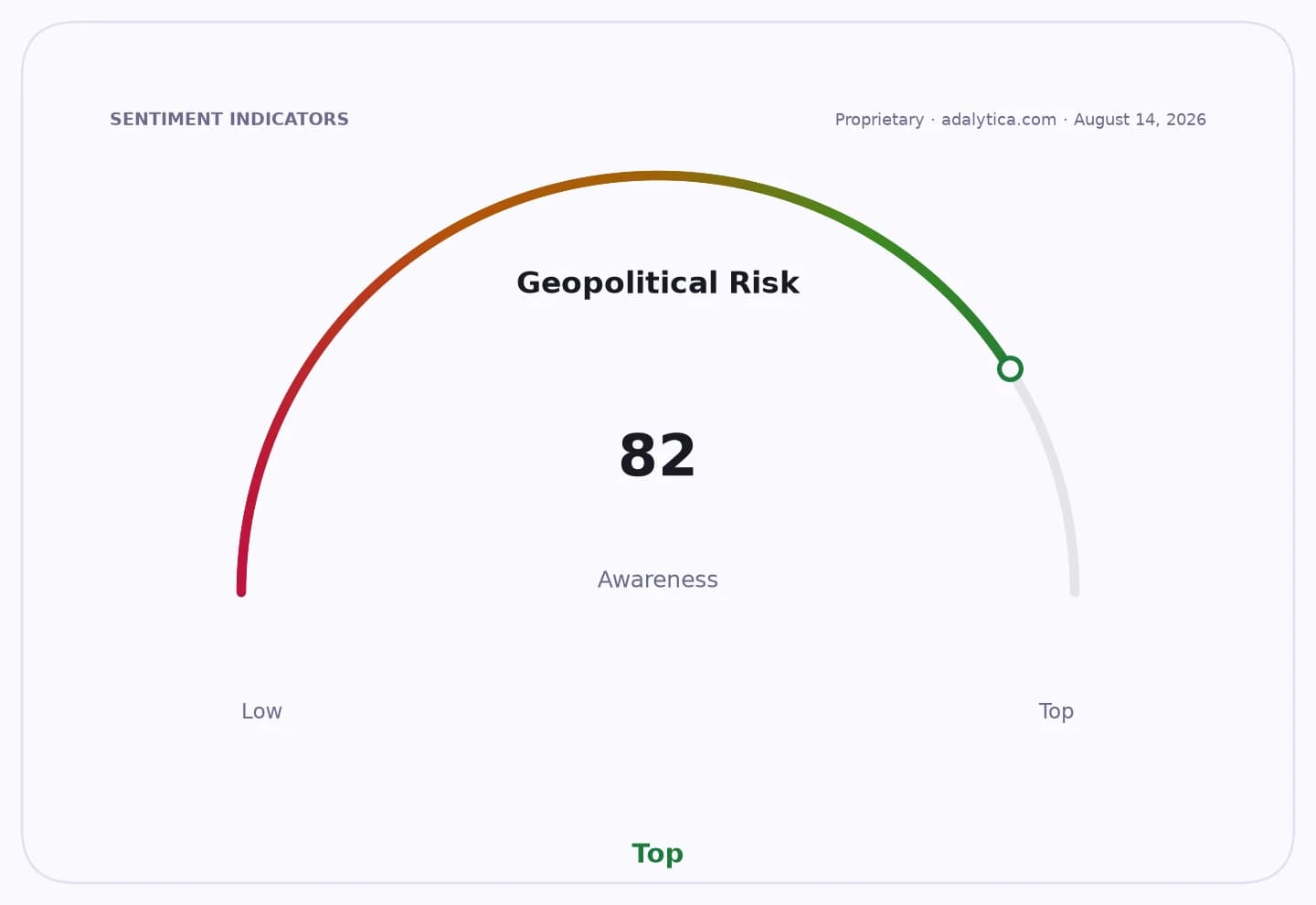
Gas prices on Amsterdam’s TTF benchmark are still hovering around 61 euros, a level that tells investors Europe’s energy market has not fully normalized even as the most immediate panic has faded.
That matters because natural gas remains the region’s most sensitive inflation valve. When TTF stays elevated, it feeds directly into power costs, industrial margins and household bills across the continent, keeping pressure on policymakers and limiting how much relief European consumers can get from softer headline inflation. It also keeps a floor under LNG imports, transport rates and storage economics as the market moves toward the colder months.
The broader signal is that energy volatility is still being priced as a macro risk, not just a commodity swing. Adalytica’s Global Stability Sentiment gauge has dropped sharply in recent days, a reminder that geopolitical unease is still enough to ripple through fuel markets. U.S. crude futures have also climbed from early-August lows, while Henry Hub gas remains far below Europe’s benchmark, underscoring how regional supply dynamics continue to shape the winners and losers.
For investors, that makes the setup more nuanced than a simple “lower energy prices” trade. European utilities, LNG infrastructure owners and gas shippers can still benefit from persistent pricing power and elevated utilization, while energy-intensive manufacturers, chemicals producers and import-dependent economies remain exposed to margin compression if TTF stays sticky. In the U.S., the gap between relatively cheap domestic gas and Europe’s higher prices keeps export-linked LNG names in focus.
The market is also telling us that geopolitical headlines still matter. With Washington openly prioritizing low fuel prices amid Middle East tensions, any fresh disruption could quickly reprice European gas and reset expectations for winter inventories. My view is that investors should keep treating European gas as a live macro trade: the easy money may have been made, but the next move in TTF could still decide who has pricing power and who gets squeezed.
| Entity | Gains | Losses |
|---|---|---|
| LNG exporters | ▲Higher arbitrage spreads | ▼Domestic buyers |
| European utilities | ▲Pass-through pricing power | ▼Energy-intensive industry |
| Gas producers | ▲Stronger regional pricing | ▼Import-dependent countries |
| Consumers in Europe | ▲None | ▼Higher household bills |