Turkey Central Bank Sees 28% Inflation in 2026
Turkey’s central bank is signaling that inflation will still be running at 28% at the end of 2026, a warning that price pressures remain entrenched enough to keep real rates high, borrowing costs elevated and the lira vulnerable.
That matters because a 28% year-end inflation path leaves policymakers with little room to ease without risking another inflation flare-up. For the economy, it means households and businesses are still facing punishing financing conditions, while any attempt to cut rates too soon would risk undoing the central bank’s credibility gains. For investors, the message is equally clear: Turkey remains a high-carry, high-volatility market where the reward for local bonds and the currency is inseparable from the risk of policy missteps.
The forecast also helps explain why Turkish assets continue to trade as a macro bet rather than a straightforward growth story. With inflation still projected far above the policy rate, the central bank is effectively keeping monetary conditions restrictive to anchor expectations. That supports the case for inflation-linked paper and short-duration exposures, but it also argues for caution on long-dated lira assets until there is clearer evidence that price growth is breaking decisively lower.
The broader backdrop is not helping. Global investors are already on edge about sticky inflation in the U.S. and the prospect of higher-for-longer rates, which has pushed American capital market yields up to 4.71%. In that environment, emerging markets like Turkey have less room for error: any doubt about disinflation can trigger capital outflows, pressure the currency and force policymakers to stay tighter for longer.
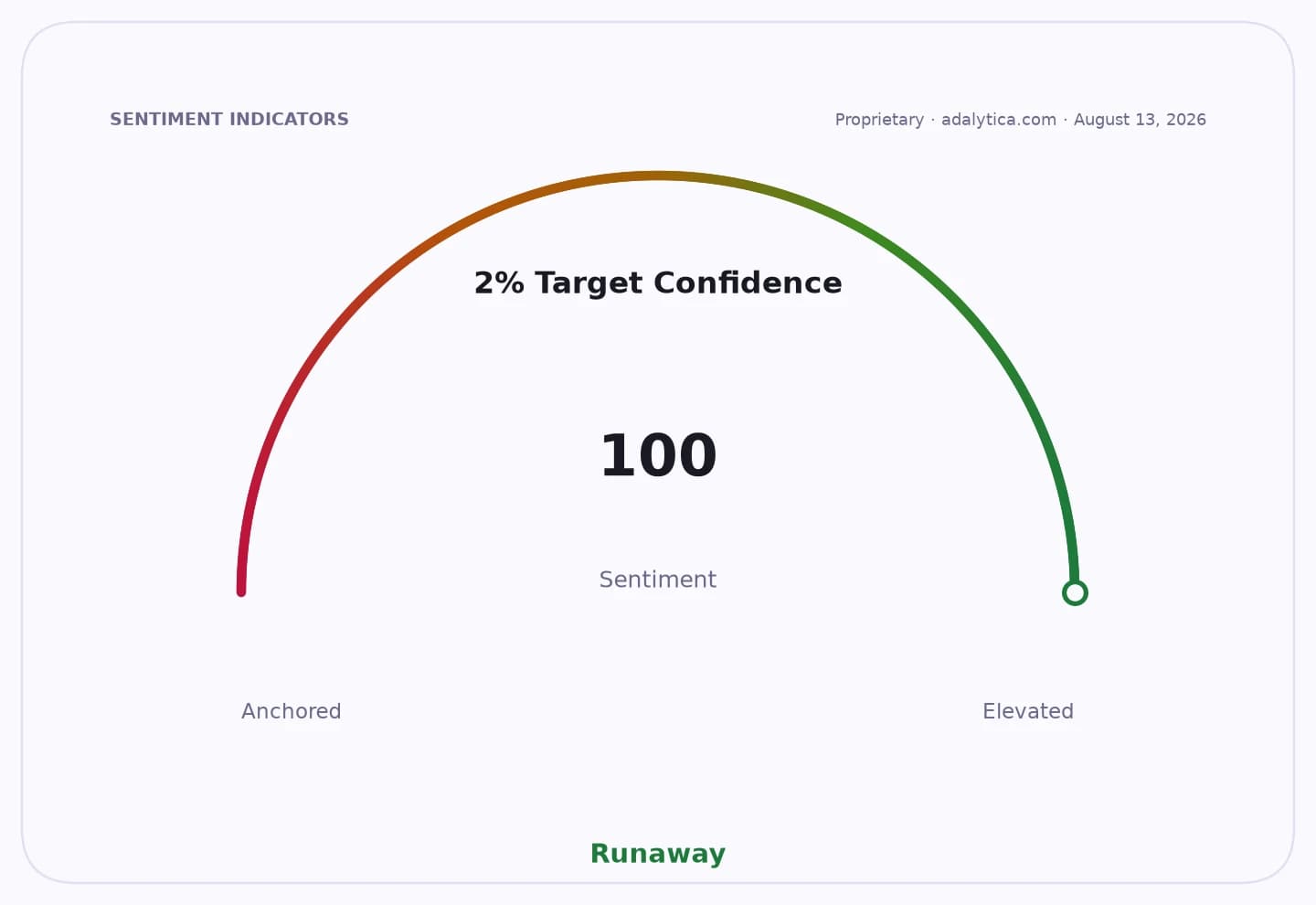
Adalytica’s CPI sentiment gauge has jumped to “Greed,” while confidence in the Fed’s 2% inflation target sits at “Extreme Greed,” underscoring how sensitive markets remain to any sign that inflation is not cooling as quickly as hoped. For Turkey, the investable conclusion is straightforward: the trade is still selective, not broad-based. Stick with assets that benefit from high nominal rates and inflation persistence, and avoid assuming that the worst of the inflation fight is over.
| Entity | Gains | Losses |
|---|---|---|
| Turkish central bank | ▲Credibility from tight policy | ▼Growth room |
| Lira bond holders | ▲High carry | ▼Mark-to-market volatility |
| Borrowers and consumers | ▲— | ▼High financing costs |
| Inflation-linked debt | ▲Protection from sticky prices | ▼— |