Türkiye retail sales growth slows in July
Türkiye’s retail sales growth cooled to its slowest pace in 16 months in July, a sign that household demand is losing momentum as high interest rates and persistent inflation bite into spending power.
Retail sales rose 10.4% from a year earlier, down from 11.5% in June and the weakest reading since March 2025, according to the Turkish Statistical Institute. On a monthly basis, sales edged up just 0.2%, after a 0.5% gain in June.
The slowdown matters because consumer spending has been one of the main supports for Türkiye’s domestic economy even as policymakers have kept monetary conditions tight to curb inflation. Softer retail activity suggests the central bank’s restraint is filtering through to households, potentially easing price pressures over time but also risking a broader slowdown in growth.
The details point to a mixed consumer backdrop. Non-food sales, which tend to capture discretionary demand, slowed sharply to 14.1% from 17.0% a year earlier. Food, beverages and tobacco improved slightly to 3.2% from 3.0%, suggesting spending remains more resilient in essentials than in higher-ticket or optional purchases. Motor fuel sales were up 8.0% year on year, while online retail sales grew 19.8%, still strong but down from 23.7% in June.
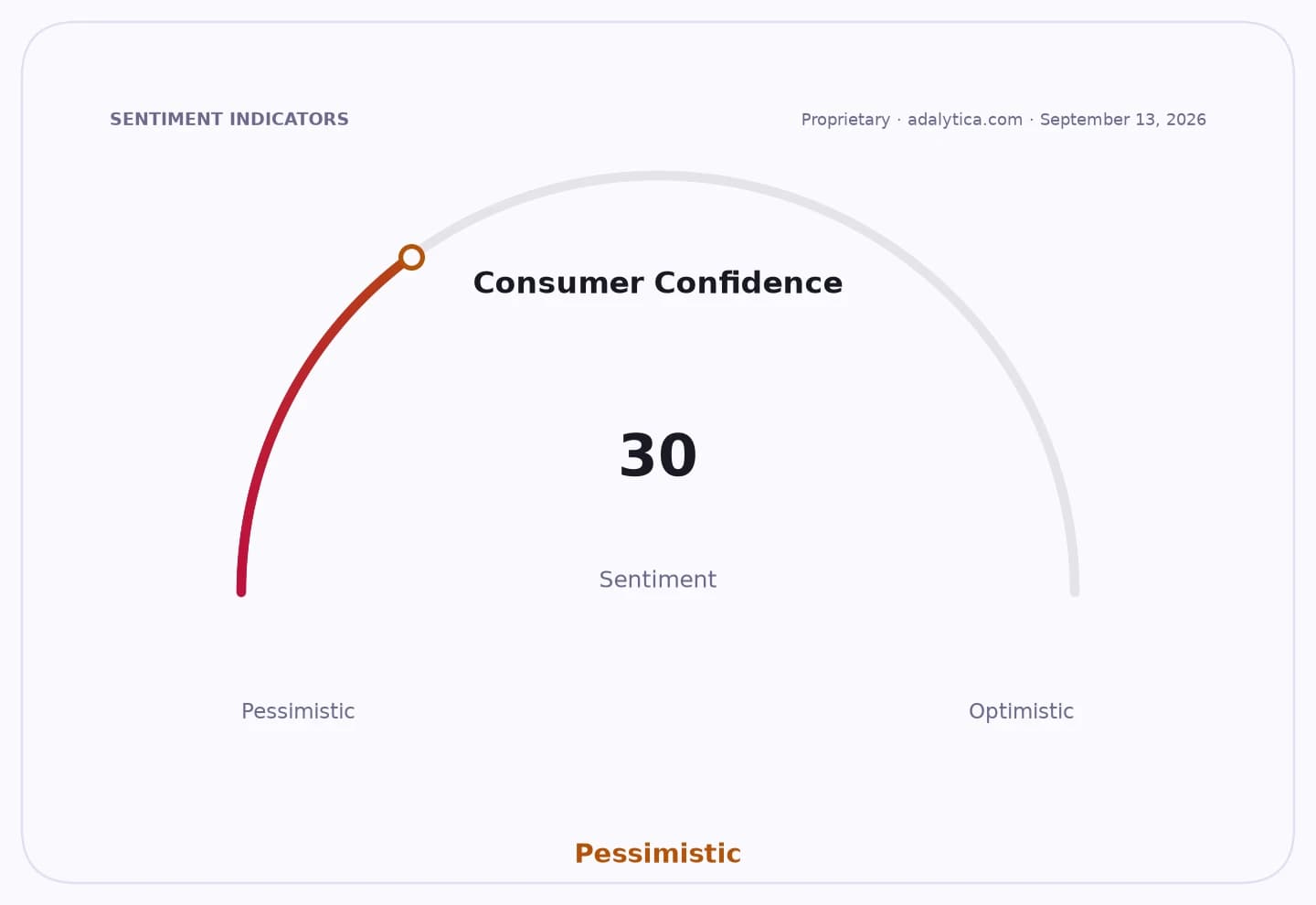
For investors, the data reinforce the view that Türkiye’s consumer sector is moving out of the very strong growth phase seen earlier in the year. The Adalytica Consumer Spending Sentiment gauge remains at “Extreme Greed,” but its sharp drop in awareness and the weaker confidence backdrop point to a gap between momentum and underlying caution. That combination can be volatile for retailers, consumer lenders and domestically focused equities.
The market also appears to be digesting a more fragile demand picture. Türkiye-linked equities have already shown swings consistent with tightening financial conditions, and the consumer slowdown may prompt analysts to trim forecasts for revenue growth across discretionary retail, autos and some consumer services. At the same time, weaker demand could support the disinflation process, which would be welcomed by bondholders and policymakers if it proves sustained.
The key question is whether July marks a temporary pause or the start of a broader cooling in consumption. If credit conditions remain tight and real wage gains fail to keep pace with inflation, retail sales growth could slow further into the autumn. If so, the economic trade-off for policymakers becomes sharper: slower domestic demand would help prices, but it would also weigh on growth and corporate earnings.
| Entity | Gains | Losses |
|---|---|---|
| Türkiye policymakers | ▲Easier disinflation | ▼Slower domestic growth |
| Bondholders | ▲Softer demand may curb inflation | ▼— |
| Retailers | ▲Essential-goods sellers hold up | ▼Discretionary sellers |
| Consumers | ▲Some relief if inflation eases | ▼Weaker purchasing power |