U.S. homebuilders cited as ready-apartment demand shifts

Buying a ready apartment can be materially cheaper than taking on a home under construction, and in a market where financing is tight and housing costs keep climbing, that gap is becoming the key decision for apartment buyers.
The reason is simple: completed housing lets buyers avoid a bundle of hidden costs and delays that can swell the total bill on a pre-sale unit. Realtor and mortgage broker Irina Asoulyuk said buyers with available cash can save as much as 30% of their budget by choosing a finished apartment instead of one still being built.
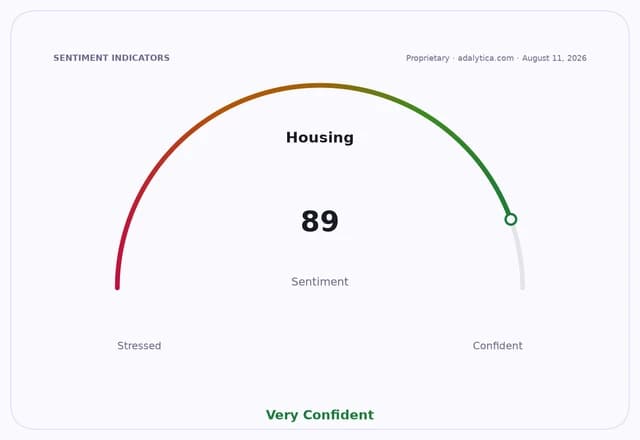
That matters economically because the housing market is not just about sticker prices. It is about the full cost of ownership, including financing charges, construction risk and the time value of money. When rates are elevated — the 10-year U.S. Treasury yield has been hovering around 4.65% to 4.69% in recent trading, a reminder that borrowing costs remain far from easy — buyers are increasingly sensitive to every extra month of waiting and every additional fee layered onto a transaction.
The broader housing backdrop also helps explain why ready units are drawing attention. U.S. new-home construction has been choppy, with housing starts forecast to ease to about 1.33 million in July from 1.43 million in June, underscoring how builders are still navigating a demand environment shaped by high mortgage rates and affordability pressure. In that kind of market, completed homes can look attractive because they reduce uncertainty: buyers can inspect what they are getting, move faster, and avoid being exposed to cost overruns or project delays.
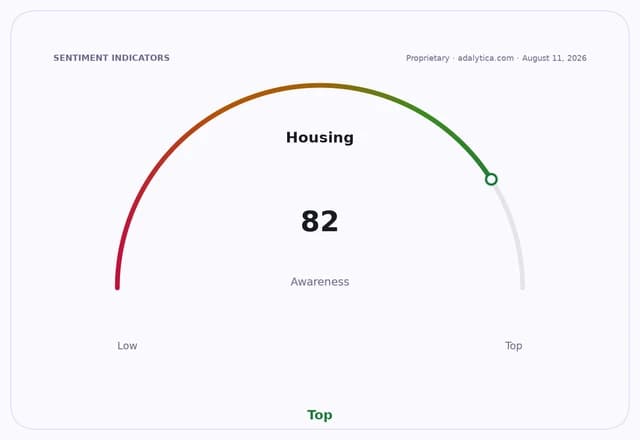
For investors, the message is less about a single apartment purchase than about the balance of power across the housing chain. Finished inventory tends to favor sellers with product in hand and buyers with cash, while under-construction projects become harder to sell if affordability weakens. That dynamic can influence homebuilders, mortgage lenders, and even local property markets by shifting demand toward immediate occupancy and away from speculative pre-sales.
The stock market is already telling a similar story. U.S. homebuilders such as D.R. Horton, Lennar and PulteGroup have seen sharp swings this year, reflecting the push and pull between resilient demand and interest-rate pressure. D.R. Horton’s shares were recently near $146.66, Lennar around $85.60 and PulteGroup about $130.05, all below their recent peaks, suggesting investors are still weighing how long affordability constraints will linger.
In Seoul, the same affordability logic is playing out in another form. Apartment prices in high-value districts have cooled after a tax reform announcement, while more than half of apartments priced between 1.5 billion won and 2 billion won were sold at reported prices last month. That shows how quickly policy and financing conditions can alter buyer behavior, especially at the upper end of the market where small changes in taxes or loan rules can make a big difference.
For long-term investors, the takeaway is that housing markets reward buyers who understand total cost, not just headline price. Finished homes may command a premium in some periods, but when financing is expensive and uncertainty is high, they can still be the better value. That makes the ready-housing segment worth watching, especially as rates, tax policy and construction backlogs continue to shape demand.
| Entity | Gains | Losses |
|---|---|---|
| Ready-home buyers | ▲Lower total cost | ▼Fewer customization choices |
| Pre-sale buyers | ▲Potential upside if prices rise | ▼Delays and extra costs |
| Homebuilders | ▲Faster sales on finished inventory | ▼Tougher pre-sale demand |
| Cash-rich buyers | ▲Bargaining power | ▼— |