Uber Eats and Costco deepen U.S. grocery partnership
Uber Eats and Costco are deepening their U.S. partnership, a move that reinforces how grocery and club-store delivery is becoming a more important growth engine for both companies at a time when consumers are still hunting for value.
For Uber, the tie-up is strategically important because grocery orders are one of the clearest ways to improve basket size, frequency and route density across its delivery network. For Costco, it extends the reach of a membership model built on traffic and volume into another channel without abandoning its low-price brand. The market underestimates how much these kinds of partnerships can matter: they turn delivery from a convenience add-on into a higher-utilization infrastructure business.
That matters economically because delivery is still expensive to operate, and the winners are the platforms that can spread fixed logistics costs over more orders. When a company like Uber adds a large, trusted retailer with strong consumer loyalty, it can increase the amount of demand flowing through the same driver network. Costco, meanwhile, gets another way to serve households that are increasingly mixing in-store shopping with digital replenishment as they manage budgets more tightly.
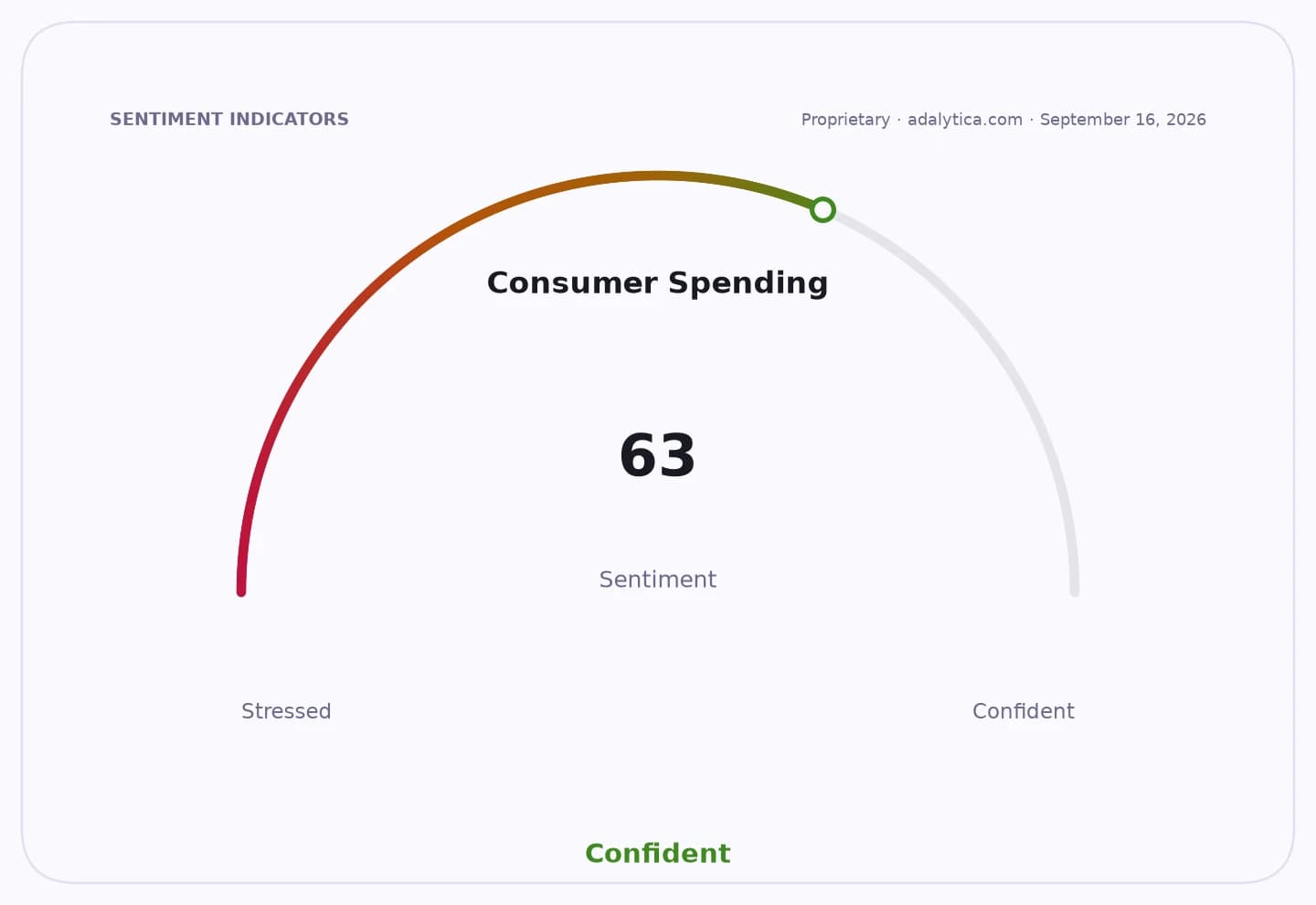
The broader backdrop is a consumer that is not exactly booming, but still spending selectively on essentials. Adalytica’s consumer spending sentiment reads neutral at 63, while awareness has slipped into fear territory, suggesting shoppers remain cautious and price-sensitive. That is a favorable setup for Costco’s value proposition and for Uber Eats’ ability to capture delivery volume from households that want convenience but still care about ticket size and membership economics.
The investment case is straightforward: this is not just a partnership announcement, it is a signal that the grocery-delivery lane remains underpenetrated and still has room to scale. Uber’s stock has been volatile and is trading well below its 200-day moving average, showing the market has not fully rewarded the delivery platform’s long-term optionality. Costco has also pulled back from recent levels, but its model remains one of the most resilient in retail because it can monetize necessity spending in more than one channel.
If the partnership works, the next phase is more of the same: deeper retailer integrations, more repeat ordering, and better economics for platforms that can turn everyday grocery demand into a toll road. In a market still looking for durable growth, I believe Uber’s delivery expansion with Costco is exactly the kind of asymmetric opportunity investors should watch: boring on the surface, but potentially powerful in the compounding.
| Entity | Gains | Losses |
|---|---|---|
| Uber Eats | ▲Higher order volume | ▼None in the near term |
| Costco | ▲Broader digital reach | ▼Some in-store exclusivity |
| Consumers | ▲More convenience | ▼Delivery fees |
| Smaller delivery rivals | ▲None | ▼More competition |