Ukraine arms transfer reports lift defense stocks

Russia has asked the United States and Turkey to clarify reports that arms are being transferred to Kyiv, a reminder that the Ukraine war remains a live geopolitical risk with direct implications for defense spending, sanctions and the supply chains that feed Western rearmament.
The immediate significance is less about the specific allegation than about what it says on the war’s evolving logistics. Any widening of military support to Ukraine — whether through direct transfers, third-country routing or replenishment deals — prolongs the conflict and reinforces expectations for sustained procurement by NATO members and their suppliers. That matters economically because defense outlays are one of the few large budget items still rising across Europe and the U.S. as governments prioritize stockpiles, air defense and munitions.
For investors, the story keeps the spotlight on U.S. prime contractors such as Lockheed Martin, RTX and Northrop Grumman, whose shares have been buoyed this year by the prospect of a longer replacement cycle for missiles, radar systems and interceptors. Lockheed Martin closed at $608.68 on Friday, well above its 50-day moving average of $542.41, while RTX ended at $222.97 versus a 50-day average of $198.88. Northrop Grumman finished at $585.87, also comfortably above its 50-day average of $539.47. All three have recovered from earlier volatility, reflecting persistent demand for U.S. and allied defense capabilities even as some indicators, including elevated RSI readings, suggest the sector is no longer cheap.
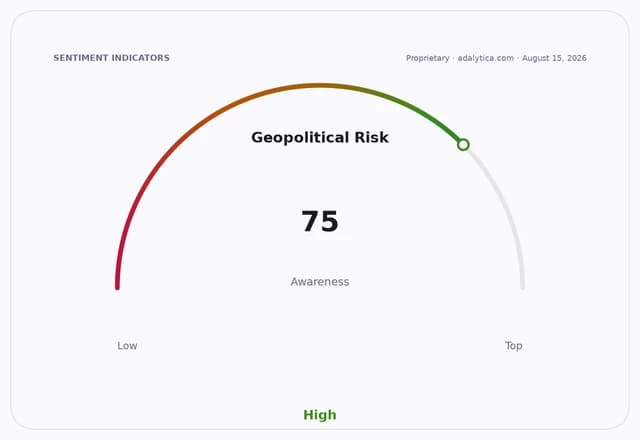
The broader market backdrop is one of extreme geopolitical caution. Adalytica’s Global Stability Sentiment gauge shows “Extreme Fear” at 4, down sharply over the past week, a sign investors are still pricing a world of frequent security shocks rather than de-escalation. In that setting, any sign that weapons flows to Ukraine may be expanding tends to support the case for sustained defense budgets, even if it also raises the risk of fresh sanctions, retaliatory diplomacy and further strain on global supply chains.

The bull case for defense stocks is that the war has turned into a multi-year replenishment cycle, with European governments still racing to rebuild inventories and the U.S. acting as the main supplier of high-end systems. The bear case is that valuations already reflect much of that optimism, leaving shares vulnerable if funding slows, procurement is delayed or political attention shifts. The next catalyst will be whether the diplomatic exchange between Moscow, Washington and Ankara produces any concrete evidence of new transfer channels — or simply underscores how entrenched the war economy has become.
| Entity | Gains | Losses |
|---|---|---|
| Lockheed Martin | ▲Higher missile demand | ▼Valuation risk |
| RTX | ▲Air-defense replenishment | ▼Earnings volatility |
| Northrop Grumman | ▲Sustained NATO spending | ▼Policy uncertainty |
| Russia | ▲Diplomatic leverage | ▼Strategic isolation |