Ukraine reshuffle raises Europe risk premium
Ukraine’s planned government reshuffle, including the resignation of Prime Minister Denys Shmyhal, raises the political stakes in Kyiv just as Russia signals it may be preparing another move in the war. For investors, the immediate issue is not domestic personnel changes but whether the transition strengthens Ukraine’s war-time decision-making or adds uncertainty to an already fragile regional risk backdrop.
President Volodymyr Zelensky’s move to replace the government is meant to sharpen Ukraine’s response to the conflict and foreign-policy pressure, according to the government context. The timing matters because the war is still driving civilian casualties, infrastructure strain and heightened diplomatic dependence on Western support, leaving little room for a prolonged power vacuum or signs of drift at the top.
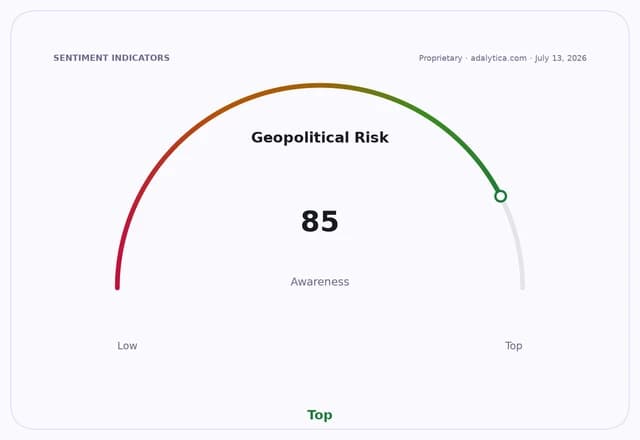
Reuters cited Foreign Minister Radoslaw Sikorski as saying Russia is “preparing something,” a warning that underscores why markets treat any political reordering in Kyiv as more than a routine cabinet reset. In geopolitical terms, the combination of leadership change in Ukraine and ominous signals from Moscow raises the probability of further escalation, which can spill into energy, defense and broader European risk sentiment.
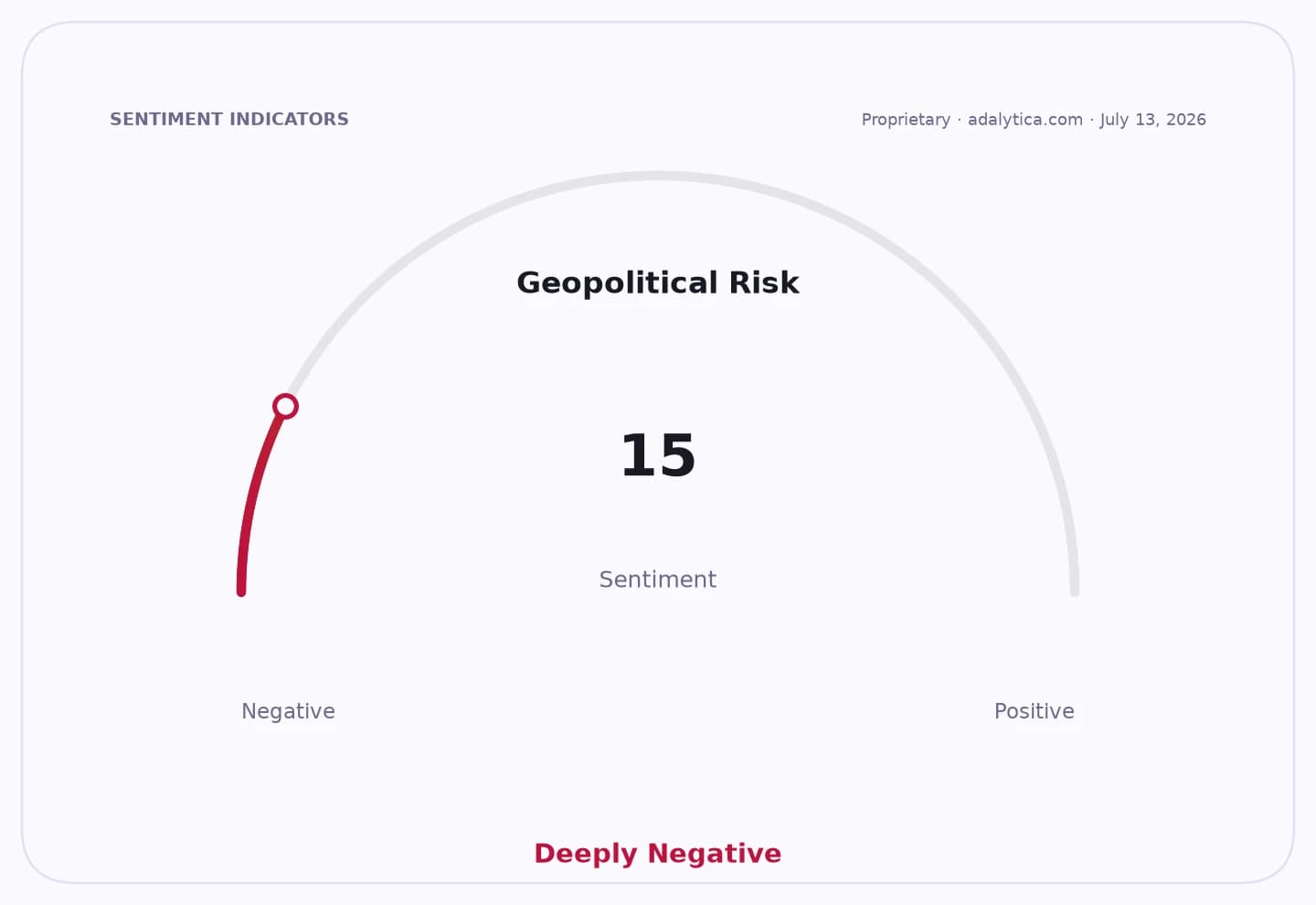
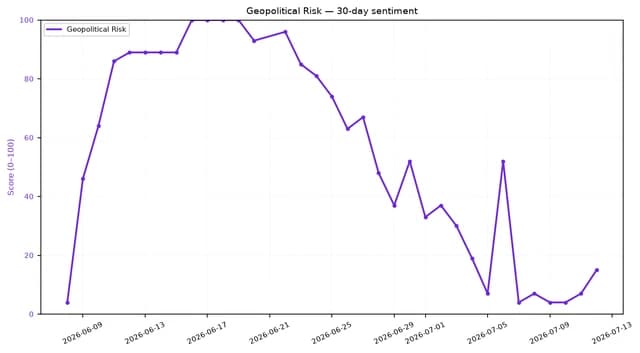
The market read-through is clearest in European risk assets. The iShares MSCI United Kingdom ETF, EWU, has held near 52-week highs around $46.60, while the iShares MSCI Eurozone ETF, FEZ, traded at $68.08, both showing resilience even as global-stability gauges point to sharp fear. A proprietary Adalytica Global Stability Sentiment snapshot shows extreme fear at 15, down 62 points over 30 days, a sign that investors are still pricing in geopolitical shocks even when equity benchmarks remain elevated.
Technical indicators also suggest the market is not ignoring the headline risk. EWU sits above its 50-day and 200-day moving averages, while FEZ remains above both its 50-day and 200-day averages, but the broad U.S. market proxy SPY has been pushing into overbought territory after a strong rebound, with the RSI in the high 50s and trading near record levels. That leaves room for sharp sector rotation if Ukraine news or Russian retaliation broadens the conflict premium.
For investors, the key question is whether the reshuffle stabilizes Kyiv’s wartime governance or becomes another source of policy uncertainty while Moscow escalates pressure. The next catalyst is the makeup of the new cabinet and any concrete signs from Russia that Sikorski’s warning translates into battlefield, cyber or infrastructure moves.
| Entity | Gains | Losses |
|---|---|---|
| Zelensky government | ▲Faster wartime decision-making | ▼Political continuity risk |
| Russia/Kremlin | ▲Pressure leverage | ▼Higher sanctions/escalation risk |
| European defense stocks | ▲Higher demand outlook | ▼Peace-dividend trade |
| European equities | ▲Stability if reshuffle is orderly | ▼Risk-off selling if conflict widens |