Ukraine drone strike hits Saratov oil refinery

Ukraine’s drone campaign against Russia’s oil infrastructure intensified again on Tuesday night, with operators striking Rosneft’s Saratov refinery and adding pressure to an energy system already struggling to absorb repeated attacks.
That matters because refineries are not just military-adjacent targets; they are the cash machines that turn crude into diesel, gasoline and jet fuel. Each successful strike chips away at Russia’s ability to move product, support its domestic fuel market and keep export flows stable. For investors, the message is broader: the war is no longer only a crude-supply story, but a refining-capacity story, and that tends to be more inflationary for global fuel markets than for crude itself.

Local officials in Russia’s Saratov region confirmed the drone attack, while the investigative Telegram channel ASTRA said residents heard explosions and saw fire overnight. ASTRA identified the target as the PJSC Saratov refinery, one of Russia’s oldest plants, built in 1934 and capable of processing up to 4.8 million tons of oil a year. The city of Engels, near a base for Russia’s strategic bombers, also reported air-defense activity, though it was not immediately clear whether that facility was hit.
The strike fits a clear pattern. Ukraine has increasingly focused on Russian energy infrastructure as a way to impose economic costs far from the front line. Kyiv previously confirmed an attack on the same refinery on Aug. 2, and the plant was forced to suspend operations in early July after damage to its only crude distillation unit. In other words, this is not a one-off nuisance attack; it is a sustained attempt to degrade a strategic industrial asset.
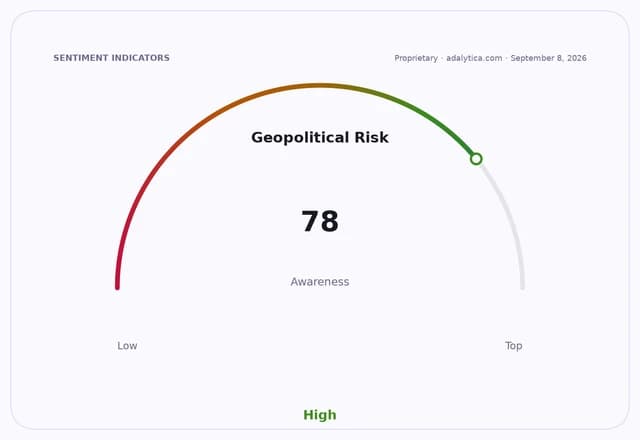
That is why energy markets have to pay attention. WTI has already climbed sharply, with the USO crude ETF sitting near 144.66 and technical readings showing the fund trading above its 50-day and 200-day moving averages. The broader energy sector, tracked by XLE, has also pushed higher, reflecting a market that is increasingly pricing geopolitical disruption into refined-product supply chains. Adalytica’s Oil WTI Trade Signals snapshot also shows “extreme greed” in awareness, underscoring how quickly traders move when refinery outages intersect with a tight global fuel backdrop.
The investment angle is straightforward: continued refinery attrition in Russia supports margins for non-Russian refiners and fuels the case for owning global energy infrastructure rather than chasing crude alone. U.S. refiners, pipeline operators and integrated producers with downstream exposure stand to benefit if disruption keeps lifting product cracks and constraining supply. The market often prices in crude shocks faster than it prices in the second-order effect — fewer barrels of refined product.
Put differently, the winning trade is not just oil. It is the companies and funds that profit from scarcity in diesel, gasoline and jet fuel while Russia is forced to spend more to defend, repair and reroute its energy system. If Ukraine keeps hitting refineries, the asymmetric upside sits with the toll roads of the energy world, not the barrels being burned.
| Entity | Gains | Losses |
|---|---|---|
| U.S. refiners | ▲Wider product margins | ▼None |
| Russian fuel system | ▲None | ▼Capacity, exports, repairs |
| Energy ETF XLE | ▲Sector inflows | ▼Short positions |
| Crude consumers | ▲None | ▼Higher fuel costs |