Ukraine Tensions Keep Kyiv-Linked Shares Volatile
Russia’s reported withdrawal of forces near the former Kakhov reservoir is a warning sign for cities along the Dnipro River, where any shift in front lines can quickly turn into a humanitarian and infrastructure crisis.
That matters because the reservoir area remains one of the most strategically sensitive parts of southern Ukraine. Even limited troop movements there can change the balance around nearby towns, expose civilian areas to new shelling routes and complicate Ukraine’s defensive planning. In a war where geography still decides who controls transport lines, river crossings and energy infrastructure, this is not just a local maneuver — it is a reminder that the southern theater remains highly volatile.
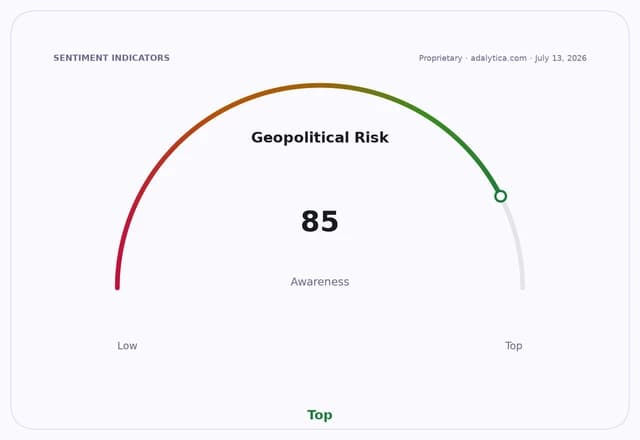
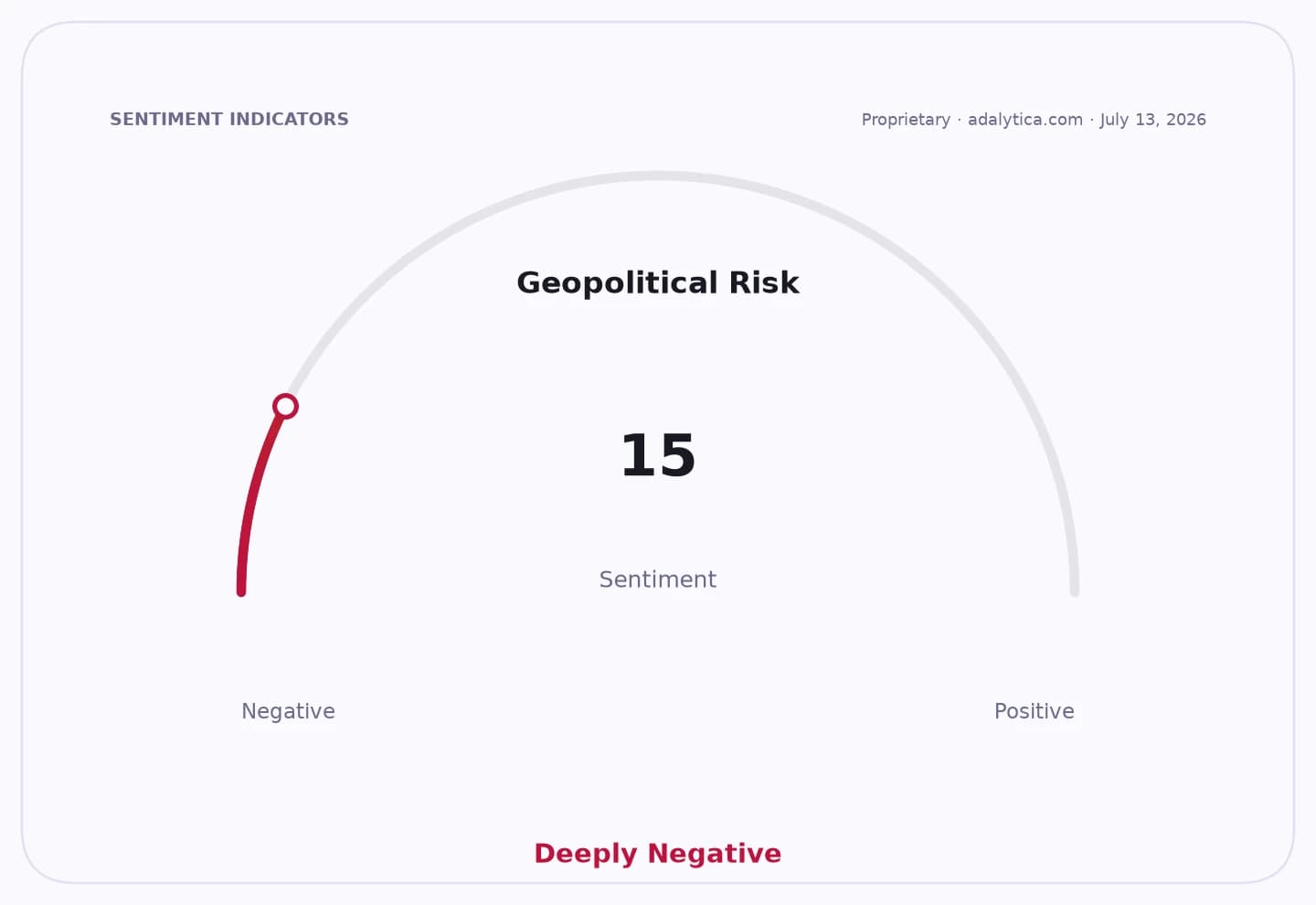
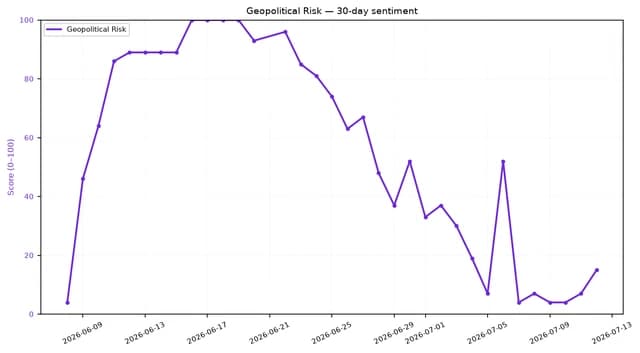
For investors, the significance is broader than the battlefield map. Escalation in Ukraine tends to feed straight into global risk appetite, energy prices and the market’s willingness to hold cyclical and Europe-linked assets. The Adalytica Global Stability Sentiment snapshot shows extreme fear at 15, with awareness still elevated, underscoring how quickly geopolitical stress is gripping markets even when headlines are tactical rather than strategic. When fear spikes this sharply, it usually supports defensive positioning, quality balance sheets and assets tied to essential spending rather than discretionary growth.
The price action in the Kyiv-linked market data also reflects that tension. Shares have been volatile, with the latest close at 15.28 after a recent run as high as 16.14. The stock is still trading above both the 50-day and 200-day moving averages, which suggests the longer-term trend has improved, but the recent easing in momentum and the RSI around 62 show the move is no longer as overheated as it was in May and early July. In plain English: investors are still willing to pay up for Ukraine exposure, but they are doing so with more caution.
The story also fits the larger pattern of this war entering yet another dangerous phase. Both sides are pressing attacks, diplomacy remains stalled and civilian losses are climbing. That combination matters economically because prolonged conflict is corrosive: it disrupts trade routes, raises insurance and shipping costs, strains government budgets and keeps reconstruction needs growing even as destruction continues. The longer the war drags on, the more likely it is that capital markets continue to price in instability rather than resolution.
For long-term investors, the key takeaway is not to chase every headline, but to understand what repeated military shifts mean for assets tied to the region. Ukraine-related securities can move fast on battlefield news, yet their long-term value will ultimately depend on survivability, funding access and postwar rebuilding potential. In a conflict like this, patience and position sizing matter more than prediction. This is still a name — and a region — to keep on the watchlist, not the trading screen.
| Entity | Gains | Losses |
|---|---|---|
| Russian forces | ▲Tactical flexibility | ▼Exposure on the river front |
| Ukraine’s defenders | ▲Better chance to stabilize lines | ▼Higher pressure on nearby cities |
| Kyiv-linked assets | ▲Speculative attention | ▼Stability-sensitive valuations |
| Global investors | ▲Opportunity in volatility | ▼Appetite for risk assets |