Ukraine tightens utility bill enforcement before winter
Ukraine is tightening enforcement on unpaid utility bills as the government rolls back wartime protections, leaving households with far less room to delay payment and raising the stakes for winter electricity costs.
The key change is practical, not symbolic: there is no minimum debt threshold that must be reached before a supplier can move to suspend service, and in most parts of the country the moratorium on cutoffs and late fees has already been lifted. For households already under pressure from inflation, the move turns utility arrears into an immediate cash-flow issue rather than a manageable backlog.
Under the rules now in force, a bill for communal services should not remain unpaid for more than one month if a consumer wants to avoid enforcement. Power suppliers must give written notice at least 10 working days before disconnection, while gas and water providers must warn customers 30 days in advance. Heating is treated differently in apartment buildings, where individual units are not disconnected, but penalties can accrue and providers may go to court.
The policy matters economically because utilities are among the most rigid monthly expenses for households and one of the clearest channels through which inflation and energy shocks hit real incomes. Ukraine’s official CPI has been rising again, with the latest reading at 334.131 in August, and households face another seasonal jump in heating demand. A failure to pay utility bills quickly becomes a balance-sheet problem for families, while also straining suppliers that depend on steady collections to fund repairs, fuel purchases and grid maintenance.
Investors watching the region should see the broader implication: the state is shifting more of the burden for energy affordability back onto consumers. That may help utility companies and municipal service providers protect cash flow, but it also increases the risk of arrears, politically sensitive bad debt and eventual state intervention if household distress deepens. For power-intensive users, the introduction of a lower tariff from Oct. 1 for electric heating customers — 2.64 hryvnias per kilowatt-hour for monthly consumption up to 2,000 kilowatt-hours through April 30 — is a partial offset, but it will not fully shield lower-income households if winter bills rise.
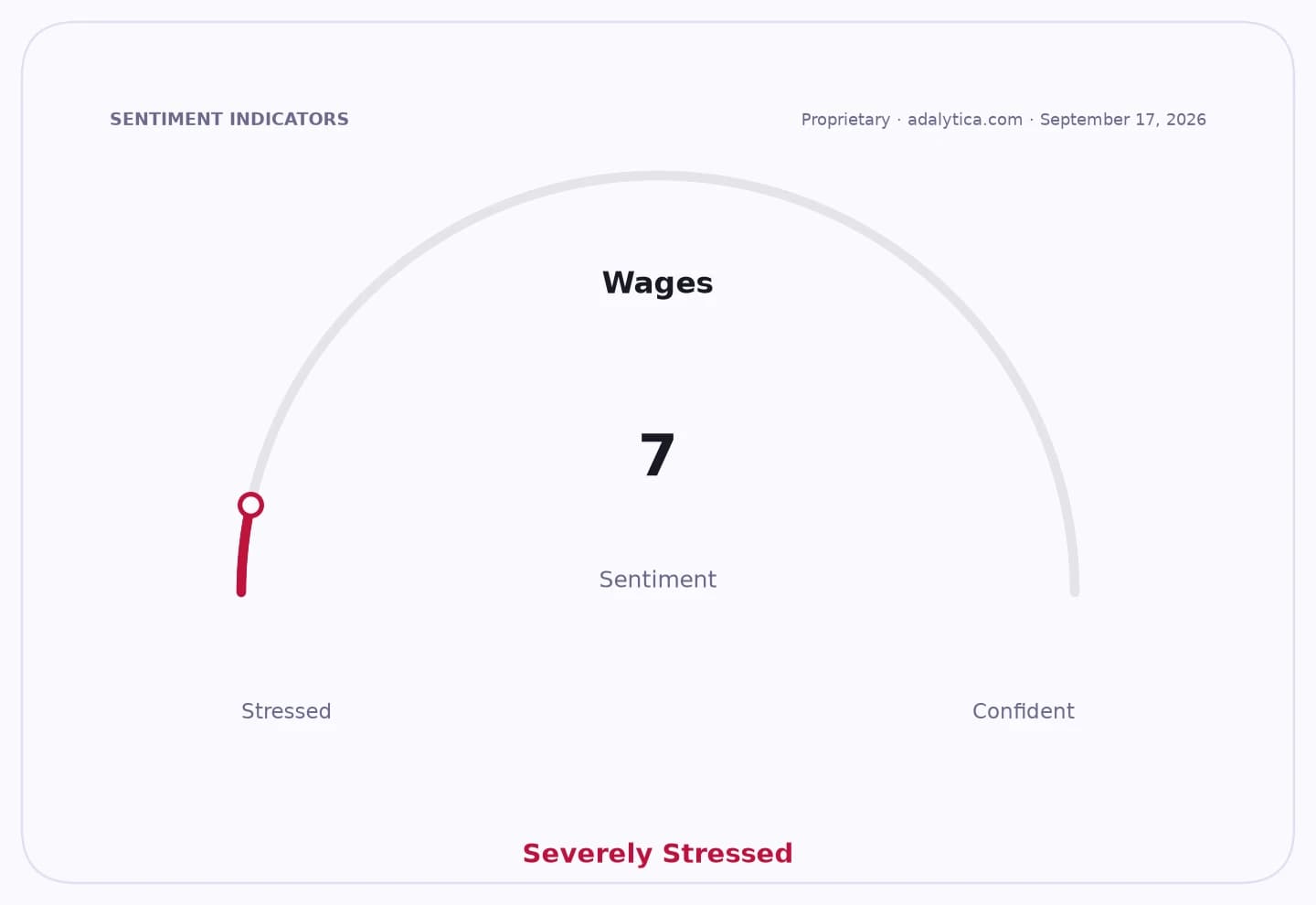
The market backdrop underscores how fragile the affordability picture remains. U.S. energy and utilities ETFs have been volatile, and broader rate and inflation expectations are still shifting, while Adalytica’s CPI and wage inflation sentiment gauges point to extreme fear even as awareness remains elevated. That combination suggests consumers are still bracing for higher living costs, and in Ukraine the immediate pressure is now being translated into enforcement rather than delay.
For households, the central question is no longer whether utility bills can be ignored during wartime disruption, but how quickly unpaid balances must be settled or restructured to avoid cutoffs. For the government and suppliers, the coming heating season will test whether tougher collection rules can stabilize the system without triggering a new wave of social strain.
| Entity | Gains | Losses |
|---|---|---|
| Utility suppliers | ▲Better collections | ▼Slower-paying households |
| Government/municipal budgets | ▲Lower arrears buildup | ▼Political pressure |
| Electric-heating users | ▲Lower winter tariff | ▼High-consumption households |
| Debtors | ▲Repayment flexibility via restructuring | ▼Risk of cutoffs and fees |