Ukraine war keeps pressure on Europe markets
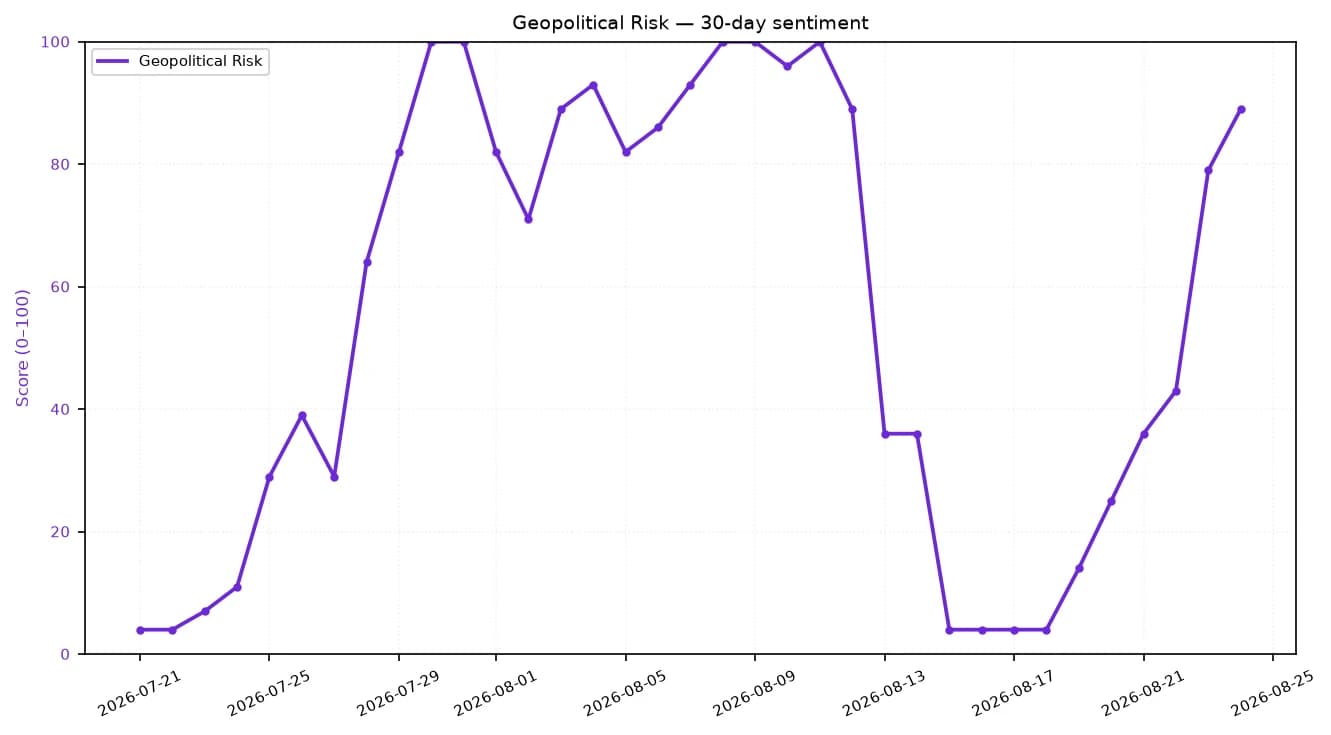
Russia has accused the UK of helping prolong the Ukraine war, underscoring how the conflict is still driving European security risk even as markets keep pricing in a higher-for-longer interest-rate backdrop.
The diplomatic salvo comes against a backdrop of renewed Russian missile and drone attacks in Ukraine, including strikes on Odesa and a shopping center in President Volodymyr Zelensky’s hometown that killed at least 14 people, while Kyiv said it hit Russian drone infrastructure in Crimea. The war’s escalation keeps pressure on European governments to fund air defenses, replenish ammunition and sustain military aid, all of which supports defense spending and keeps geopolitical risk premiums embedded in regional markets.
That matters for investors because the war is no longer just a humanitarian or diplomatic crisis; it is a live input into European asset pricing, sovereign borrowing costs and defense-sector earnings. The Global Stability Sentiment gauge from Adalytica.com shows extreme greed at 89, but awareness remains in fear territory at 29, a combination that suggests markets are complacent about headline risk even as the conflict intensifies.
European equity ETFs tied to the region have been firm. Germany’s EWG was last at $44.13, up from $43.92 on Aug. 20 and above its 50-day and 200-day moving averages, while Britain’s EWU closed at $49.10 and the euro-zone FEZ ended at $71.60, both near recent highs with relative strength readings still elevated. That resilience suggests investors are still favoring Europe’s defense and industrial beneficiaries over sectors exposed to energy shocks or trade disruption.
The macro backdrop is also sensitive. The U.S. 10-year Treasury yield was forecast at 4.708%, near the 4.65% to 4.74% range seen in recent sessions, keeping global financing conditions tight and limiting room for fiscal easing in Europe. With the U.S. recession gauge still at zero, markets are treating the shock as geopolitical rather than cyclical for now, but a wider escalation could still lift energy costs and push inflation expectations higher.
The next market catalyst is any fresh move on military aid, air-defense funding or sanctions enforcement, along with any further escalation in Russian strikes that could widen the war’s spillover into European stocks, bonds and energy markets.
| Entity | Gains | Losses |
|---|---|---|
| European defense contractors | ▲Higher order flow | ▼Peace dividend hopes |
| UK and NATO supporters | ▲Stronger coalition case | ▼Diplomatic room with Moscow |
| Russian state narrative | ▲Domestic blame shift | ▼International credibility |
| European consumers/importers | ▲— | ▼Higher energy and security costs |