UnitedHealth Group shares slipped again Wednesday as investors remained focused on the company’s fragile margin recovery in Medicare Advantage and a broader selloff in managed-care stocks tied to rising medical-cost pressure.
UnitedHealth shares fall on Medicare Advantage costs

The stock closed at $393.06 on Sept. 9, down 1.9% from the prior session, after trading as low as $378.08 intraday. That left the shares below the 50-day moving average of about $410 and still well above the 200-day moving average near $350, a sign the long-term uptrend remains intact but near-term momentum has weakened. Relative strength readings in the low-50s point to a market that is no longer stretched, but also not yet showing convincing renewed buying interest.
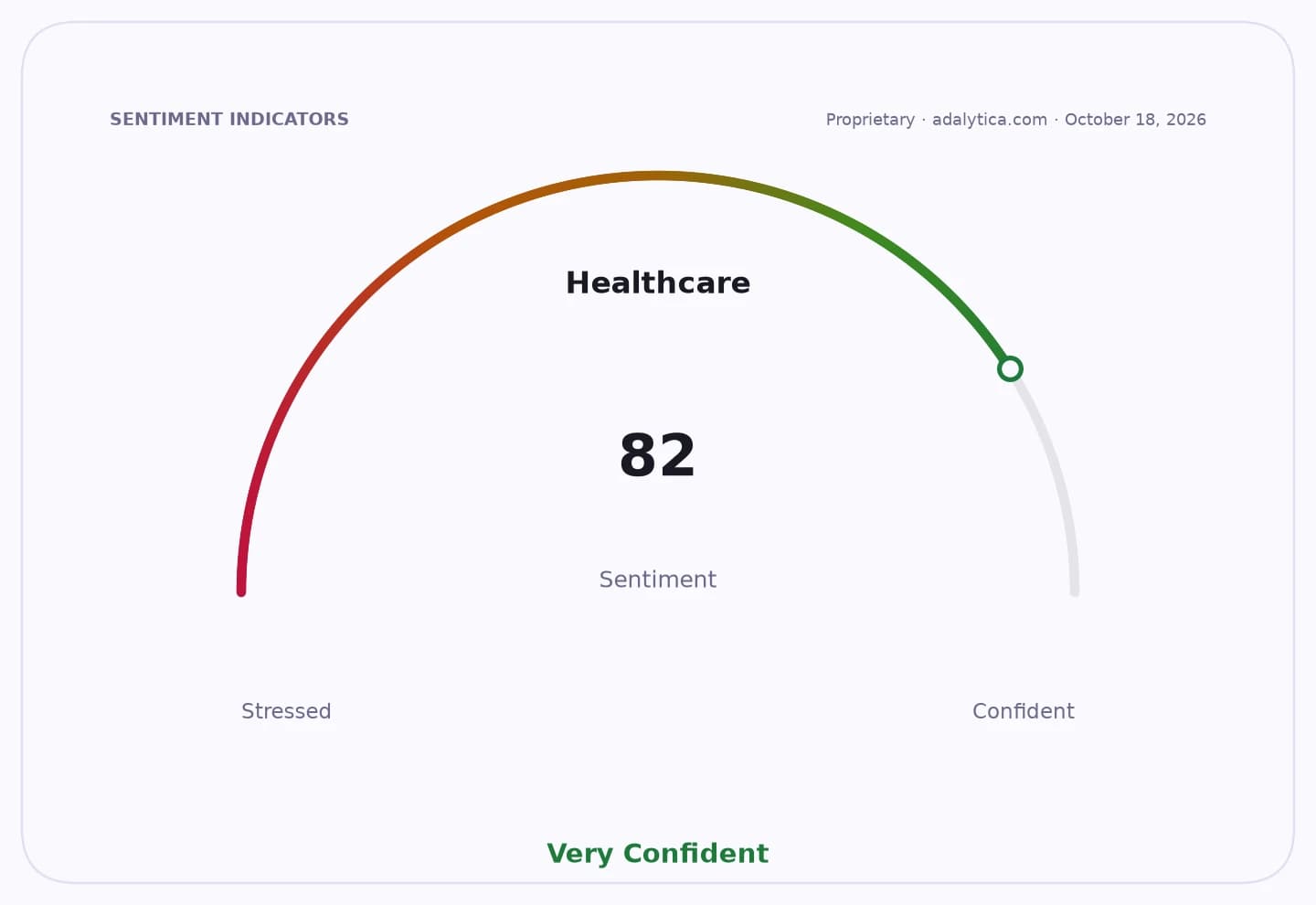
Sentiment IndicatorsⓘProprietary · adalytica.com · September 11, 2026
This is a snapshot — live sentiment, awareness and momentum for 130+ markets update continuously in the dashboard.Open AlphaPulse
The move matters because UnitedHealth is the bellwether for the largest U.S. health insurer and a key read-through on pricing, utilization and reimbursement across the sector. When investors sell UNH, they are usually voting on one of two things: either medical-cost trends are still moving faster than premium pricing, or the market is not yet persuaded the company has fully restored earnings visibility after this year’s volatility. In either case, the stock’s underperformance carries implications well beyond one company, because UnitedHealth’s scale makes it central to sentiment on managed care, Medicaid, Medicare and employer-sponsored coverage.
The weakness also fits a broader industry backdrop that has become less forgiving for insurers. Healthcare spending sentiment tracked by Adalytica has slid sharply into “Fear,” reflecting rising concern around medical costs and access to care. That sentiment backdrop matters for UnitedHealth because the company’s profit model depends on keeping medical-loss ratios in check while navigating higher utilization and reimbursement pressure. Recent SEC filings show the company has been working to mitigate medical cost increases and has been pushing for actuarially sound rates, a reminder that the fight between pricing power and claims inflation remains central to the investment case.
Healthcare vs UNHadalytica.com
Explore this data interactively — full history, time series and cross-market comparisons.Open AlphaPulse
The pressure is not unique to UnitedHealth. Rival Humana was roughly flat to slightly higher over the same period, while Cigna traded firmer, suggesting investors are differentiating between companies rather than abandoning the sector outright. Still, UnitedHealth’s larger exposure and heavier index weight make it the focal point when the market worries that the current pricing cycle may not be enough to offset utilization and policy pressure. The company’s shares also remain sensitive to any sign that Medicare Advantage profitability is stabilizing more slowly than hoped.
For investors, the question is whether Wednesday’s decline is simply another leg in a post-shock consolidation or a sign that the stock’s recovery has run ahead of fundamentals. Bulls will point out that UNH still trades above its 200-day average and that broader technical momentum has not fully broken down. Bears will note that the shares have struggled to reclaim their 50-day average, even as the company continues to face questions about cost inflation, reimbursement and the durability of earnings growth.
The next catalyst is whether UnitedHealth can show that premium growth, expense discipline and benefit design are finally outrunning medical trend. Until then, the stock is likely to remain a proxy for confidence in the managed-care business model itself.
| Entity | Gains | Losses |
|---|---|---|
| UnitedHealth bulls | ▲Longer-term value case | ▼Near-term momentum |
| UnitedHealth bears | ▲Repricing of risk | ▼Quick earnings recovery |
| Humana and Cigna | ▲Relative comparison | ▼Sector-wide fear spillover |
| Employers and payers | ▲Pressure for cost control | ▼Higher medical-cost trend |