Uruguay exports fall 16% in August on drought
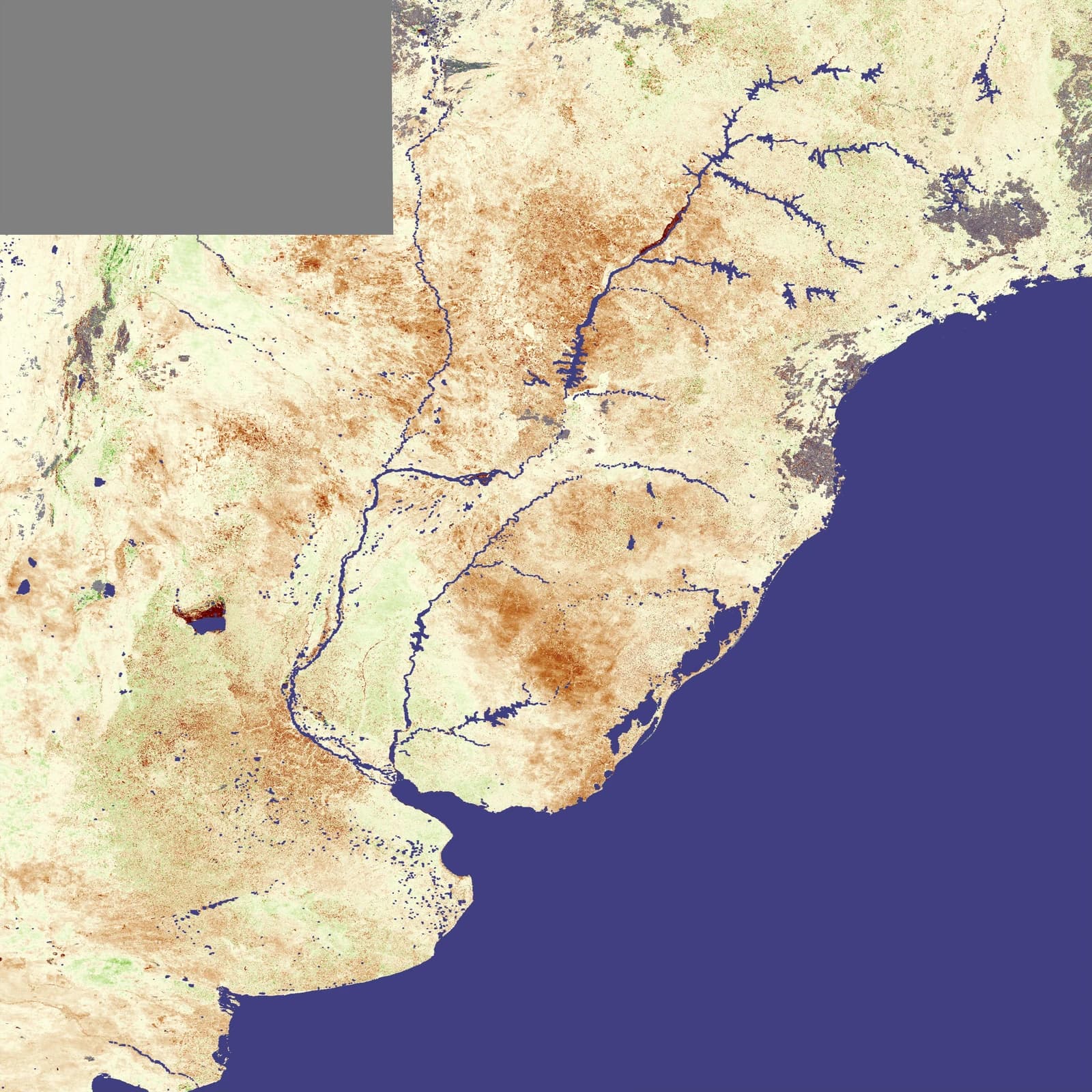
Uruguay’s export sector took a sharp hit in August, with applications falling 16% from a year earlier as drought cut deeply into soybean and rice output, underscoring how a weather shock is now feeding directly into growth, farm incomes and the country’s trade performance.
The monthly data from Uruguay XXI showed export requests, including free zones, at $1.121 billion, while the year-to-date decline remained mild at 1% as stronger shipments in other categories partly offset the agricultural slump. The split matters: it suggests the export slowdown is not a broad-based collapse in demand, but a concentrated supply shock hitting two of Uruguay’s most important agricultural earners.
Soybeans were the main drag. Exports of the crop fell 70% in August and are down 46% so far this year, after production in the 2025-26 season was estimated to be about 50% below the prior crop because of the water deficit. Rice, another key staple in the export basket, also weakened, with August shipments down 33% and year-to-date volumes off 19%. The damage was severe enough for the agriculture ministry to declare an agropecuarian emergency earlier this year.
That matters for the broader economy because agriculture remains a major transmission channel for Uruguay’s growth, tax revenue and foreign-currency inflows. Analysts have already been trimming growth forecasts, with the central bank’s survey now pointing to 1.2% expansion this year from 2% in February. The weak export data also aligns with softer domestic indicators, including a fall in second-quarter activity and lower gasoil sales, raising the risk that the economy is entering a more pronounced slowdown than the aggregate export number alone suggests.
For investors, the story is less about a sudden loss of competitiveness than about timing and composition. The rest of the export basket still looks resilient: excluding drought-hit goods, cumulative shipments over the past 12 months rose by 337,000 tons even as the total declined by 320,000 tons between December and July. That means the headline weakness is mostly a weather story, not a structural erosion of Uruguay’s external sector.
Still, the drought has left a mark on pricing, logistics and margins. Higher fuel and fertilizer costs are squeezing producers just as yields are falling, limiting any near-term recovery in farm earnings. Beef, Uruguay’s largest export in August, helped cushion the blow, but even that sector posted a 12% drop in value, partly offset by firmer international prices.
The near-term focus will be on whether rainfall normalizes and whether crop losses force a deeper revision to GDP and export expectations. If weather improves, the damage to the trade balance may prove temporary. If not, the August figures may be the start of a longer stretch in which Uruguay’s growth, and the market’s view of its agricultural exporters, stays under pressure.
| Entity | Gains | Losses |
|---|---|---|
| Non-agricultural exporters | ▲Offset the decline | ▼Lose relative attention |
| Soybean farmers | ▲— | ▼Lower output and export revenue |
| Rice producers | ▲— | ▼Weaker shipments and margins |
| Uruguay economy | ▲Some support from other exports | ▼Slower growth and foreign-currency inflows |