US Beige Book Shows Defense and Data Center Strength
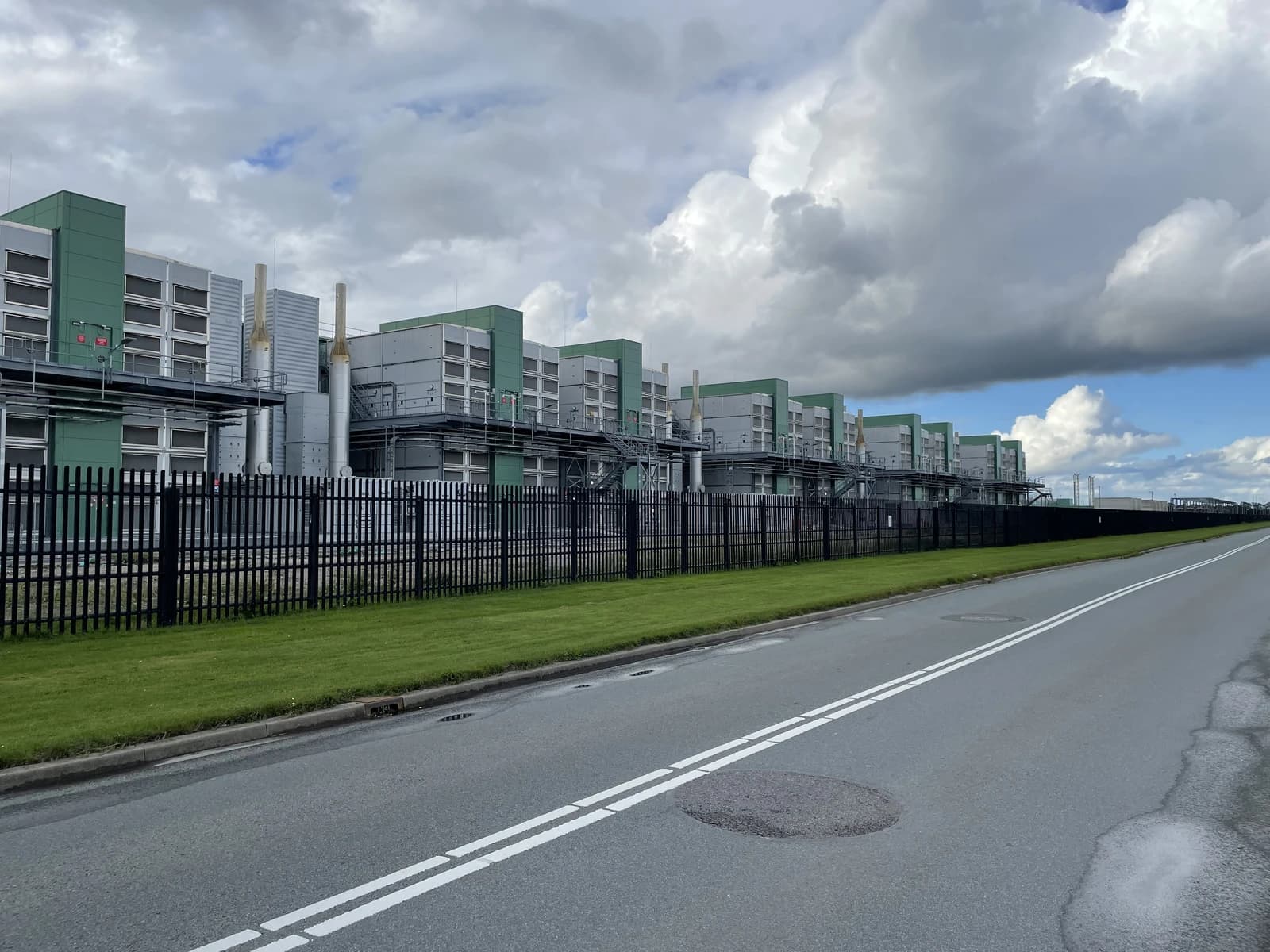
The US economy expanded at a modest pace in July and August, with defense orders and data-center construction emerging as two of the clearest pockets of strength, according to the Federal Reserve’s Beige Book.
That matters because it suggests growth is being driven less by broad-based consumer momentum and more by capital-intensive spending tied to government procurement and the AI buildout. In a period of still-elevated borrowing costs and uneven household demand, those two engines are helping keep industrial activity and selected service sectors afloat even as autos and housing soften.

The Beige Book said 10 of the Fed’s 12 districts reported slight to moderate growth, with manufacturing improving in nearly all districts. Firms linked to defense and data centers stood out in particular, pointing to a flow of demand that has been resilient despite tighter financial conditions. The report also described modest gains in consumer spending, though car sales weakened on high prices, low confidence and elevated credit costs.
That split is economically important. Defense spending is typically less cyclical and can cushion factories, logistics networks and specialized suppliers when private demand slows. Data-center investment, meanwhile, reflects the capital intensity of AI infrastructure and has become a meaningful source of orders for construction, power equipment, chips and industrial services. The fact that data-center-related work accounted for most of the non-residential construction strength underscores how concentrated the current investment cycle has become.
For investors, the message is that the US expansion remains alive, but increasingly dependent on a narrow set of beneficiaries. Defense contractors such as Lockheed Martin, Northrop Grumman and RTX have already been supported by steady government budgets, and the report reinforces the case that procurement remains a durable revenue stream. The AI infrastructure trade may also stay underpinned, with utilities, electrical equipment makers, real estate investment trusts tied to digital infrastructure and select industrial names benefiting from the same demand.
The market reaction across assets suggests investors are still balancing that resilience against policy uncertainty. Conventional technical indicators on defense stocks show recent pressure, even after strong moves earlier this year, while broader risk appetite has weakened sharply, with proprietary Adalytica readings on the S&P 500 flashing extreme fear. Treasury sentiment remains defensive too, reflecting doubts about the path for rates even as growth holds up.
The bigger narrative is that the US is not seeing a classic broad-based slowdown; it is seeing a reallocation of growth toward government-linked spending and AI-related capital expenditure. That can extend the cycle, but it also makes the economy more vulnerable if federal outlays slow, if data-center investment cools, or if energy and political uncertainty further constrains business plans. For now, the Beige Book points to a still-expanding economy, but one increasingly shaped by a few powerful sectors rather than a wide consumer-led recovery.
| Entity | Gains | Losses |
|---|---|---|
| Defense contractors | ▲Steady procurement demand | ▼Less leverage from consumer cycle |
| Data-center builders | ▲AI-related investment boom | ▼Higher power and financing costs |
| US industrial economy | ▲Support from capital spending | ▼Weak retail and housing demand |
| Consumers and auto sellers | ▲Lower fuel pressures at margin | ▼High credit costs and soft sales |