The United States appears to be offering Brazil little room to negotiate on tariffs, a sign the dispute is moving from diplomatic friction toward a more durable trade confrontation that could reshape bilateral flows, pressure exporters and add another layer of volatility to emerging-market assets.
US-Brazil Tariff Standoff Pressures EWZ
Former Brazilian diplomat and trade negotiator Welber Barral said Washington’s proposals for lower tariffs were “non-negotiable,” underscoring that the talks are not yet a genuine bargaining process so much as an exercise in leverage. That matters because tariff disputes tend to become self-reinforcing: once duties are in place, the economic cost falls quickly on importers and supply chains, while the political incentive to hold the line often rises.
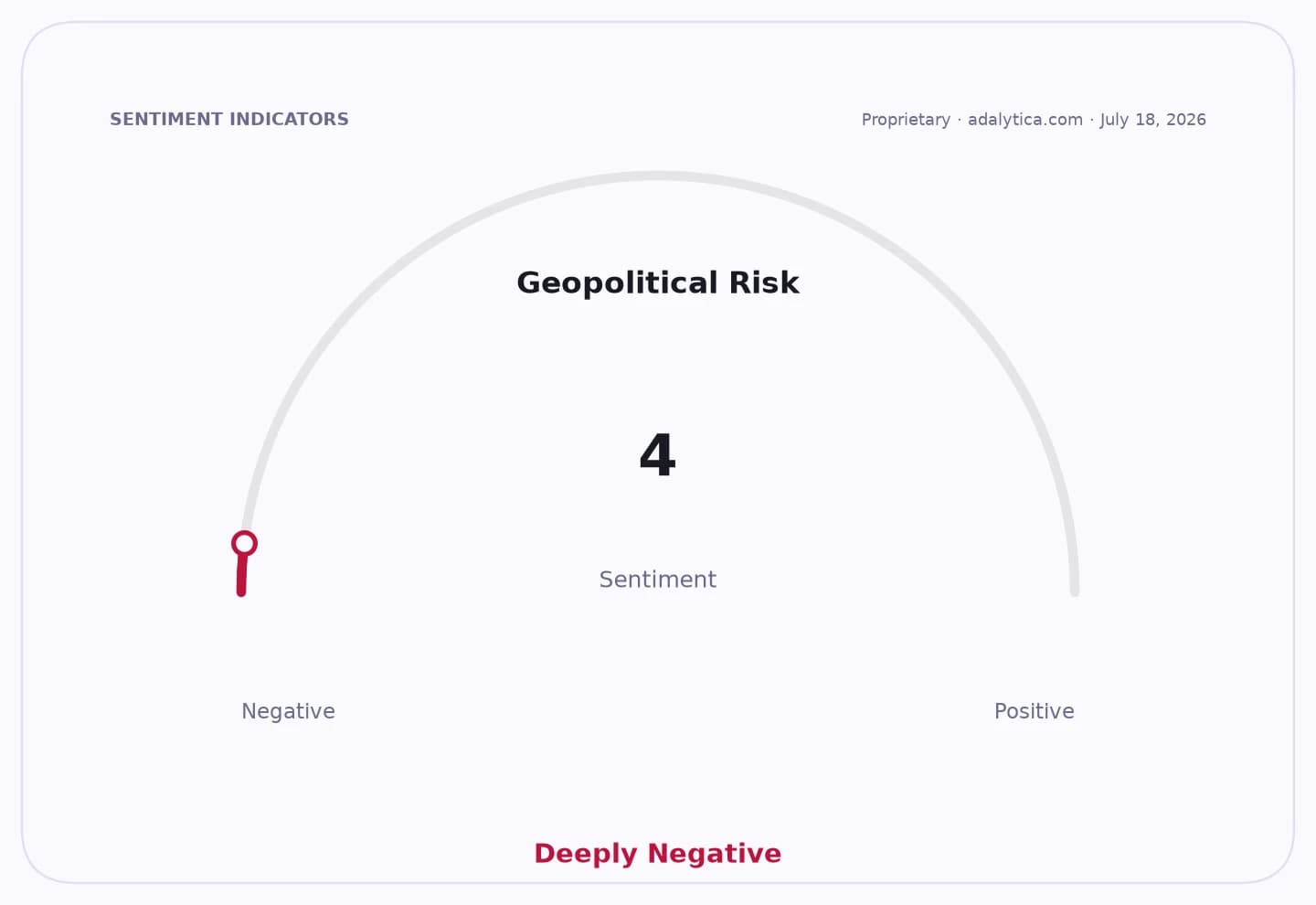
Sentiment IndicatorsⓘProprietary · adalytica.com · July 18, 2026
This is a snapshot — live sentiment, awareness and momentum for 130+ markets update continuously in the dashboard.Open AlphaPulse
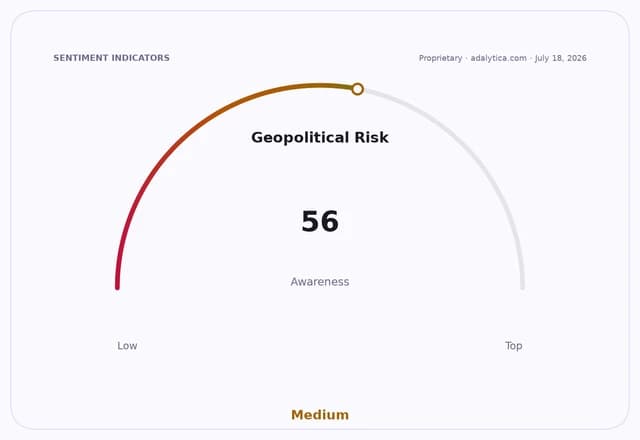
The immediate economic effect is straightforward. A 25% tariff on Brazilian goods makes US-bound shipments more expensive, compresses margins for Brazilian exporters and raises the risk that some trade is diverted rather than simply rerouted. The impact will be uneven across sectors, with agricultural and commodity-linked exporters more exposed than diversified names. For Brazil, the problem is not only lost sales to the US but the signal that its access to the world’s largest consumer market is less predictable.
That uncertainty is already showing up in market behavior. EWZ, the main US-listed Brazil ETF, has swung sharply higher and lower over recent months, reflecting how quickly investor sentiment can change when tariff headlines collide with broader risk appetite. After surging to the high $30s earlier in the year, the fund recently traded around $35.23, near its 50-day moving average and above its 200-day average, suggesting the market still assigns Brazil some medium-term resilience even as short-term conviction weakens. The ETF’s recent retreat from an overbought reading in the RSI, and the flattening momentum in the MACD, point to a market that is less euphoric and more sensitive to policy risk.
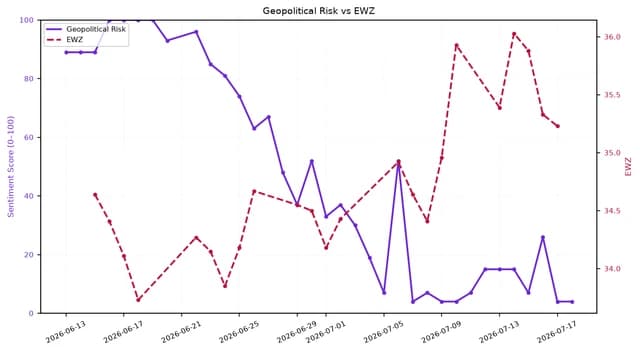
The implications extend beyond Brazil’s exporters. A prolonged tariff clash can feed into wider emerging-market pricing by lifting the perceived cost of US trade policy risk, especially when the dollar is not providing a strong shelter. Brazil’s large miners, agribusiness groups and industrial exporters could face slower demand or lower realized prices, while US importers and consumers bear higher costs if substitution is limited. If Brazil retaliates, even selectively, US firms with exposure to Brazilian demand could also see pressure.
The broader context is a world where trade disputes are increasingly used as geopolitical instruments rather than narrow commercial tools. Adalytica’s Global Stability Sentiment sits at “Extreme Fear,” a reminder that investors are already dealing with a fragile macro backdrop. In that environment, every new tariff skirmish can have an outsized effect on risk premia, especially in markets like Brazil where foreign flows matter and policy headlines can move prices as much as earnings do.
For investors, the key question is whether this becomes a contained negotiation over specific goods or a wider rupture that feeds into retaliation, weaker cross-border trade and a more persistent discount for Brazilian assets. If Washington keeps the terms rigid, the downside case for exporters and the Brazil risk trade strengthens. If talks eventually open space for exemptions or phased reductions, the rebound could be meaningful — but for now, the message from Barral’s remarks is that the bargaining table is not yet yielding a compromise.
| Entity | Gains | Losses |
|---|---|---|
| US policymakers | ▲Trade leverage | ▼Diplomatic goodwill |
| Brazilian exporters | ▲— | ▼Higher tariff costs |
| US importers/consumers | ▲— | ▼Higher input prices |
| EWZ investors | ▲Potential policy relief | ▼Near-term volatility |