US consumer confidence falls to near record lows
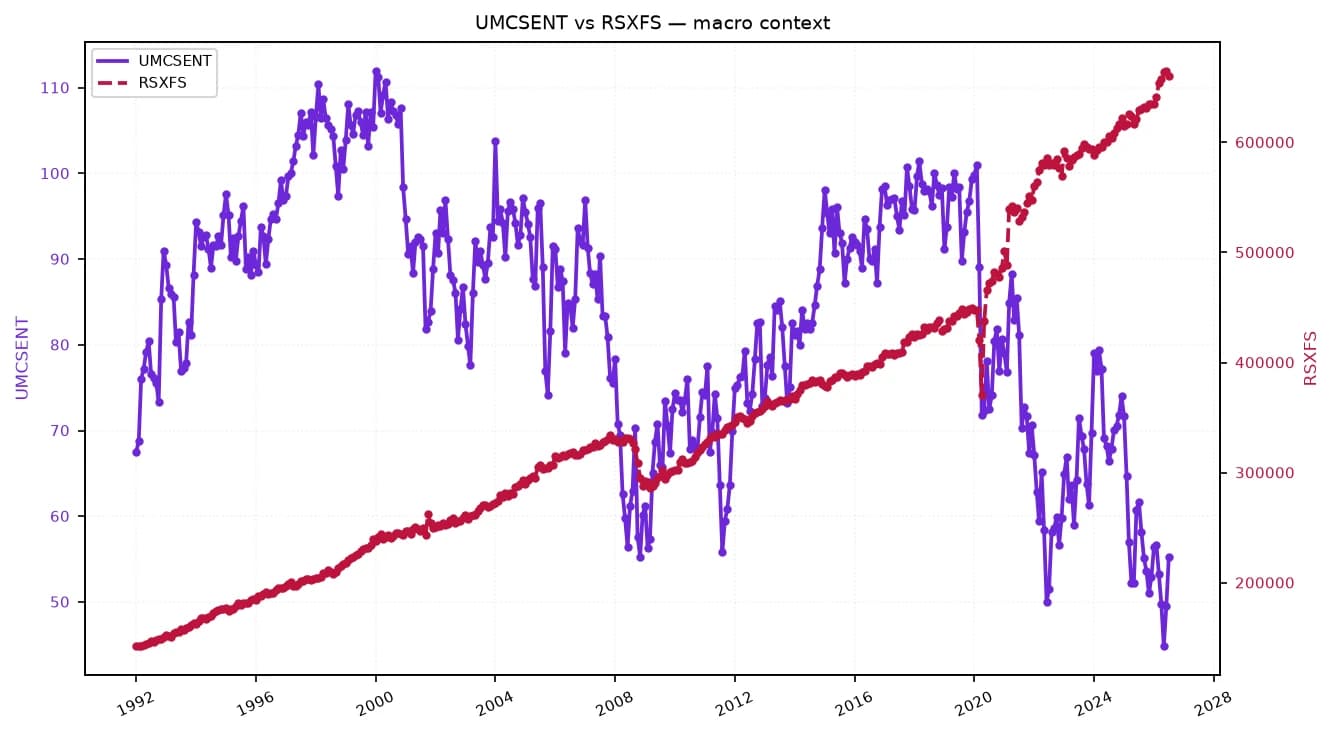
US consumer confidence is sliding to some of the weakest levels on record this year, and that matters because the American consumer still drives the bulk of economic growth. When households feel worse about their finances, they do not just complain more — they tend to delay purchases, trade down to cheaper goods and become more cautious about discretionary spending.
The latest University of Michigan survey showed consumer confidence falling 13% in September, after an 8% decline in August, leaving sentiment near historic lows for the year. The backdrop is familiar but still powerful: inflation has cooled from its 2022 peak, yet essentials such as food, gasoline and entertainment remain expensive, while a tight labor market is no longer enough to offset the strain. Goldman Sachs economists say the data point to broad pessimism, not just over wallets, but over the state of the world more generally.
That distinction matters for investors. Confidence is one of the earliest signals that spending could slow, and spending is the lifeblood of US corporate earnings. Retailers, consumer brands and discretionary chains are the most exposed if shoppers pull back, while companies selling necessities or value-oriented products tend to hold up better. Adalytica’s Consumer Spending Sentiment snapshot still shows “Extreme Greed,” but its Retail Sales Sentiment sits in “Extreme Fear,” a split that suggests households may be emotionally engaged but increasingly selective with their dollars.
For long-term investors, this is less a reason to panic than a reminder to stay disciplined. Weak confidence does not automatically mean a recession, but it does argue for caution around names that rely on easy spending and for patience with businesses that can grow even when consumers are pressured. In practice, that favors companies with pricing power, strong balance sheets and recurring demand, while leaving highly cyclical retailers more vulnerable to disappointment.
The biggest takeaway is simple: record-low confidence is a real economic headwind, but it also creates opportunities for investors willing to look through the noise and focus on durable winners. If inflation stays sticky and geopolitical uncertainty persists, sentiment could stay depressed for months. That makes quality, diversification and a multi-year horizon more important than ever.
| Entity | Gains | Losses |
|---|---|---|
| Value retailers | ▲bargain hunters | ▼margin pressure |
| Consumer staples | ▲steady demand | ▼limited upside |
| Discretionary retailers | ▲selective spenders | ▼weaker traffic |
| Long-term investors | ▲better entry points | ▼short-term volatility |