U.S. consumers and retailers after April inflation at 332.568
A simple financial habit is quietly eroding wealth for middle-class households: spending every raise, bonus and windfall instead of letting income compound. That matters because the real threat to long-term financial health is not one big emergency, but a steady leak of cash flow that leaves families vulnerable just as inflation, debt and weak confidence squeeze discretionary spending.
The broad economic backdrop is not helping. U.S. consumer prices have climbed to 332.568 from 332.407 in April, while real household spending has also kept grinding higher, suggesting consumers are still paying up even as the pressure on budgets persists. At the same time, consumer sentiment has slumped to 49.5 from 49.8 in April, with a forecast reading of 43.99 for July, a sign that households are feeling more cautious even if they are not yet cutting back in a dramatic way.
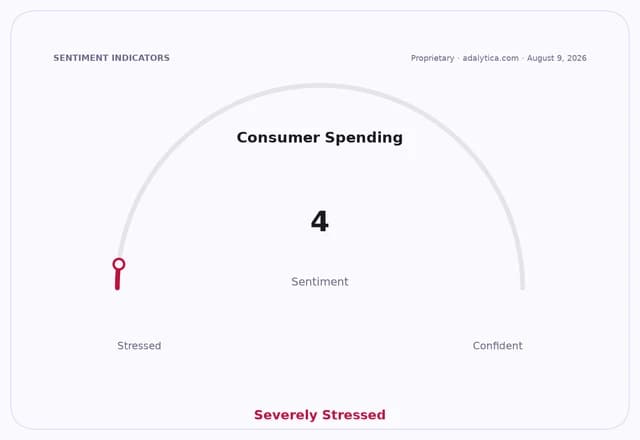
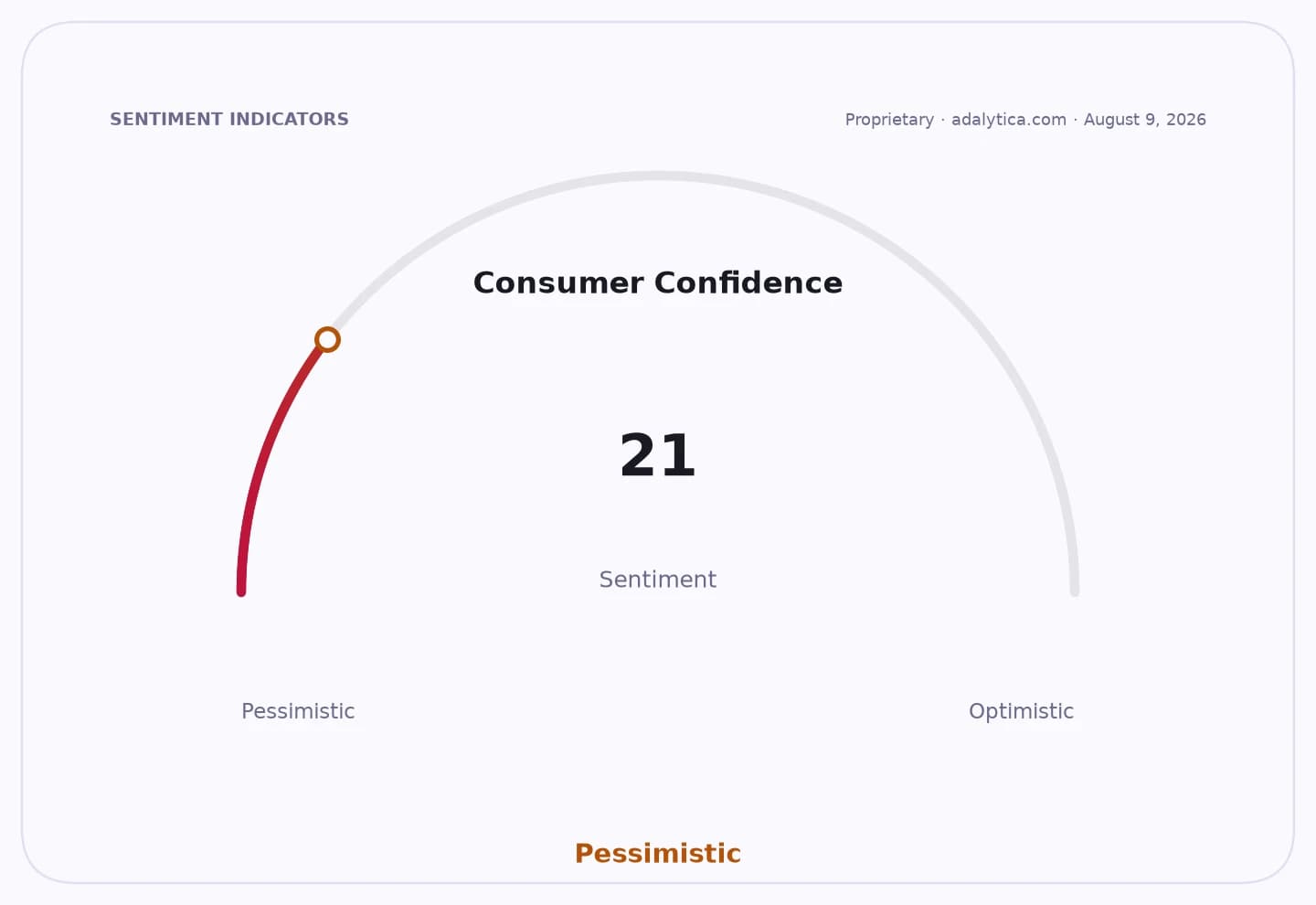
That caution shows up in the way people are spending. An Adalytica consumer spending sentiment gauge is at 4.0, or “Extreme Fear,” even though awareness remains at 100.0, an “Extreme Greed” reading. In plain English, people are highly aware of spending opportunities and lifestyle choices, but the mood around future consumption is deeply uneasy. A separate consumer confidence recession gauge sits at 21.0, squarely in fear territory, reinforcing the idea that households are under pressure to protect balance sheets rather than expand them.
For investors, that is the real lesson in the “going broke” warning: the issue is not just personal finance, it is future spending power. When households convert higher salaries into higher consumption immediately, they sacrifice the compounding that comes from investing, saving and building an emergency buffer. Over time, that behavior can make a middle-class family feel richer on payday while becoming poorer in net worth. In an economy where wage gains are not always keeping pace with living costs, that is a dangerous trade.
It also helps explain why retailers with scale and value positioning can keep winning even in a fragile consumer environment. Walmart’s shares have held around $111.85, while Amazon has climbed back to $274.48, both reflecting investors’ preference for businesses that can capture share from budget-conscious shoppers. Target, meanwhile, has surged to $149.70 from $86.34 in November, showing how quickly sentiment can rebound when investors think the worst may be behind a retailer. The bigger picture is that consumers may become more selective, but they do not stop shopping — they trade down, compare harder and favor convenience, price and value.
That is why the spending-habit warning matters far beyond household budgets. Economically, it points to a consumer base that is more fragile than headline spending data may suggest. For investors, it reinforces the case for owning the strongest retailers, the biggest platforms and the most durable cash-generating businesses, because those are the companies most likely to benefit when customers become disciplined, not just busy.
The long-term takeaway is straightforward: if you are building wealth, the habit to break is lifestyle inflation. If you are investing, the theme to watch is consumer discipline — and the companies that profit when shoppers get smarter about every dollar. In both cases, patience and compounding matter far more than chasing the next paycheck-fueled splurge, so this is a story worth keeping on your watchlist for years, not weeks.
| Entity | Gains | Losses |
|---|---|---|
| Savers and investors | ▲More compounding power | ▼Less immediate consumption |
| Middle-class households | ▲Stronger long-term balance sheets | ▼Lifestyle inflation, weaker net worth |
| Walmart and Amazon | ▲Trade-down and value demand | ▼Premium-only retailers |
| Target | ▲Recovery if spending shifts to value | ▼If cautious shoppers keep trimming budgets |