U.S. debt, Treasury yields, and dollar stay pressured

Trump’s vow to “grow our way out of debt” lands as the U.S. heads toward a record $40 trillion national debt and borrowing costs stay elevated, keeping pressure on Treasury financing, the dollar and rate-sensitive assets.
The economic math behind the promise is unforgiving. GDP is forecast to reach about $32.9 trillion in the July quarter of 2026, up 1.28% from the prior estimate, while the federal funds rate sits at 3.63% and the 10-year Treasury yield is near 4.79%, a level that keeps debt-service costs high and limits fiscal room.

Investors are already pricing in that tension. The SPDR S&P 500 ETF Trust slipped to 757.56 on Sept. 10 from 765.96 two days earlier, while the iShares 20+ Year Treasury Bond ETF fell to 80.81, underscoring how long-duration bonds remain under pressure as yields stay elevated. The U.S. dollar ETF, UUP, edged to 28.03, suggesting the greenback is still supported by higher rates even as policy uncertainty rises.
The combination of heavy borrowing and still-solid growth is the key market narrative. If growth accelerates enough, tax receipts can improve and debt ratios can stabilize; if not, the government will keep refinancing more debt at higher coupons, a mix that can crowd out private investment and keep volatility elevated across equities, Treasuries and credit.
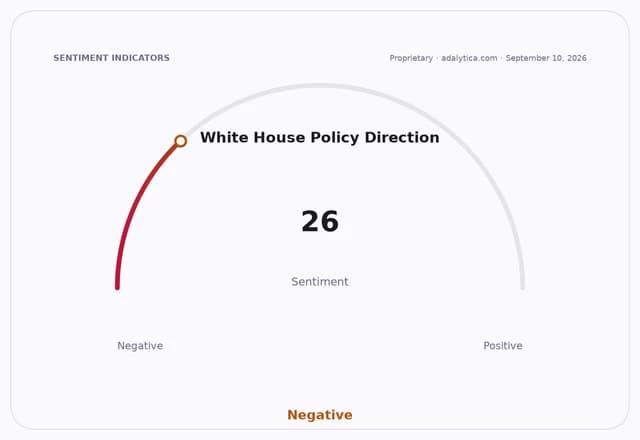
Adalytica’s US White House Policy Direction Sentiment gauge sits at 26, in “Fear,” reflecting rising uncertainty around the administration’s fiscal and policy path. For investors, the next test is whether growth data, Treasury auctions and Fed policy can keep financing conditions manageable without forcing a bigger repricing in bonds and stocks.
| Entity | Gains | Losses |
|---|---|---|
| U.S. economy | ▲Stronger nominal growth | ▼Slower growth, weaker tax receipts |
| Treasury borrowers | ▲Refinance capacity if growth holds | ▼Higher interest expense |
| Equity investors | ▲Earnings support from growth | ▼Rate-sensitive valuations |
| Bondholders | ▲Stability if inflation eases | ▼Price pressure from higher yields |