U.S. Dollar Rises Ahead of CPI and Michigan Data
The U.S. dollar edged higher early Friday as investors positioned for two readings that could shape the Federal Reserve’s next move: consumer-price inflation and the University of Michigan’s sentiment survey.
That matters because the dollar’s direction is still tightly linked to the market’s view of rates. If inflation comes in sticky, or if consumers show enough confidence to keep spending resilient, the Fed has less room to ease quickly. That tends to support Treasury yields and the greenback, while pressuring rate-sensitive corners of the market.

The dollar tracked higher through the UUP exchange-traded fund, which closed Thursday at 28.07, just below its recent short-term highs and above its 200-day moving average of 27.63. Technical readings showed UUP’s RSI at 59.1, a sign of firm but not overextended momentum, while its MACD stayed marginally negative. In plain English, the dollar has already rebounded enough to matter, but traders were still waiting for the data to decide whether the move has legs.
The macro backdrop helps explain the caution. The latest consumer-price index reading in the supplied data showed annual inflation still running at 3.4% in August, with the forecast for September pointing to only a slight cooling. At the same time, Michigan sentiment has been fragile, though it has improved from May’s slump. That combination is awkward for policymakers: consumers remain uneasy, but prices are not yet behaving like a problem that is fully behind the economy.
For investors, the bigger issue is what happens to financial conditions if the data surprise to the upside. A stronger dollar can weigh on multinational earnings, commodity prices and emerging-market assets, while helping importers and businesses that buy goods abroad. It also tends to hit gold and other dollar-priced hedges. On the other hand, a firm dollar can be a warning that the market is pushing out hopes for rapid rate cuts, which would favor cash, short-duration bonds and quality balance sheets over speculative growth.
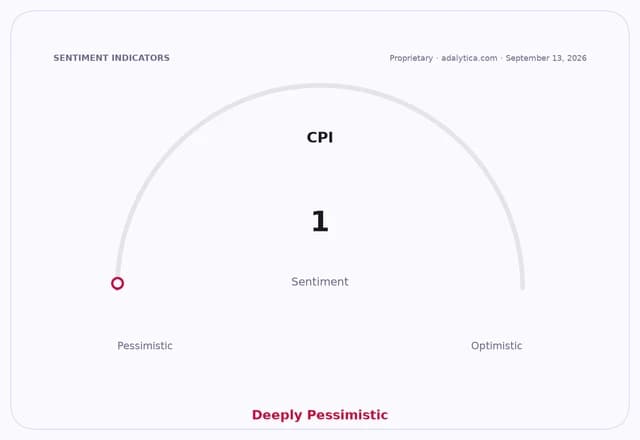
The reaction in broader market sentiment underscores how sensitive this setup is. Proprietary Adalytica data showed CPI sentiment at “Extreme Fear,” while S&P 500 trade signals also sat in “Extreme Fear,” a sign investors are wary of being caught on the wrong side of an inflation surprise. Consumer spending sentiment, by contrast, remained at “Extreme Greed,” suggesting households are still willing to spend even as they worry about prices.
That is the story worth watching over the next few sessions. If inflation and sentiment both cool, the dollar could give back some of its gains and risk assets may breathe easier. If prices stay firm and consumers stay resilient, the greenback may have more room to run — and investors should expect the Fed debate to stay focused on how long rates need to remain restrictive. For long-term investors, this is a reminder to keep portfolios diversified and let macro swings create opportunities rather than tempt timing mistakes.
| Entity | Gains | Losses |
|---|---|---|
| U.S. dollar | ▲Firmer rate outlook | ▼Importers and multinationals |
| Treasury yields | ▲Sticky inflation support | ▼Bond prices |
| UUP holders | ▲Dollar rebound exposure | ▼Weak-dollar hedges |
| S&P 500 | ▲Softer inflation surprise | ▼Higher-rate sensitivity |