U.S. Dollar Holds Gains as Fed Gives No New Signal

The U.S. dollar looks likely to keep its recent gains, but traders are having a harder time finding the next catalyst because the Federal Reserve is offering little fresh guidance on where rates go from here.
That matters because the dollar’s direction is still being driven by the same force that has dominated currency markets for much of the past two years: interest-rate expectations. When the Fed is clear, the dollar can reprice quickly. When the Fed is vague, the market tends to drift, and that can leave the greenback stuck near levels that reflect caution rather than conviction.
A Reuters poll points to exactly that kind of setup. The dollar has recovered enough to hold onto gains, but not enough to break decisively higher, with investors left to weigh a still-firm U.S. yield backdrop against the absence of a strong new Fed signal. Ten-year Treasury yields are around 4.82%, while two-year yields are near 4.45%, keeping the curve only modestly inverted and reinforcing the idea that policy will stay restrictive for some time. That is usually supportive for the dollar, but only up to a point.
The recent price action in the U.S. Dollar Index ETF, UUP, tells the same story. The fund closed at 28.17 on Sept. 2, not far from its 50-day moving average of 28.27 and above its 200-day moving average of 27.61. That suggests the dollar is still trending higher over the longer term, but it is not in a breakout phase. Momentum has cooled, with the relative strength index at 48.2, a reading that suggests the fund is neither overbought nor oversold.
For investors, that combination usually means patience is required. A dollar that is stable but directionless can be a headwind for multinational earnings translation, commodity prices and emerging-market assets, but it does not create the kind of disorderly move that forces broad portfolio repositioning. It also means currency-sensitive trades can be more about yield differentials and central-bank communication than about a single dramatic macro shock.
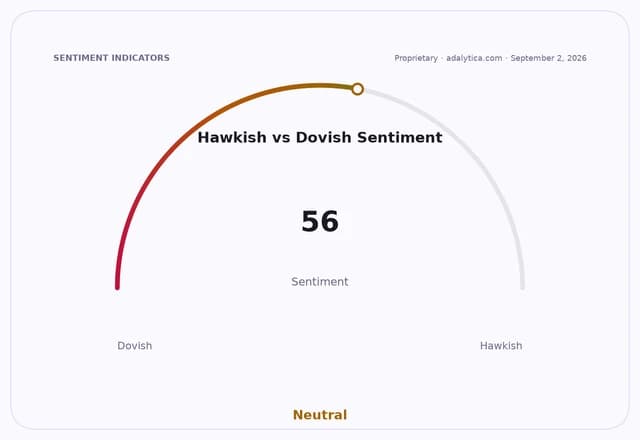
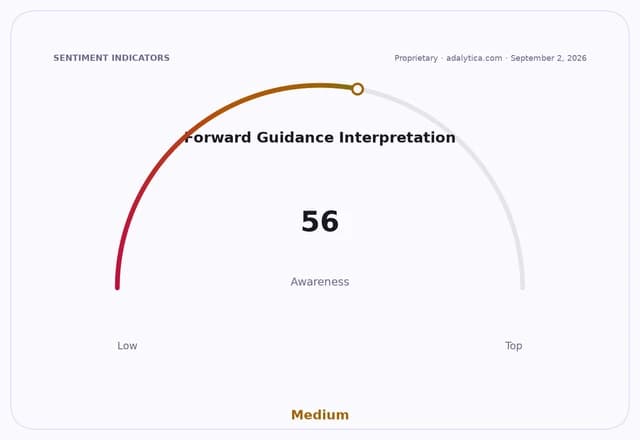
There is another layer to this story: policy uncertainty itself. Adalytica’s Federal Reserve Forward Guidance sentiment gauge is sitting in “Extreme Fear,” underscoring how little clarity investors feel they are getting from the central bank. That uncertainty has helped keep demand for U.S. assets supported, even as broader market sentiment has turned cautious.
The long-term takeaway is fairly simple. If the Fed stays quiet and Treasury yields stay elevated, the dollar should remain supported, but likely in a range rather than on a runaway move. For investors building portfolios for the next three to 10 years, that argues for diversification over currency bets and for keeping an eye on how much foreign revenue exposure companies really have. The dollar may not be roaring, but it is still doing enough to matter. Worth watching.
| Entity | Gains | Losses |
|---|---|---|
| U.S. dollar | ▲Holds support from higher yields | ▼Breakout momentum |
| Treasury buyers | ▲Income from elevated yields | ▼Price upside if yields rise |
| Multinationals | ▲None | ▼Translation from stronger dollar |
| Emerging-market assets | ▲Relief from limited dollar surge | ▼Risk if dollar strength resumes |