US dollar rises as UUP gains and yen weakens

The US dollar’s latest burst higher is squeezing global markets, lifting the greenback-linked UUP fund while leaving the yen weaker and forcing traders to lean harder on short-term volatility moves.
That matters because a stronger dollar tightens financial conditions across emerging markets, weighs on commodity prices and can reshape returns for exporters, importers and multinationals that earn revenue in foreign currencies. For CFD traders, it creates the kind of fast, leveraged price swings that can quickly turn into profits or losses.

JustMarkets, a multi-asset CFD platform, said understanding dollar dynamics is key for traders looking to capture moves across forex, commodities and other markets as macro volatility picks up. Its warning lands as Adalytica’s FX volatility signals show “Extreme Fear,” with a sentiment reading of 11 and awareness at 4, even as US dollar trade signals have jumped 14 points in a day and 48 points over a week.
That backdrop is showing up in the market itself. The Invesco DB US Dollar Index Bullish Fund, UUP, closed at 28.08 on Sept. 4, above its 50-day moving average of 28.24 and 200-day average of 27.62, while its RSI of 49.1 suggests momentum has cooled from earlier overbought levels. By contrast, the Invesco CurrencyShares Japanese Yen Trust, FXY, ended at 58.67, below its 200-day average of 57.99 after a volatile run, underscoring renewed pressure on the yen.
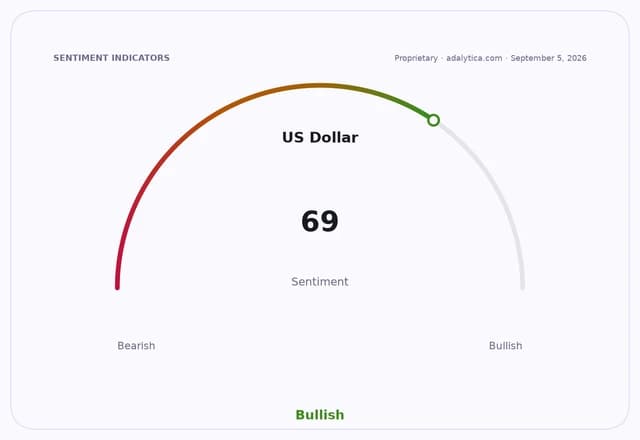
The move also has broader policy implications. The Federal Reserve’s benchmark rate is projected around 3.626%, while 10-year Treasury yields are near 4.802%, keeping US assets comparatively attractive and supporting dollar demand. A stronger dollar also tends to complicate the outlook for overseas borrowers with dollar debt and for US companies exposed to foreign exchange translation, including automakers and other global manufacturers.
For investors, the key question is whether dollar strength persists long enough to influence earnings, capital flows and commodity pricing into the next Fed decision and upcoming macro data. If the rally extends, exporters and emerging-market assets could stay under pressure, while dollar bulls, volatility traders and hedged US investors remain the main beneficiaries.
| Entity | Gains | Losses |
|---|---|---|
| Dollar bulls | ▲Higher FX returns | ▼More crowded positioning risk |
| CFD traders | ▲Bigger short-term swings | ▼Faster leveraged losses |
| US importers | ▲Cheaper overseas inputs | ▼None from dollar strength |
| Emerging-market borrowers | ▲None | ▼Higher debt-servicing stress |