U.S. household debt falls in Q2 as delinquencies ease
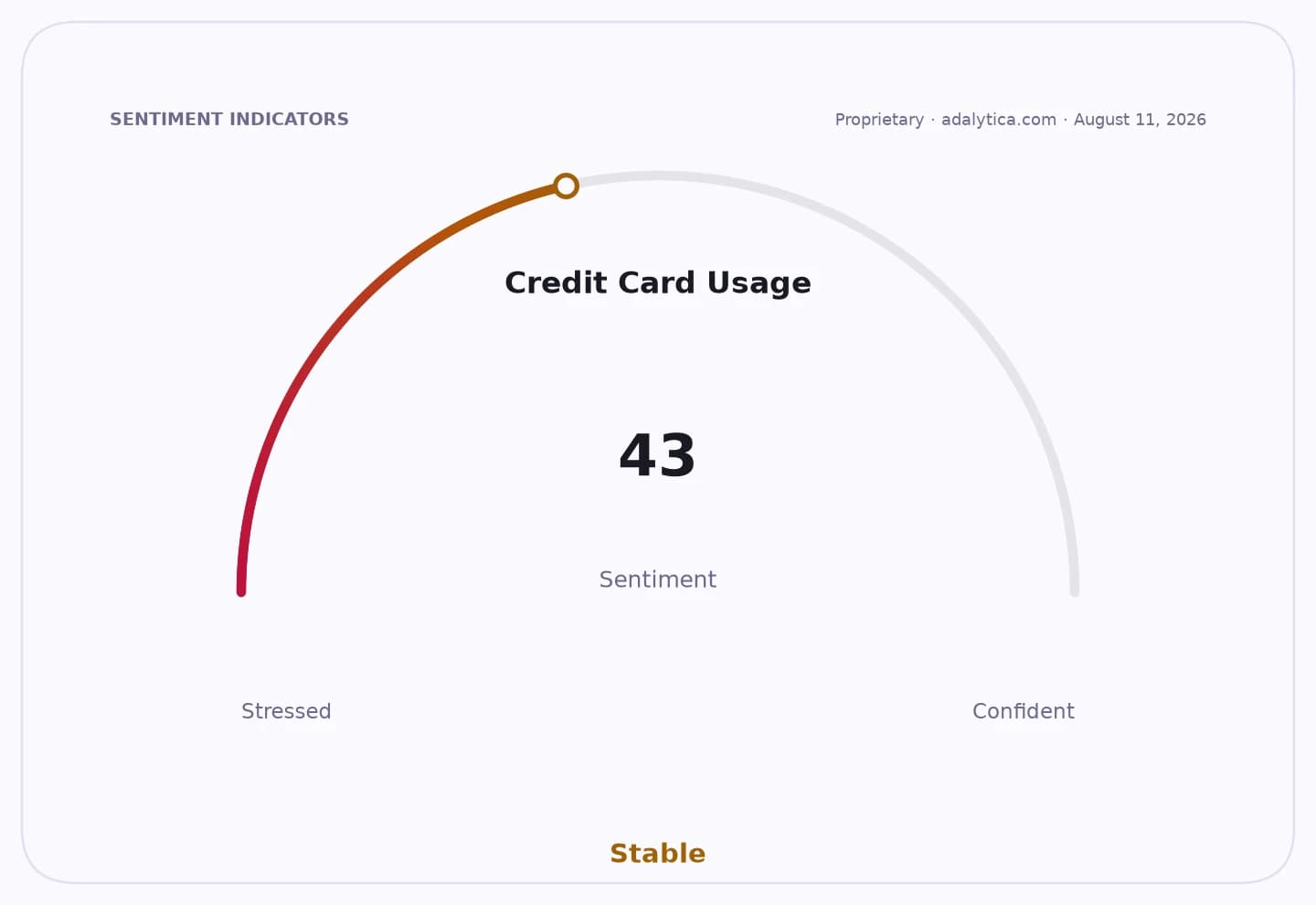
U.S. household debt fell in the second quarter for the first time since the pandemic, but the improvement is not broad enough to suggest consumers are out of the woods.
The Federal Reserve Bank of New York said total household balances eased while the delinquency rate slipped to 4.7%, yet pockets of stress remain elevated, underscoring how higher borrowing costs and lingering inflation are still weighing on borrowers. For investors, that mix matters because consumer credit quality feeds directly into bank earnings, credit-card lenders and the pace of household spending, the main engine of the U.S. economy.
The drop in overall debt suggests some families are finally reducing leverage after years of heavy borrowing and elevated rates, but the details point to a fragile balance sheet adjustment rather than a clean recovery. Even with some delinquency metrics improving, the persistence of strain implies that lower-income borrowers and revolving-credit users remain vulnerable as financing costs stay high.
That backdrop is especially relevant with the 10-year Treasury yield around 4.72%, keeping consumer loan rates and mortgage costs elevated enough to discourage refinancing and new homebuying. Recent housing transactions have also slowed as loan rates rise, a sign that household caution is spilling into the broader economy.
The earnings season has offered a similar picture: major lenders including JPMorgan, Capital One, Synchrony and American Express have pointed to stable-to-better consumer credit trends in some portfolios, but also to continued pressure in others, especially in credit cards and certain unsecured loans. The divergence suggests banks may avoid a sudden credit shock, yet they are unlikely to see a quick relief rally in provisions or charge-offs.
The broader market response has been muted but constructive for financials, with the Financial Select Sector SPDR Fund, XLF, trading above its 50-day and 200-day moving averages. Regional bank shares, tracked by KRE, are also firmer, though the group remains sensitive to any renewed deterioration in consumer credit.
Investors will be watching the next round of consumer data, mortgage rates and bank updates for signs that the debt pullback is translating into healthier balance sheets rather than simply more stretched households spending less.
| Entity | Gains | Losses |
|---|---|---|
| Households paying down debt | ▲Lower leverage | ▼Tighter spending capacity |
| Banks and card lenders | ▲Fewer severe credit shocks | ▼Ongoing delinquency risk |
| Financial stocks | ▲Stabilizing credit outlook | ▼Rate-sensitive consumer pressure |
| The U.S. consumer | ▲Some balance-sheet repair | ▼Slower credit-fueled growth |