US households are running into more pressure on monthly debt payments just as the cost of borrowing remains elevated, forcing banks and card lenders to watch for signs of strain even before the broader economy weakens.
US households face higher debt payment pressure
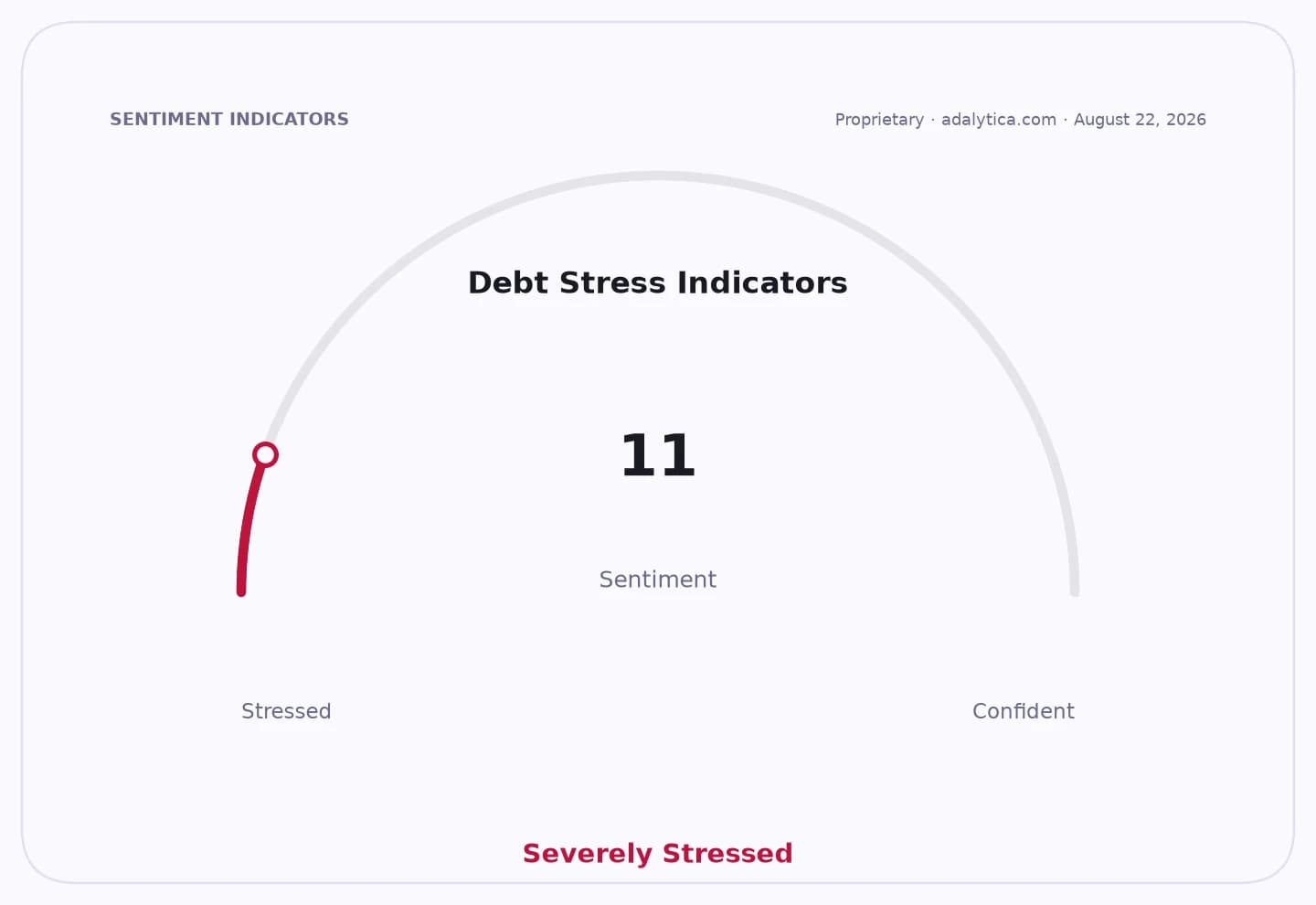
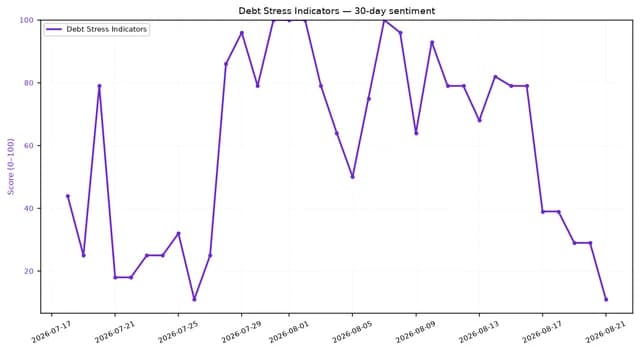
The most important development is not a single missed payment, but the combination of still-high benchmark rates, persistent consumer debt loads and a sharp deterioration in household debt stress sentiment. The 10-year Treasury yield is holding near 4.68%, far above the ultra-low levels that helped borrowers refinance cheaply for much of the past decade, while the household debt stress gauge from Adalytica has dropped to 11, or “Extreme Fear,” after sliding 79% over the past week. That points to a growing need for debt relief tools such as refinancing, balance transfers, hardship plans, consolidation loans and payment renegotiations.
Sentiment IndicatorsⓘProprietary · adalytica.com · August 22, 2026
This is a snapshot — live sentiment, awareness and momentum for 130+ markets update continuously in the dashboard.Open AlphaPulse
For consumers, the practical issue is immediate cash flow. A higher-rate environment raises the monthly cost of everything from credit card balances to personal loans, and that matters most for households that rely on revolving credit to bridge pay cycles or absorb shocks. Even if unemployment is still relatively contained at 4.1%, rising financing costs can pinch budgets before job losses show up in the official data. That is why relief options matter now: they can prevent a temporary payment squeeze from turning into delinquencies, fees and eventual charge-offs.
The stress is visible in lenders’ own filings. Capital One said its net charge-off rate was 3.23% in the second quarter, while Synchrony flagged ongoing credit-card charge-offs in recent reporting. Those are not crisis levels, but they show lenders are already seeing the effect of stretched household balance sheets. In card lending, small changes in delinquency can quickly feed through to provisions, funding costs and margins, which is why investors track consumer repayment behavior as closely as loan growth.
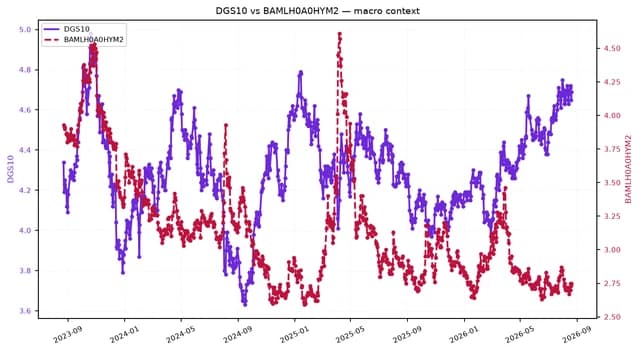
Markets are also sending a mixed signal. Capital One shares have recovered sharply this year and closed at $217.91 on Aug. 21, above both its 50-day and 200-day moving averages, even after a pullback from recent highs. Synchrony ended at $79.47, also above its short- and long-term moving averages. That suggests investors are not pricing in a broad consumer credit breakdown. But the recent pullback in household debt sentiment and the weakness in broader S&P 500 trade signals imply less room for complacency if rates stay near current levels.
The five relief routes matter because they separate manageable stress from real damage. Refinancing works when borrowers can replace expensive debt with cheaper terms; balance transfers help if someone can qualify for introductory offers; hardship programs can buy time; debt consolidation can simplify payments; and negotiation with lenders can reduce late fees or extend maturities. Each comes with trade-offs, but all are preferable to missed EMI-style payments that can snowball into long-term credit damage.
The bigger narrative is that the US consumer is not yet breaking, but is becoming more rate-sensitive. If Treasury yields and consumer funding costs remain elevated, lenders may tighten underwriting, reward higher-quality borrowers and become less generous on promotional credit. For investors, that means the key watchpoints are delinquency trends, reserve builds and whether relief programs are being used as a pressure valve—or as an early warning that household finances are fraying.
| Entity | Gains | Losses |
|---|---|---|
| Borrowers using relief options | ▲Lower monthly pressure | ▼Higher total interest or fees |
| Banks and card lenders | ▲Fewer immediate defaults | ▼Lower margins, higher admin costs |
| Investors in consumer lenders | ▲Stability if delinquencies stay contained | ▼Reserve builds if stress spreads |
| Delinquent borrowers | ▲Time to avoid missed payments | ▼Credit score damage if relief fails |