US Housing Affordability and Parental Help
Rising interest rates and record house prices are making family help a bigger part of the homebuying equation, turning the so-called bank of mum and dad into a structural force in housing markets rather than a last-resort safety net.
That matters because affordability is no longer being determined only by wages, mortgage approvals and deposit rules. In much of the market, access to parental wealth is now deciding who can buy, who can bid higher and who gets shut out altogether. For first-time buyers, the gap between incomes and prices has widened enough that family assistance can mean the difference between owning a home and remaining a renter.
The pressure comes through clearly in the data. US home prices, as measured by the Case-Shiller index, have climbed to 336.663 in June 2026 from 308.065 a year earlier, extending a long run of gains that has left prices far above pre-pandemic levels. At the same time, the 10-year Treasury yield has risen to about 4.95%, with a further move toward 5.043% forecast, underscoring why mortgage costs remain elevated even after the latest policy steadying by the Federal Reserve. Average 30-year mortgage rates have stayed above 6%, according to company disclosures cited in filings.
The result is a tougher financing hurdle for buyers who do not have family wealth behind them. The housing crunch is visible not just in the US but across other markets too: Queensland’s affordability has fallen to a record low, with typical households able to afford only 9% of homes sold. That kind of stress helps explain why parents are increasingly stepping in with deposits, guarantees or outright cash transfers. It also explains why developers and lenders are adapting their products to a market where traditional affordability metrics are breaking down.
Investors are already seeing the effects in housing-related equities. The iShares U.S. Home Construction ETF, ITB, fell to 89.12 on Sept. 15 from 98.43 a month earlier, while the SPDR S&P Homebuilders ETF, XHB, slipped to 97.76 from 108.23 over the same period. Both have also dropped below their 200-day moving averages, with RSI readings in the mid-20s, a sign of technical weakness that reflects deteriorating sentiment around the housing cycle. Zillow, which depends on transaction volume, has warned that persistently high mortgage rates are depressing consumer activity, while manufactured-home lenders and builders have said elevated borrowing costs are delaying purchases.
The bullish case for housing equities is that family wealth can keep demand from collapsing. If parental support is bridging deposit shortfalls, it can sustain turnover at the upper end of the market and support builders, agents and lenders more than headline affordability data would suggest. The bearish case is that this is a narrow, uneven prop for demand that deepens inequality and leaves the broader market vulnerable once family balance sheets reach their limits.
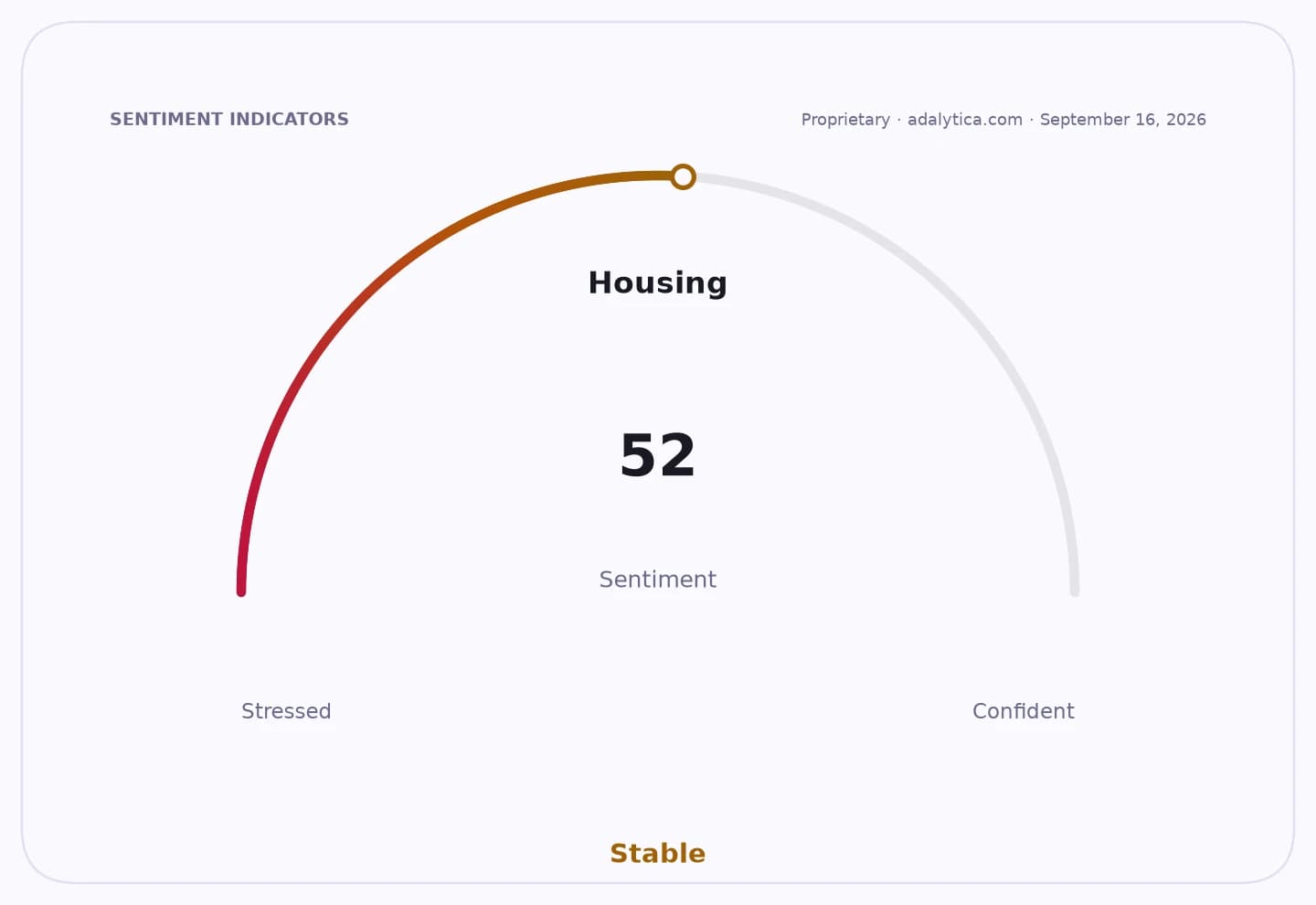
Adalytica’s Housing and Rent Inflation Sentiment gauge remains neutral at 52, but the latest drop in awareness and the recent swings in sentiment point to a market still searching for a stable footing. For investors, the key question is whether high rates and high prices keep forcing buyers to rely on inherited wealth — or whether weaker demand finally feeds back into prices, margins and transaction volumes.
| Entity | Gains | Losses |
|---|---|---|
| Wealthier parents | ▲Larger role in homebuying | ▼Liquidity risk, weaker savings |
| First-time buyers with family support | ▲Better access to deposits | ▼Dependence on wealth transfers |
| First-time buyers without family support | ▲— | ▼Worse affordability, fewer bids |
| Homebuilders and agents | ▲Demand from supported buyers | ▼Broader buyer pool stays constrained |