U.S. Housing Sales Stay Near 30-Year Low
The U.S. housing market still looks like a sector trying to crawl out of a deep trough, and the key question for investors is whether that bottom is finally in sight or whether affordability will keep pinning demand near recessionary levels. Existing-home sales are still running at about a 30-year low, mortgage rates remain elevated, and the newest data suggest a market that is stabilizing in spots but not yet free of the pressure that has hammered builders, brokers and housing-related stocks.
That matters because housing is not just a place to live; it is one of the economy’s biggest interest-rate-sensitive engines. When transactions freeze, the slowdown ripples through construction, furnishings, lenders, title companies and even local tax receipts. A recovery in the resale market — the “second-hand houses” segment that tends to set the tone for overall housing turnover — would be a signal that buyers are adjusting to higher borrowing costs and that the worst of the volume collapse may be passing. But if sales stay stuck near the floor, housing will continue to act as a drag on growth.
The latest housing series underscore that tension. U.S. housing starts have been volatile and remain well below the kind of levels associated with a healthy expansion, with the forecast pointing to only a modest rebound after a choppy summer. At the same time, the S&P CoreLogic Case-Shiller national home price index has kept grinding higher, recently around 336.7, showing that limited supply is still protecting prices even as affordability stays stretched. That combination — weak turnover, firm prices — is exactly what makes this phase of the cycle so uncomfortable for would-be buyers and so tricky for investors.
For housing-exposed stocks, the message is mixed. The iShares U.S. Home Construction ETF has recovered from its spring lows, but the technical picture has softened again in recent sessions, with the fund slipping below its 50-day moving average and its relative strength reading easing. That suggests traders are still skeptical that the rebound has real staying power. Lennar, D.R. Horton and NVR have all flagged the same core problem in recent filings: demand is being restrained by affordability, elevated rates and uneven pricing pressure, even as some order trends improve. That is not the profile of a roaring housing boom; it is the profile of a slow, uneven reset.
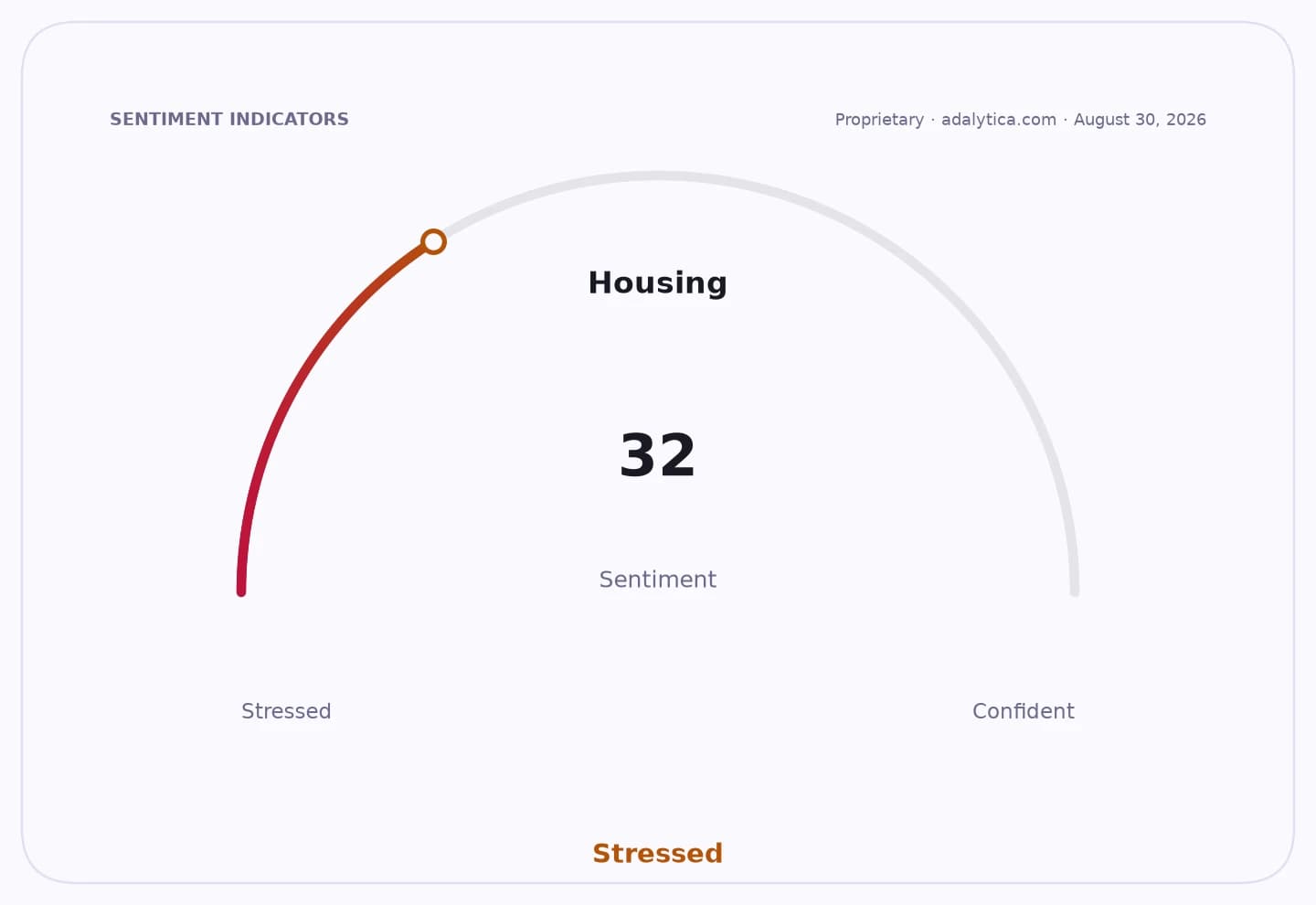
Still, investors should not confuse a slow recovery with no recovery. If mortgage rates ease and labor market conditions remain solid, the resale market can improve faster than many expect, because housing demand has been delayed rather than destroyed. Adalytica’s Housing Fear & Greed reading has also moved back into neutral territory after swinging sharply earlier this year, which fits the idea of a market searching for direction rather than breaking down anew.
For long-term investors, the real story is not whether housing bounces one month at a time. It is whether the sector can move past its lowest point and begin a multi-year normalization. If existing-home sales stop making new lows, homebuilders and housing ETFs could regain footing even without a dramatic drop in rates. If not, the market may keep rewarding patience over urgency. Either way, this looks like a housing cycle worth watching closely and holding through with a long-term lens.
| Entity | Gains | Losses |
|---|---|---|
| Buyers | ▲More negotiating power | ▼Higher financing costs |
| Existing-home sellers | ▲Better turnover if demand revives | ▼Sluggish sales volume |
| Homebuilders | ▲Easier pricing if resales thaw | ▼Weak affordability and volume |
| Housing ETFs / investors | ▲Upside if the bottom holds | ▼More volatility if sales stay stuck |