U.S. Inflation Eases as Wage Pressure Cools

Inflation is easing in the aggregate, but the real investment story is how unevenly the pain — and the relief — is being distributed across households, workers and asset classes.
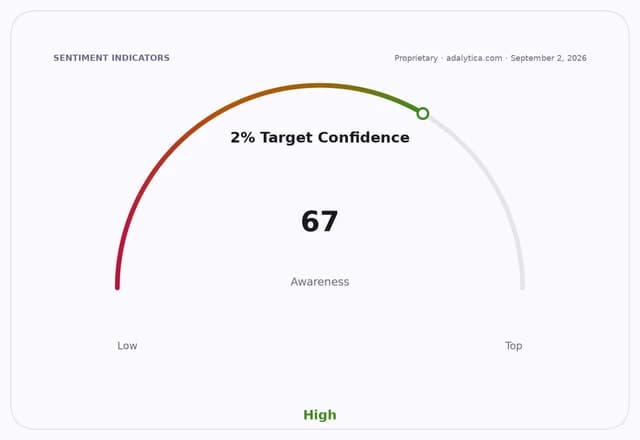
That is the message behind fresh U.S. inflation data showing consumer prices up just 0.07% in July from June and 3.3% from a year earlier, while core inflation rose 0.22% month over month and 3.4% year over year. Unemployment is still low at 4.1%, which helps explain why the Federal Reserve can keep a soft landing narrative alive, but it also masks a growing split: consumers are regaining confidence that the Fed’s 2% target is credible, while wage inflation fears are cooling sharply.
That divergence matters economically because inflation is not a single tax; it is a transfer of purchasing power that hits fixed-income households, renters, labor-intensive businesses and lower-margin retailers first. In this case, the broad CPI print suggests pricing pressure is moderating, but core services remain sticky enough to keep policy restrictive. The result is a labor market that is still tight, but not tight enough to feed a new wage spiral — a crucial distinction for the next leg of the cycle.
For investors, that mix points to a market that may be underpricing the second-order winners from disinflation. If wage inflation fears continue to fade, the biggest beneficiaries are likely to be long-duration equities, consumer discretionary names with pricing power, and businesses whose margins were squeezed by labor costs. The losers are companies that relied on passing through inflation to protect earnings, along with consumer-facing firms exposed to the lower-income cohort, where price sensitivity remains highest.
The latest Adalytica reading on confidence in the Fed’s 2% target jumped to 100, with sentiment labeled “Extreme Greed,” while its wage inflation gauge sat at 30, or “Fear.” That combination is telling: investors are becoming more comfortable that inflation is no longer metastasizing, even as they remain cautious about labor costs and household strain. In other words, the market is starting to separate “inflation down” from “inflation solved.”
That is why Arthur de Watrigant’s point resonates far beyond the policy debate. Inflation is not landing evenly, and the market will not treat it evenly either. The next trade is in the gap between headline calm and household stress: companies with genuine margin resilience, exposure to a still-employed consumer, and leverage to lower input costs should keep outperforming. The broader implication is clear — disinflation is becoming an investable theme, but only for the businesses positioned on the right side of inequality.
| Entity | Gains | Losses |
|---|---|---|
| Fed credibility | ▲Gains confidence | ▼Loses urgency for cuts |
| Wage-sensitive employers | ▲Gains margin relief | ▼Loses pricing leverage |
| Consumers with cash flow | ▲Gain purchasing power | ▼Lose less to inflation |
| Lower-income households | ▲Gain little relief | ▼Lose most to price pressure |