US Job Lock and Health Insurance Friction
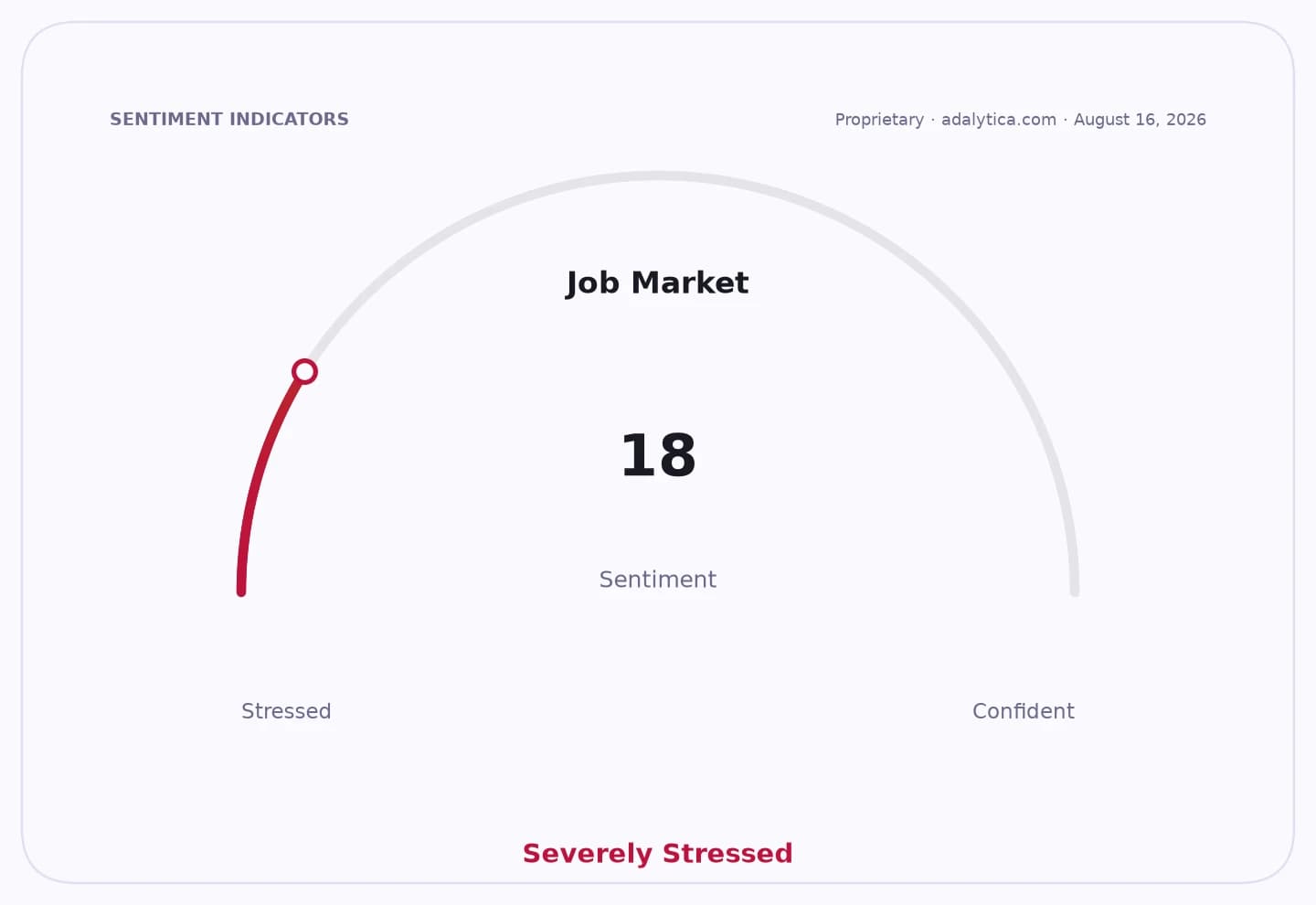
Roughly 23 million Americans say they want to quit their jobs but feel trapped by the one benefit they can least afford to lose: health insurance.
That matters far beyond household frustration. In a labor market that has otherwise healed, job lock keeps workers from moving to better-paying roles, blocks wage growth from being fully realized and leaves employers with an artificial grip on talent. It also helps explain why the U.S. health insurance system remains one of the biggest hidden frictions in the economy, even with unemployment near a multi-year low and payrolls still expanding.
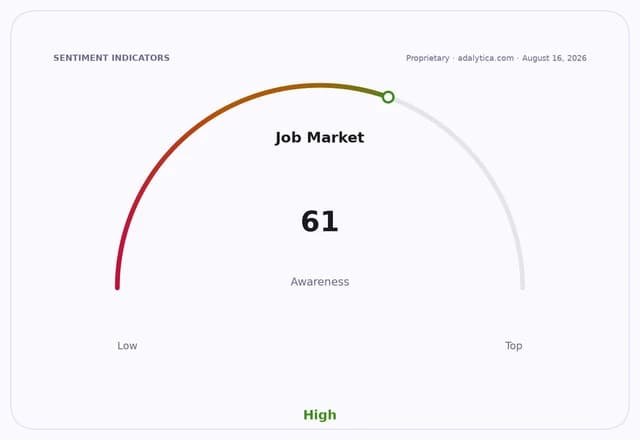
The latest labor backdrop shows why the problem persists. The unemployment rate is forecast at 4.09% in August, down from 4.1% in July and not far from levels that economists would normally call close to full employment. Nonfarm payrolls are also projected to edge up to 158.959 million from 158.858 million. On paper, that is a fairly healthy labor market. In practice, many workers still do not feel free to move.
Health insurance is the key reason. When coverage is tied to employment, quitting a job is not just a career decision — it can become a household risk calculation. Losing access to a plan, facing higher premiums on the individual market or worrying about a coverage gap can outweigh the promise of a better title, a higher salary or a less stressful boss. For millions of workers, that makes “opportunity” conditional.
Investors should care because job lock distorts how labor markets normally reprice talent. If workers cannot move easily, companies have less pressure to bid up wages aggressively, but they also face weaker access to the best available talent. That can eventually weigh on productivity across the economy. It also helps explain why health insurers, hospitals and pharmacy benefit managers sit at the center of a huge economic bargain: they are not just serving patients, they are shaping labor mobility.
The policy angle is important too. Governments are moving to reduce some of the friction. New reforms aimed at simplifying insurance claims and curbing arbitrary hospital billing reflect a broader recognition that the system’s complexity is itself a cost. If households trust coverage more, fewer of them will feel compelled to stay put solely to keep a plan. That could slowly loosen the labor market’s hidden handcuffs.
For insurers and managed-care companies, this is both risk and opportunity. On one hand, reforms that make coverage easier and more portable could weaken one of the system’s stickiest features. On the other, a more transparent system can improve customer satisfaction and reduce churn driven by anger rather than economics. The winners will be the firms that can deliver lower-friction coverage at scale. The losers will be those that rely on confusion and inertia.
The market is already watching that tension play out across the managed-care group. UnitedHealth Group, Cigna and CVS all trade against a backdrop of heavy scrutiny over costs, claims and benefits ratios. UnitedHealth’s shares have rebounded sharply from earlier weakness, while CVS has also staged a strong recovery this year even after recent pressure. Beneath the price swings is the same long-term question: can these companies adapt to a system that is being pushed, however slowly, toward more consumer-friendly insurance?
For long-term investors, the bigger lesson is that this is not just a policy story — it is a cash-flow story, a wage story and a mobility story. If the U.S. keeps chipping away at job lock, workers may finally gain more freedom to chase better opportunities. That could be healthy for the economy, even if it changes the economics of some insurers and benefits-heavy employers. Worth watching for investors who think in years, not weeks.
| Entity | Gains | Losses |
|---|---|---|
| Workers | ▲More job mobility | ▼Less coverage-related fear |
| Employers | ▲Easier hiring markets | ▼Weaker retention leverage |
| Health insurers | ▲More transparent demand | ▼Less sticky customers |
| U.S. economy | ▲Higher labor efficiency | ▼Lower friction-based stability |