US Job Openings Fell to 7.359 Million in June
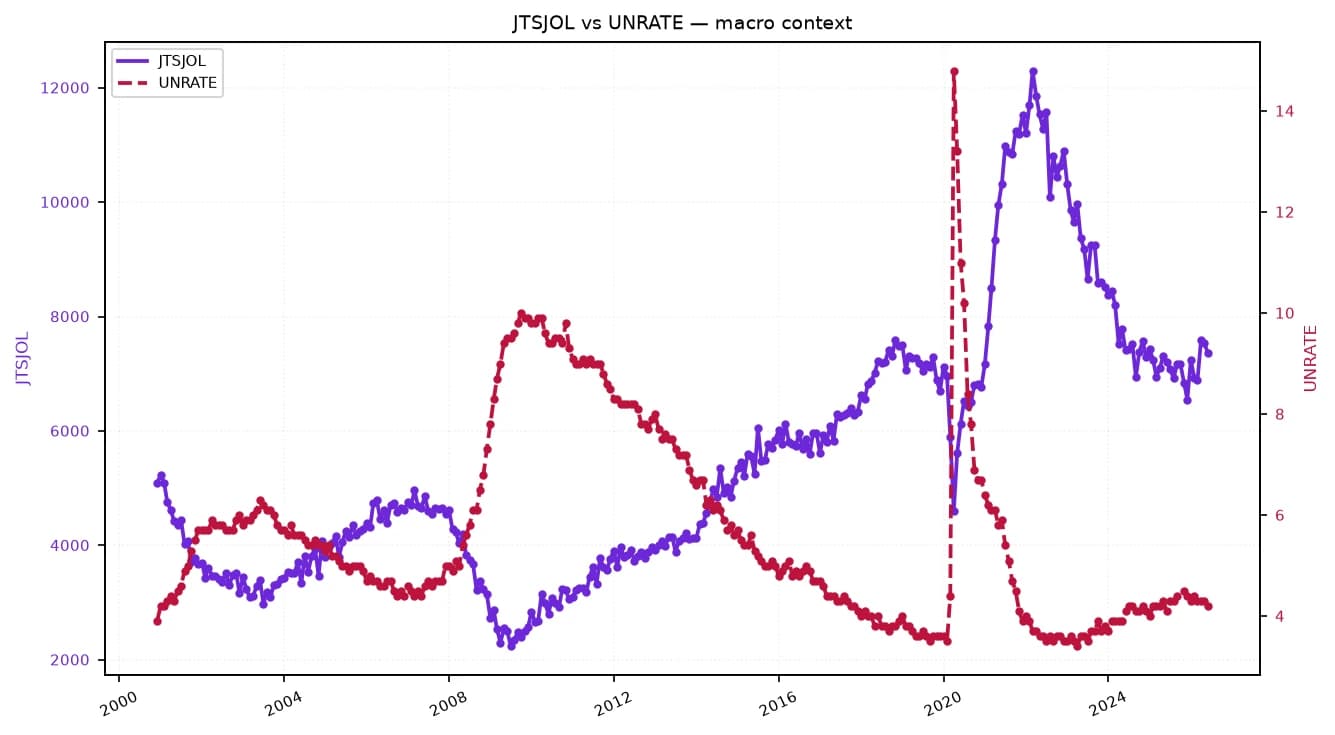
US job openings edged lower in June to 7.4 million, a small decline that still leaves the labor market looking resilient even as businesses absorb the economic hit from renewed fighting involving Iran. The report suggests companies are slowing some hiring, but not yet pulling back enough to signal a broad downturn.
Openings fell to 7.359 million from 7.537 million in May, according to the Labor Department’s Job Openings and Labor Turnover Survey, while the unemployment rate held near 4.2%. Payrolls were still rising at 158.984 million, underscoring that employers continue to keep workers on the books even as the outlook becomes less certain.
That matters because job openings are one of the best real-time gauges of labor demand and a key input for the Federal Reserve’s view on inflation and rate cuts. A labor market that remains firm, despite geopolitical shocks, reduces the urgency for the Fed to ease and could keep borrowing costs elevated for longer.
For investors, the message is mixed. Strong employment supports consumer spending and corporate revenues, but it also reinforces the idea that the economy can withstand higher rates and geopolitical volatility. That has helped keep equity benchmarks such as the SPY and DIA near elevated levels, even as bond prices remain sensitive to any shift in growth or policy expectations.
The data also point to an economy that is cooling, not cracking. Openings are well below the pandemic-era peak of more than 12 million, but still above levels that would typically be associated with recessionary stress. The latest reading came in close to the market’s forecast for a modest rebound in July, suggesting labor demand may be stabilizing rather than collapsing.
Adalytica’s job market sentiment gauge is at 100, labeled “Extreme Greed,” reflecting very high awareness around the labor data, while its payrolls snapshot remains neutral. That combination points to a market focused less on an imminent labor shock than on how long growth can continue if energy prices, supply chains and risk sentiment deteriorate further.
The next catalyst is the July employment report, which will show whether the resilience in openings is translating into hiring and payroll growth, or whether the impact from geopolitical तनाव and tighter financial conditions starts to show up more clearly in the coming months.
| Entity | Gains | Losses |
|---|---|---|
| Workers | ▲Continued job availability | ▼Less wage leverage if openings cool |
| Employers | ▲Easier hiring without wage spiral | ▼Higher uncertainty from geopolitical shock |
| Fed hawks | ▲Case for holding rates higher | ▼Faster-cut advocates |
| Equities | ▲Support from resilient growth | ▼Risk if labor weakens later |