U.S. job openings rise to 7.27 million in July
U.S. job openings edged higher in July, reinforcing the view that the labor market is still holding together even as higher borrowing costs, tariff uncertainty and energy shocks weigh on households and hiring plans.
The Labor Department said vacancies rose to 7.27 million from a revised 7.18 million in June, a small gain that nonetheless points to continued demand for workers. Layoffs also fell, while the quit rate slipped to 1.9%, suggesting employees are less confident about finding a better job and companies are not cutting aggressively.

That matters because the labor market remains the main support for consumer spending and the broader economy. Employers added an average of just 61,000 jobs a month this year, a pace that is soft by historical standards, but unemployment has stayed low at 4.1% and claims for jobless benefits remain subdued. The picture is one of a labor market that is not booming, but is still resilient enough to keep incomes flowing.
For investors, the report supports a slower-growth, higher-for-longer policy backdrop rather than an imminent collapse in hiring. Treasury yields and rate-sensitive assets remain tied to whether the Federal Reserve sees enough cooling in employment to justify cuts, while equities are watching for any sign that tighter credit and cost pressure are finally hitting corporate payrolls. The broad S&P 500, meanwhile, has held above its 200-day moving average even as the 50-day moving average and RSI readings suggest momentum is less stretched than earlier in the summer.
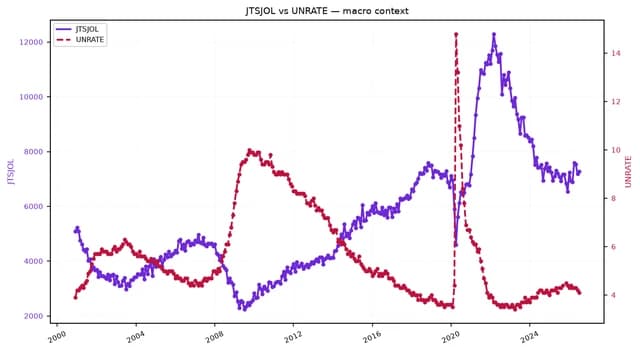
The report also lands against a backdrop of rising concern about hidden weakness beneath the surface. Official labor data have been uneven, with July payrolls unexpectedly falling by 23,000, and the next monthly jobs report is expected to show only modest hiring and a slight uptick in unemployment. That keeps pressure on markets to parse whether the economy is cooling gently or slipping into a more fragile low-hire, low-fire phase.
The immediate focus now shifts to Friday’s employment report, which will give the clearest read yet on whether July’s steadier openings translate into durable hiring or merely mask a labor market that is gradually losing momentum.
| Entity | Gains | Losses |
|---|---|---|
| Workers with current jobs | ▲Stable employment | ▼Fewer outside options |
| Employers | ▲Easier retention | ▼Higher labor costs |
| Federal Reserve | ▲More data time | ▼Less urgency for cuts |
| Rate-sensitive stocks | ▲Support from resilience | ▼Risk from prolonged tight policy |