U.S. jobs fall 23,000 in July; staffing stocks rebound
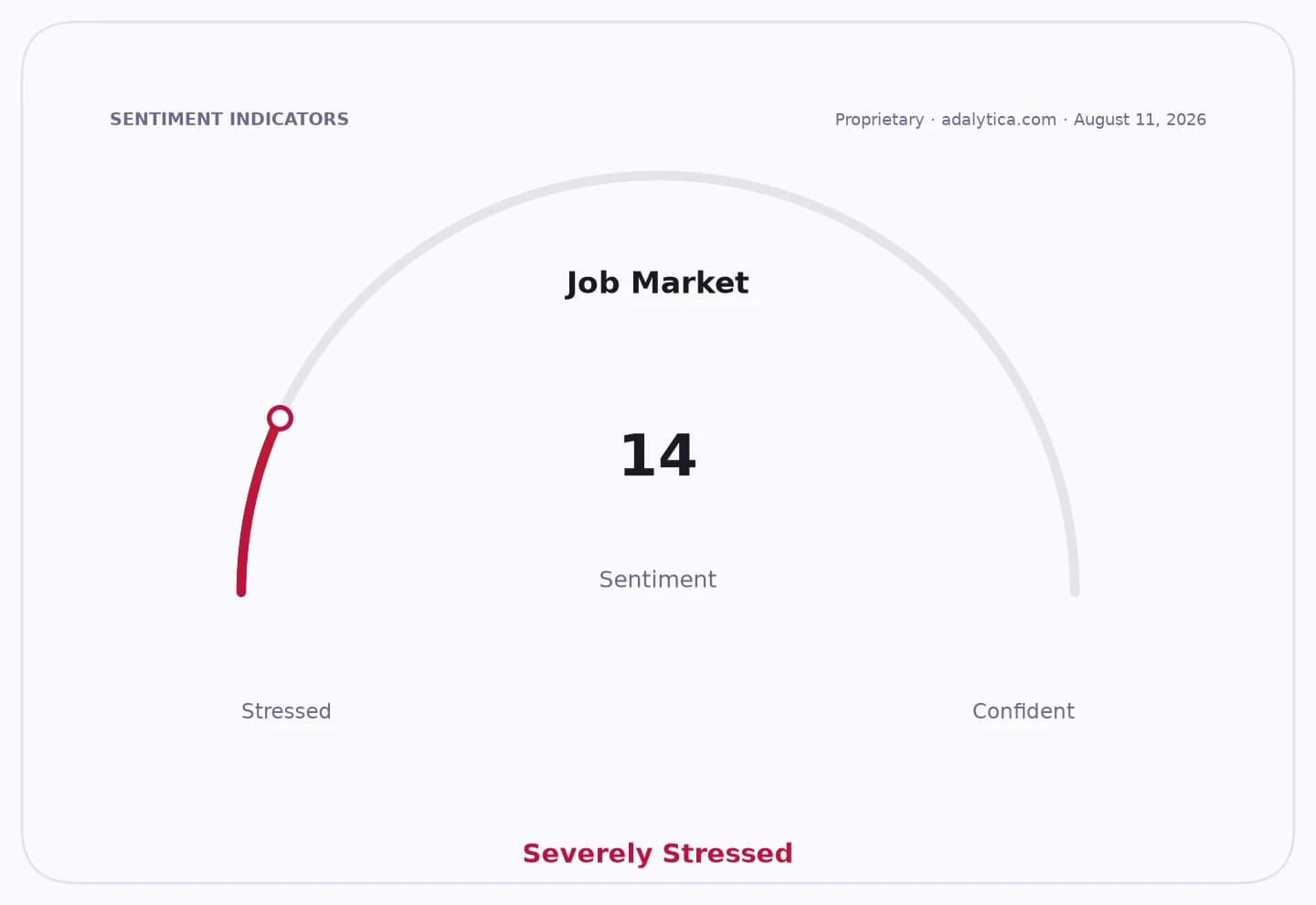
The U.S. labor market’s sudden July contraction is the most important economic development here, and it is already reshaping who gets hired, who gets squeezed and where investors should look for the next earnings inflection point.
Employers shed 23,000 jobs in July after an already weak June, a reversal that points to a labor market moving from shortage to selectivity. Unemployment is still forecast to hover near 4.1% in August, but the real story is in the demand mix: firms are still hiring, just more cautiously, and they are increasingly favoring skilled, flexible workers over broad-based headcount growth.
That matters because labor is the backbone of consumer spending, wage inflation and Federal Reserve policy. When payrolls soften, wage pressure usually cools, rate-cut expectations rise and the market starts to reprice cyclicals, staffing firms and labor-sensitive sectors. It also exposes a split economy: lower-income workers are still seeing faster after-tax wage gains, while the demand for white-collar and specialized talent remains relatively resilient.
For investors, this is where the opportunity gets interesting. The market tends to punish labor slowdowns indiscriminately, but the best-positioned companies are not the ones tied to mass hiring — they are the ones serving employers who still need precision, speed and flexibility. That is exactly why staffing names such as ManpowerGroup and Robert Half have come back into focus.
ManpowerGroup has surged to $56.52 from the low $20s earlier this year, with the stock trading well above its 50-day and 200-day moving averages. Robert Half has also rebounded sharply to $42.68, reclaiming its 50-day trend and signaling that investors are starting to pay for exposure to a more selective labor market, not just a stronger one. Huntington Ingalls, meanwhile, shows how this theme can spill into adjacent labor-intensive businesses when investors expect steadier government and industrial demand.
The deeper narrative is that the labor market has not simply weakened — it has inverted. The winning workers are specialized, adaptable and scarce. The winning employers are those that can source talent efficiently without committing to permanent payroll expansion. Staffing and workforce-solutions firms sit on the toll road of that transition, and if payrolls keep cooling while unemployment holds near 4%, I believe this group still has room to rerate.
The next catalyst is the upcoming jobs print. If the slowdown proves persistent, the Fed can lean more dovish and the market will keep rewarding balance-sheet-light service providers that monetize hiring complexity. For investors, the play is to stay long the picks-and-shovels of labor flexibility and avoid companies that need a broad-based hiring rebound to grow.
| Entity | Gains | Losses |
|---|---|---|
| Staffing firms | ▲More demand for flexible hiring | ▼Broad hiring slowdown |
| Skilled workers | ▲Greater bargaining power | ▼Mass-market job seekers |
| Employers | ▲Access to scarce talent | ▼Higher recruiting complexity |
| Fed-sensitive cyclicals | ▲Easier rate-cut case | ▼Strong wage inflation bets |