U.S. Labor Market Remains Tight in August

The U.S. labor market is still giving workers room to climb, and that matters because the fastest way to grow wealth over time is to raise your earning power, not just chase the next hot stock.
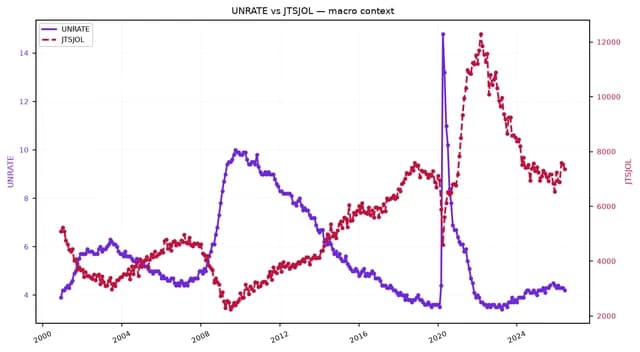
Unemployment is forecast to hold near 4.1% in August, down from 4.3% in May and close to levels that historically leave employers competing harder for talent. At the same time, job openings are still projected around 7.7 million, after cooling from a peak above 12 million, suggesting demand for labor remains healthy even if the frenzy of the post-pandemic hiring boom has eased. For early-career workers, that combination is important: when companies still need people, credentials, promotions and job-hopping all tend to pay better.

That is the real economic story behind the data. A labor market with low unemployment and millions of openings supports wage growth, keeps professional mobility alive and makes it easier for ambitious workers to move from back-office roles into higher-value functions. In finance, that can mean a CFA, an M7 MBA or simply moving closer to revenue and decision-making. In law, it can mean building a stronger case load and a larger client base. Across professions, the same principle holds: your career is an asset, and in a competitive labor market, that asset can still compound.
There are signs the broader economy is not starving workers of opportunity either. The number of people working full time for salary or wages has risen to about 665 million in the latest data, up from roughly 621 million at the end of 2024 and far above the 142 million level recorded in 1992. That long-run climb underscores a simple point investors often forget: household income power is the engine behind consumer spending, savings, retirement contributions and eventually stock-market wealth creation.
For investors, this matters because higher earnings potential supports everything from housing demand to discretionary spending to long-term retirement flows. It also helps explain why firms that sell education, training and career mobility tools can remain resilient even when the economy slows. Straighter-line beneficiaries are the companies helping workers skill up, switch tracks and stay employable. The losers are the people and businesses that treat talent development as optional.
That said, the labor market is no invitation to stand still. Unemployment is still rising from its cycle lows, job openings have retreated from their peak, and competition for white-collar roles remains uneven. The lesson for investors and workers alike is the same: in a world where the labor market still rewards skills, the best defense is to keep upgrading them. Over a three- to 10-year horizon, that is often the most reliable way to widen the gap between your income and your expenses — and to build the kind of cash flow that can later be invested with discipline.
| Entity | Gains | Losses |
|---|---|---|
| Early-career workers | ▲Higher bargaining power | ▼Standing still |
| Employers | ▲Access to talent | ▼Excess wage pressure |
| Education and credentialing firms | ▲More demand for upskilling | ▼Weak career mobility |
| Investors in human capital | ▲Rising lifetime earnings | ▼Missed promotion opportunities |