U.S. Labor Market Hiring Stalls as Unemployment Holds
The latest twist in the U.S. labor market is not a spike in layoffs but a stall in hiring, with the unemployment rate holding at 4.1% even as payroll growth is expected to remain almost flat at 159,090 in September.
That combination matters because it points to an economy that is still expanding, but with far less momentum beneath the surface. A steady unemployment rate can mask a cooling jobs market if firms are no longer adding workers at the pace needed to absorb new entrants. In practice, that is a softer landing than a recessionary break, but it also suggests wage pressure should keep easing and the Federal Reserve may have more room to keep policy restrictive without immediately choking off growth.
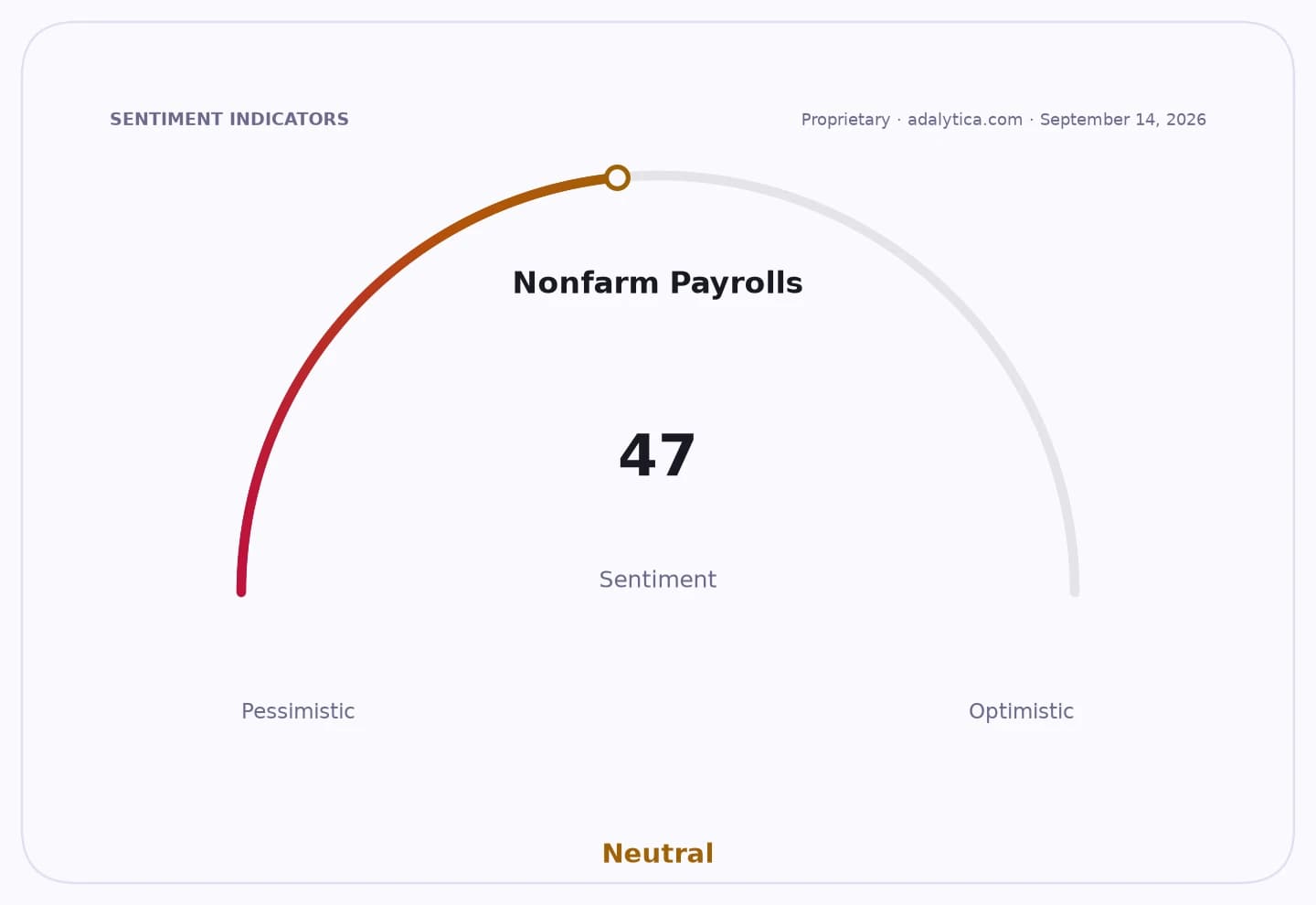
The data show the labor market has shifted from overheating to near-stall speed. Nonfarm payroll sentiment tracked by Adalytica sits at 47, neutral, after a sharp drop over the past month, while confidence readings remain elevated. That split reflects an economy where consumers still see resilience, but labor demand is less broad-based than in the post-pandemic rebound. The unemployment rate forecast at 4.02% for September would keep joblessness near its highest level in recent years, but well below the peaks of prior downturns.
For investors, the key issue is whether weaker hiring becomes a problem for earnings or a relief for bonds. Treasury traders have already marked up rate-cut expectations, and the 10-year yield has climbed to about 4.96% after being below 4.7% in August, suggesting markets are wrestling with the idea that slower labor growth does not automatically translate into imminent easing. If payrolls stay soft while unemployment remains contained, that is usually supportive for long-duration assets only if inflation continues to trend lower. If not, the Fed can stay cautious and keep real yields elevated.
Equity markets are sending a more balanced signal. The SPDR S&P 500 ETF is near 760, well above its 200-day moving average, and the broader benchmark remains resilient despite some recent momentum loss. That tells you investors are not pricing an outright labor shock. But the labor market’s late-cycle feel matters for cyclical sectors, small caps and rate-sensitive names, which tend to outperform when hiring is strong and financing conditions ease. A flatter payrolls trend also raises the risk that consumer spending, still a major driver of U.S. growth, cools later in the year.
The narrative behind the numbers is a labor market that is neither cracking nor accelerating, but settling into a slower, more fragile equilibrium. The bull case is that unemployment stays contained while inflation moderates, giving the Fed a clean path to eventual cuts. The bear case is that hiring keeps fading, labor-force participation softens and the slowdown begins to feed through to household income and demand.
What matters next is whether September payrolls confirm that the economy is cooling in an orderly way or whether the current calm is just the pause before a sharper deterioration.
| Entity | Gains | Losses |
|---|---|---|
| Treasury bulls | ▲Lower growth expectations | ▼Higher yields near term |
| Rate-cut advocates | ▲Softer labor momentum | ▼Sticky policy rates |
| Large-cap equities | ▲Relative resilience | ▼Cyclicals and small caps |
| Job seekers | ▲Less overheating, fewer bidding wars | ▼Slower hiring gains |