U.S. mortgage rates look set to stay elevated in August, with the 10-year Treasury yield climbing to 4.75% and the 2-year at 4.28%, a combination that keeps financing costs high for homebuyers and preserves the squeeze on housing affordability.
U.S. mortgage rates stay high as 10-year yield hits 4.75%
That matters because mortgage pricing in the U.S. remains tightly linked to Treasury yields, and the latest move higher in the long end comes even as the federal funds rate is forecast to sit around 3.625% in August. In other words, the market is not waiting for the Fed to cut before repricing borrowing costs. The yield curve is staying stubbornly restrictive, and that is the real story for housing: not just where policy stands, but where term funding costs are headed.
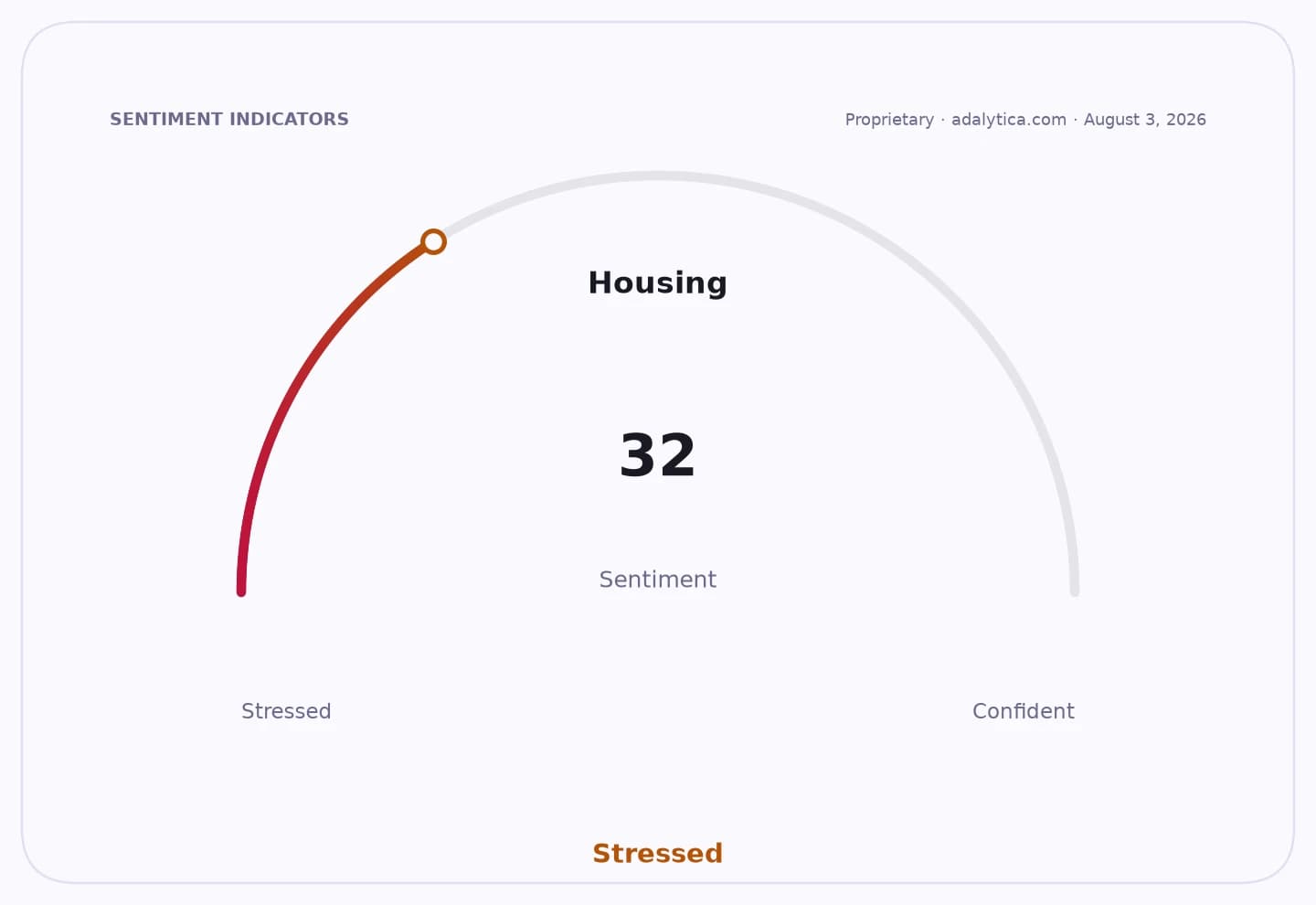
Sentiment IndicatorsⓘProprietary · adalytica.com · August 3, 2026
This is a snapshot — live sentiment, awareness and momentum for 130+ markets update continuously in the dashboard.Open AlphaPulse
The pressure is already showing up in housing-related markets. The iShares U.S. Home Construction ETF slipped to 97.01 on Aug. 3 from 103.69 on July 31, while the SPDR S&P Homebuilders ETF recovered to 106.36 after a weak close at 103.69. That rebound looks more like a tactical bounce than a clean breakout. The technical backdrop is still mixed: ITB remains below its 200-day moving average, and XHB has only barely reclaimed levels near its long-term average. For investors, that says the sector is not pricing in a meaningful mortgage-rate relief rally yet.
The economic impact is straightforward. Higher mortgage rates reduce affordability, slow turnover, and keep monthly payments pinned at levels that force buyers to stretch or step away. That hits housing demand, but it also reverberates through furniture, building materials, home improvement and mortgage origination. Lennar has already said mortgage rates remained stubbornly elevated in the mid-to-upper 6% range, a reminder that the market is dealing with a persistent affordability problem rather than a short-lived spike.
DGS10 vs DGS2 — macro contextadalytica.com
Explore this data interactively — full history, time series and cross-market comparisons.Open AlphaPulse
This is where the investable setup gets interesting. The market tends to treat higher rates as uniformly bearish for housing, but the winners and losers are more nuanced. Mortgage REITs such as AGNC and NLY are exposed to spread and prepayment risk, yet a steeper, stickier yield environment can also keep new purchase activity subdued and extend the life of high-coupon mortgage assets. Homebuilders with strong balance sheets, land discipline and incentive flexibility can still take share if weaker competitors are forced to discount more aggressively. Meanwhile, rate-sensitive ETFs like ITB and XHB may continue to trade on every move in Treasury yields rather than on underlying demand.
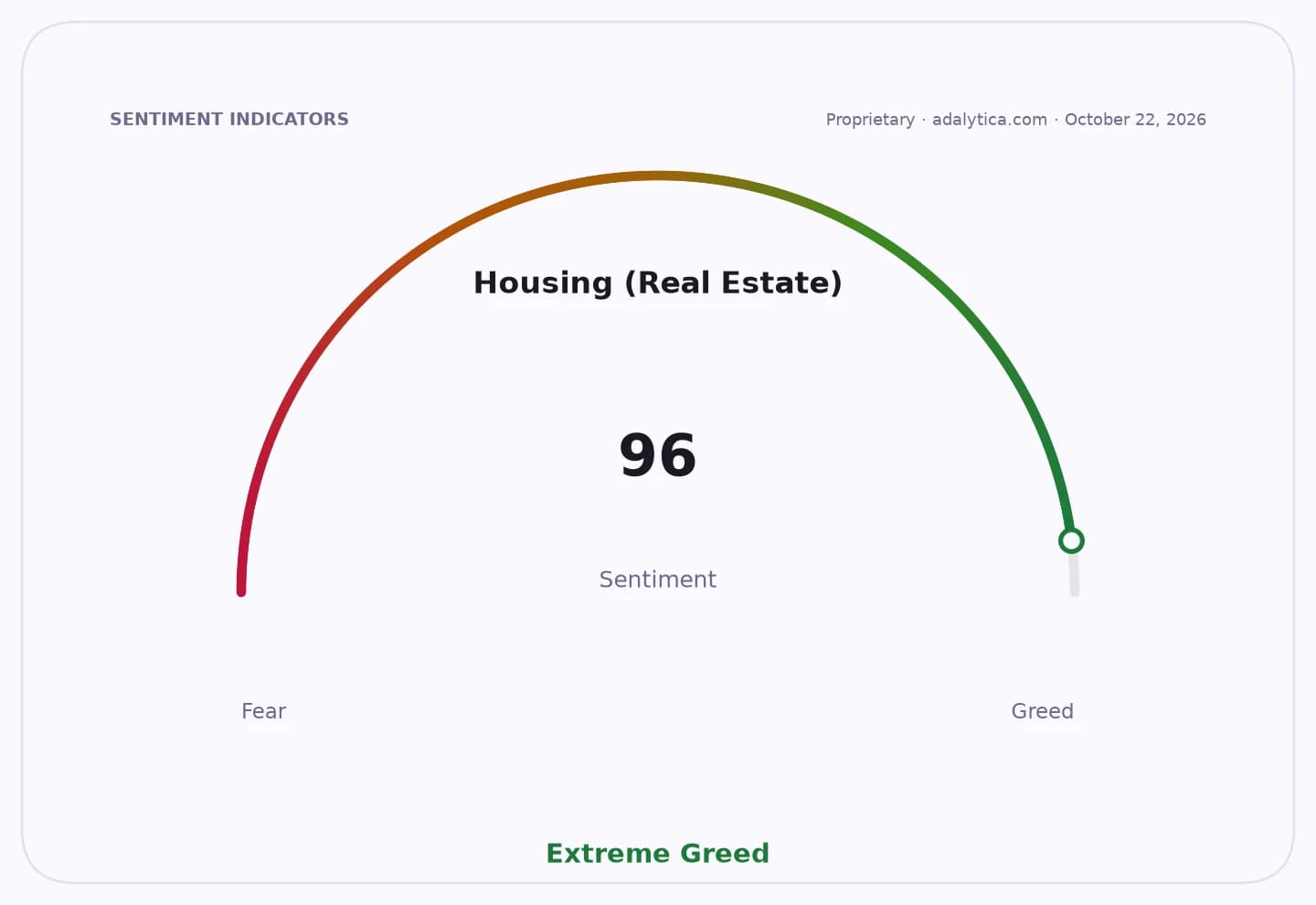
The bigger narrative is that housing is becoming a late-cycle collateral damage story from the bond market, not just from the Fed. Adalytica’s Housing and Rent Inflation gauge shows awareness at an extreme level, while Treasury bond trade signals have turned aggressively bullish for duration, underscoring how quickly investor positioning can shift when rates move. But the Treasury market is still warning that the path of least resistance for mortgage costs is higher, not lower, in the near term.
For investors, that argues for staying selective. I believe the best trade is not trying to bottom-pick the broad homebuilder complex too early, but owning the businesses that profit from housing scarcity, infrastructure replacement and refinancing dislocation, while keeping exposure light to the most rate-sensitive operators. Until the 10-year yield decisively cools, August mortgage rates are likely to stay the dominant headwind for housing and the clearest source of opportunity for disciplined investors.
| Entity | Gains | Losses |
|---|---|---|
| Treasury yield sellers | ▲Higher yields, better income | ▼Price pressure |
| Homebuilders with strong balance sheets | ▲Market share gains | ▼Demand softness |
| Mortgage REITs | ▲Wide-spread carry opportunity | ▼Prepayment and spread risk |
| Homebuyers and refinancers | ▲None | ▼Affordability squeeze |