U.S. Mortgage Rates Rise Above 7%
Mortgage rates have pushed back above 7%, with the average 30-year fixed mortgage rising to 7.02% on Tuesday and signaling that borrowers should not expect near-term relief.
The move matters because housing costs remain one of the most interest-rate-sensitive parts of the U.S. economy. At these levels, monthly payments stay elevated for would-be buyers, while refinancing only makes sense for a narrower slice of homeowners whose existing loans are still materially higher.

Zillow lender-marketplace data showed the 30-year fixed rate up 11 basis points from the prior day, while the 5/1 adjustable-rate mortgage jumped 48 basis points to 7.33%. The 15-year fixed slipped 5 basis points to 6.32%, and the refinance rate on a 30-year fixed loan stood at 6.98%.
Markets are not pointing to an imminent break lower. The 10-year Treasury yield is around 5%, with the benchmark forecast at 5.043% for Tuesday, and the federal funds rate is still running near 3.626%, keeping mortgage borrowing costs anchored at restrictive levels.
That backdrop has left housing under pressure. Higher rates are weighing on affordability, home sales and refinance activity, while mortgage stress has been building as homeowners face elevated borrowing costs and softer property values.
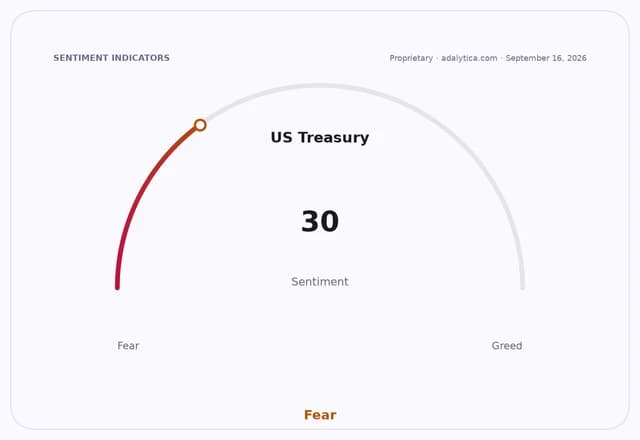
For investors, the implications run from homebuilders and mortgage lenders to banks, mortgage REITs and bond funds. The iShares MBS ETF, MBB, was at $91.24 on Tuesday, below its 50-day moving average of $92.69 and 200-day average of $92.98, while the 10-year Treasury ETF, TLT, sat at 106.47, with Adalytica’s bond-trading signal showing “fear,” reflecting defensive positioning in rates markets.
The short-term outlook remains for little change. MBA and Fannie Mae both see 30-year mortgage rates hovering in the mid-6% range through the rest of 2026 and into 2027, suggesting any drop below 7% is more likely to be gradual than immediate.
| Entity | Gains | Losses |
|---|---|---|
| Homebuyers | ▲Some negotiating power if inventory stays soft | ▼Higher monthly payments |
| Recent homeowners with low rates | ▲Little incentive to refinance | ▼Lose access to cheaper cash-out refis |
| Banks and mortgage lenders | ▲Higher pricing on new loans | ▼Slower refinance volume |
| Homebuilders | ▲Possible demand if rates ease later | ▼Near-term affordability drag |