U.S. Mortgage Rates Rise to 6.49% on Treasury Yields

Mortgage rates in the U.S. have climbed back toward 6.5%, squeezing affordability just as a jump in Treasury yields tied to Middle East tensions makes it more expensive to buy a home.
The average rate on a 30-year fixed mortgage rose to 6.49% from 6.43% a week earlier, Freddie Mac said Thursday. That is still below 6.72% a year ago, but the direction matters more than the year-on-year comparison for buyers already stretched by home prices and stubbornly high borrowing costs.
A move like this can add hundreds of dollars to a monthly payment, and that is exactly why the housing market has remained stuck in a low-transaction rut. Existing-home sales in the first three months of the year fell from a year earlier, extending a downturn that began in 2022 when mortgage rates began climbing from pandemic-era lows. Sales have barely recovered since, running at an annual pace of about 4 million — well below the roughly 5.2 million that has historically been normal.
The latest jump is not happening in a vacuum. Mortgage rates tend to follow the 10-year Treasury yield, and that benchmark has risen as investors demand compensation for higher inflation risks tied to surging oil prices and the breakdown of the ceasefire between the U.S. and Iran. The 10-year yield stood at 4.55% on Thursday, up from 4.49% a week earlier and far above 3.97% at the end of February, before the conflict intensified.
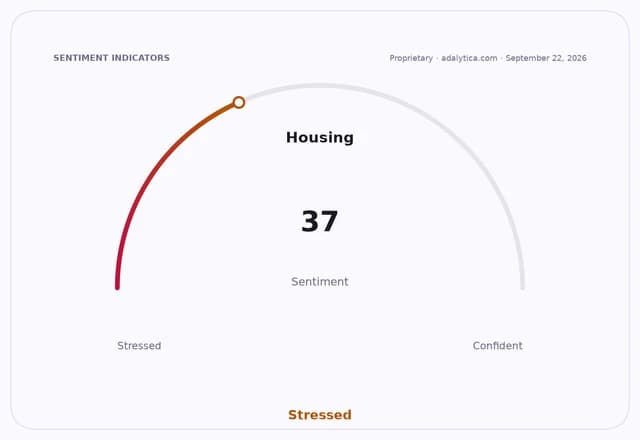
That is the key investment point: higher long-term yields tighten financial conditions even if the Federal Reserve itself is not hiking aggressively. The Fed funds rate is still parked around 3.63%, but the mortgage market is being driven by bond investors, not just policymakers. For homebuyers, that means relief can disappear quickly if geopolitics keeps feeding inflation fears.
The pressure is showing up in housing-linked assets too. The iShares U.S. Home Construction ETF, XHB, has dropped sharply in recent sessions, while Treasury bonds have been volatile as investors reposition around the possibility that oil-driven inflation remains sticky. At the same time, Adalytica’s U.S. Treasury Bonds trade signal shows “Greed” on TLT even as awareness remains in “Extreme Fear,” a classic sign of a market that has already priced in some stress but is still vulnerable to another leg higher in rates.
For investors, the setup argues against chasing a quick housing rebound. The longer mortgage rates stay near current levels or move higher, the more pressure falls on homebuilders, mortgage originators and affordability-sensitive consumer spending. The beneficiaries are less obvious but real: cash buyers, rental housing, and companies with exposure to refinancing or mortgage-servicing spreads rather than new purchase volume.
The market underestimates how much damage a few tenths of a percentage point can do at these levels. At nearly 6.5%, mortgage rates are not just a housing story — they are a transmission channel for geopolitical risk into the U.S. consumer. If oil stays elevated and Treasury yields keep grinding up, housing affordability will remain the first place Americans feel it, and one of the most important places investors should stay cautious.
| Entity | Gains | Losses |
|---|---|---|
| Cash homebuyers | ▲Stronger negotiating power | ▼None from higher rates |
| Homebuilders | ▲Selective pricing power on incentives | ▼Lower traffic and margins |
| Mortgage originators | ▲Servicing and rate-lock opportunities | ▼Fewer purchase applications |
| Renters / landlords | ▲More rental demand | ▼Less owner-occupier demand |